




English Porcelain Mug
An english porcelain mug brings the painted scenes and soft bodies of eighteenth and nineteenth-century ceramic rooms straight to the table.
English Porcelain Mug
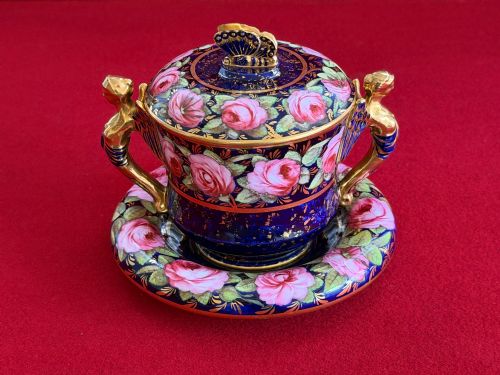
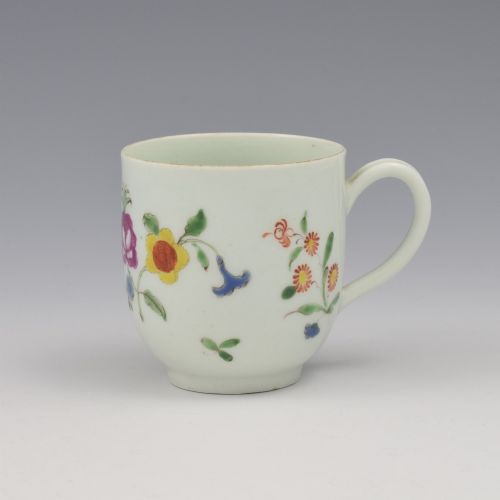
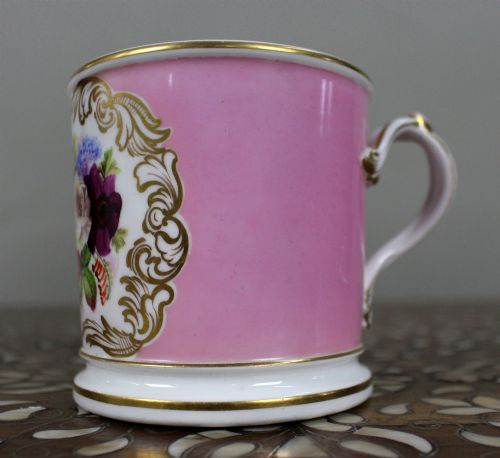
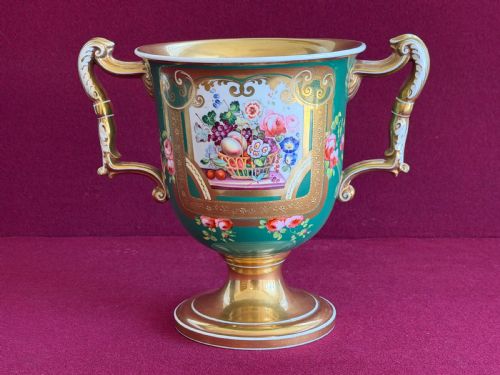
An english porcelain mug covers everything from eighteenth-century coffee cups and coffee cans to large nineteenth-century porter mugs, tankards, and loving cups. You will frequently meet smaller eighteenth-century coffee cups alongside larger Regency porter mugs and later Victorian tankards.
The forms span straightforward cylindrical drinking vessels, handled chocolate cups, and miniature tygs alongside figural Toby jugs. Many pieces take familiar forms from Worcester, Derby, and Liverpool potteries, capturing domestic drinking habits across the Georgian, Regency, and Victorian periods.
How They Were Made
Potters shaped these bodies from soft-paste porcelain, hard-paste porcelain, and ironstone, applying fluid glazes before firing. Early pieces often show the subtle undulations typical of eighteenth-century soft-paste porcelain bodies.
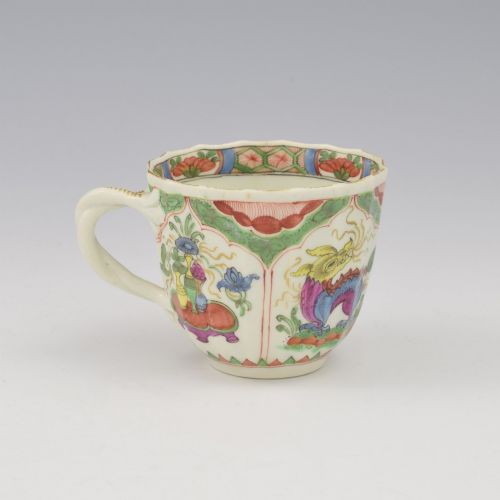
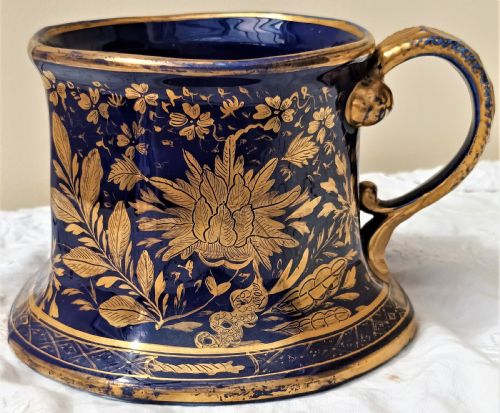
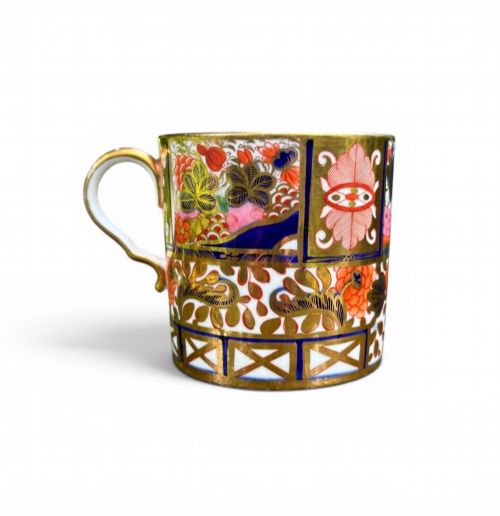
Decoration relied on hand-painting in enamels, underglaze blue, and polychrome palettes, frequently finished with rich gilding and gold leaf accents. Many patterns incorporate transfer-printed or hand-painted Chinoiserie scenes, floral motifs, and topographical landscapes.
A snuff-taking Toby jug proves that even porcelain figures needed a reliable pinch of tobacco.
What Varies in Quality
Quality rests upon the crispness of the painted or printed ornament and the control shown in the enamelling and gilding. Pieces featuring finely detailed topographical scenes or intricate hand-painted Chinese figures stand apart from simpler monochrome wares.
The weight and refinement of the porcelain body, alongside the purity of the glaze, dictate the standing of the piece. Superior examples maintain sharp modelling on handles and relief elements without blurring in the kiln.
Richard Chaffers·Dr Wall Worcester·Spode·Derby Porcelain·H & R Daniel·Royal Worcester·Stevenson and Hancock·Lowestoft Porcelain·Hadley Worcester·Mason
The English Porcelain Mug Glossary
- Coffee can
- A straight-sided cylindrical porcelain cup without a handle, made primarily during the Georgian and Regency periods for drinking strong coffee. These small vessels often match saucer sets.
- Porter mug
- A substantial handled drinking vessel designed for malt liquor, frequently decorated with hand-painted landscapes or armorials. They date predominantly to the Regency and Georgian eras.
- Soft-paste porcelain
- An artificial porcelain mixture of clay, glass frit, and white sand fired at lower temperatures than hard paste. It yields a warm, creamy body that absorbs enamel colours deeply.
- Tyg
- A heavy drinking vessel featuring three or more vertical handles, allowing multiple drinkers to share the cup. Miniature versions appear in later Worcester production.
- Wet blue
- A rich, deep underglaze blue ground colour applied to porcelain before firing, often reserved as a background for framed panels of birds or flowers.
English Porcelain Mug: Frequently Asked Questions
What is a porter mug?
A porter mug is a sturdy, large-handled drinking vessel made to hold malt liquor. These pieces appear frequently in Regency and Georgian ceramics.
They often feature hand-painted topographical views, hunting scenes, or plain colourful grounds suited to daily tavern or domestic use.
How do I date an antique mug?
Dating relies on body composition, decorative style, and factory marks where present. Eighteenth-century pieces typically show soft-paste bodies with hand-painted Chinese or floral motifs.
Nineteenth-century examples introduce ironstone bodies, richer ground colours like rose pompadour, and distinct Victorian or Edwardian stylistic traits.
What is a coffee can?
A coffee can is a small, handleless cylindrical cup produced during the Georgian and Regency periods. They were designed specifically for serving strong black coffee after meals.
Their straight walls often showcase intricate Imari patterns, gilding, or hand-painted landscapes wrapping around the exterior.
Are these mugs meant for drinking?
While originally made for drinking tea, coffee, porter, or chocolate, antique porcelain requires careful handling today. Most collectors treat them as display pieces to preserve fragile enamel and gilding.
Historical wear inside the vessel often tells the story of its previous domestic use.