




Hand Painted Ceramic Tankard
These hand painted ceramic tankard pieces span the eighteenth and nineteenth centuries, offering robust drinking vessels decorated in porcelain, earthenware and creamware.
Hand Painted Ceramic Tankard
A hand painted ceramic tankard is a drinking vessel designed for beer, ale or porter, appearing across Georgian, Regency and Victorian periods. You will encounter these in materials ranging from tin-glazed earthenware and creamware to fine porcelain and pearlware glaze.
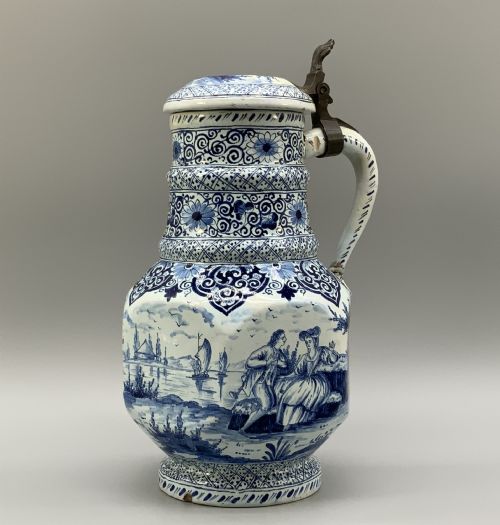
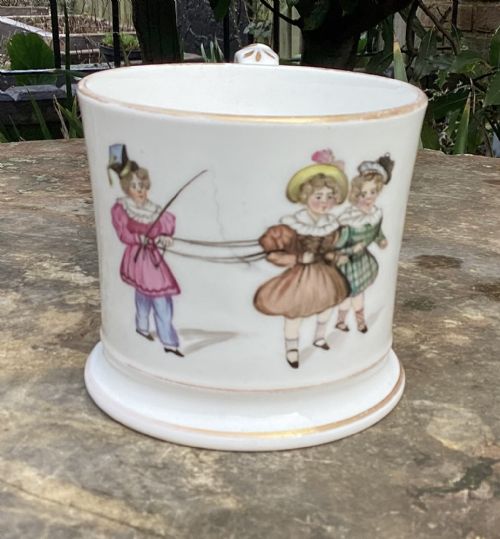
The forms vary from simple cylindrical mugs to two-handled loving cups and lidded jugs with pewter mounts. Styles span from domestic English pottery patterns to Dutch Delftware and Chinese Export porcelain created for the European market.
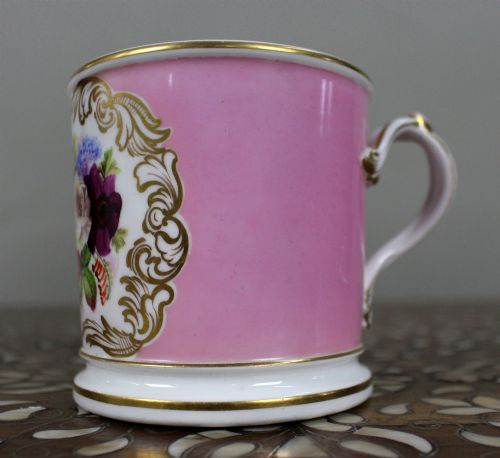
Mugs and tankards on this page frequently display floral hand painted decoration, armorials, or specific topographical scenes such as views near Newark. They serve as tangible survivals of historic domestic and tavern drinking customs.
Materials and methods
Makers shaped these vessels using traditional ceramic bodies including creamware, pearlware, earthenware and hard or soft-paste porcelain. Surface decoration was applied by hand using enamel colours, sometimes accented with gold leaf.
Potters utilised tin glazes for Dutch Delftware pieces and pearlware glazes to achieve a smooth finish on earthenware mugs. Certain porcelain tankards incorporated complex coloured grounds, such as rose pompadour, before hand painting was applied over or under the glaze.
Certain pearlware loving cups feature hidden frogs and newts moulded inside the well to startle the drinker at the bottom.
Judging quality in historic tankards
Quality rests in the precision of the hand painting and the crispness of the ceramic moulding. Fine porcelain porter mugs show delicate brushwork on detailed topographical scenes, whereas simpler earthenware pieces display robust folk art motifs like frogs and newts.
The refinement of the clay body and the evenness of the glaze separate standard production wares from superior factory output. Surviving pewter lids and mounts on Dutch Delft jugs add structural and material complexity that elevates the piece.
Grainger Worcester·Derby Porcelain·Hadley Worcester·Lowestoft Porcelain
The Hand Painted Ceramic Tankard Glossary
- Creamware
- A refined earthenware with a pale yellowish straw-coloured lead glaze developed in Yorkshire and Staffordshire. It became the dominant domestic ceramic of the Georgian era.
- Pearlware
- An earthenware body introduced by Josiah Wedgwood featuring a bluish glaze designed to mimic the whiteness of Chinese porcelain. It frequently carries hand painted blue or polychrome decoration.
- Porter Mug
- A large drinking vessel specifically sized for porter, a dark malt beer popular in the eighteenth and nineteenth centuries. These mugs often feature cylindrical bodies and substantial handles.
- Loving Cup
- A large drinking vessel with two or three handles, designed to be passed between guests at communal gatherings and celebrations. They frequently appear in earthenware and pearlware.
- Famille Rose
- A palette of Chinese ceramic enamels dominated by opaque pink or purple colours introduced during the Qing Dynasty. Pieces decorated in this style were widely exported to Europe.
Hand Painted Ceramic Tankard: Frequently Asked Questions
What is a hand painted ceramic tankard used for?
These vessels were historically used for consuming ale, beer or porter in domestic homes and taverns. Larger two-handled examples served a communal function during celebrations.
Today, collectors use them primarily for display as decorative vessels rather than for daily drinking.
How do I tell a Georgian tankard from a Victorian one?
Georgian pieces often utilise creamware, pearlware or Chinese export porcelain with hand painted polychrome or blue and white motifs. Victorian examples tend to feature heavier pottery bodies and distinct patterns like Gaudy Welsh.
Examining the weight of the ceramic body and the style of the hand painted decoration helps clarify the period.
Are pewter lids original to these tankards?
Certain eighteenth-century earthenware and Delft jugs incorporate pewter lidded mounts fitted by contemporary metalworkers. These mounts protected the contents and added structural reinforcement to the rim.
Matching the wear on the pewter to the age of the ceramic body assists in confirming its authenticity.
How should I clean my antique ceramic tankard?
Historic ceramics with hand painted enamels or gold leaf require gentle dusting with a soft dry brush. Submersing them in water can risk damage to old glaze crazing or fragile repairs.
Avoid chemical cleaning agents entirely to preserve the original surface integrity.