
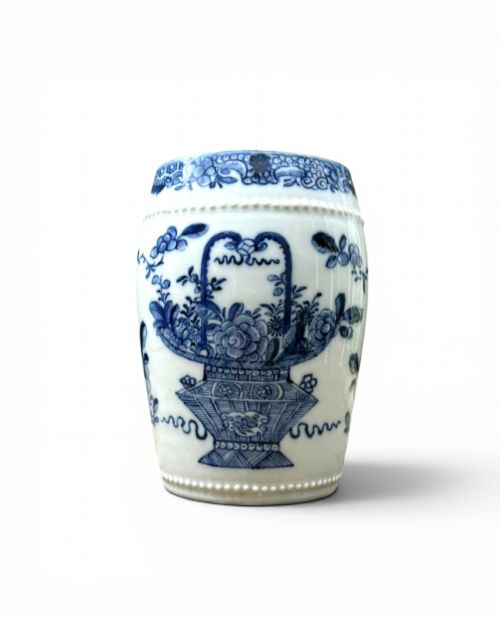

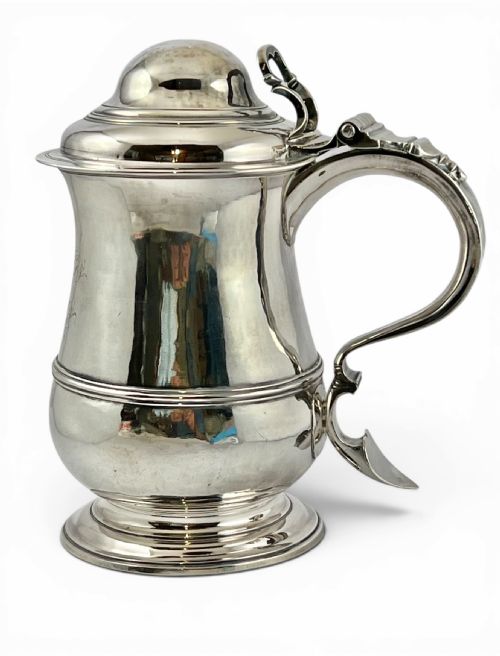
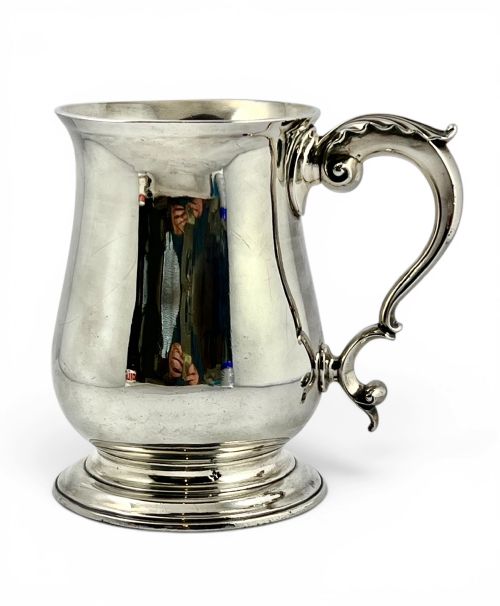


18th Century Mug
An 18th century mug brings sturdy silver, soft-paste porcelain, and warm pewter to the table for holding ale or tea.
18th Century Mug
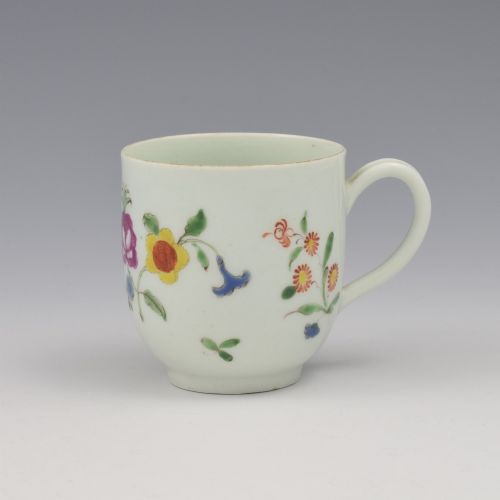
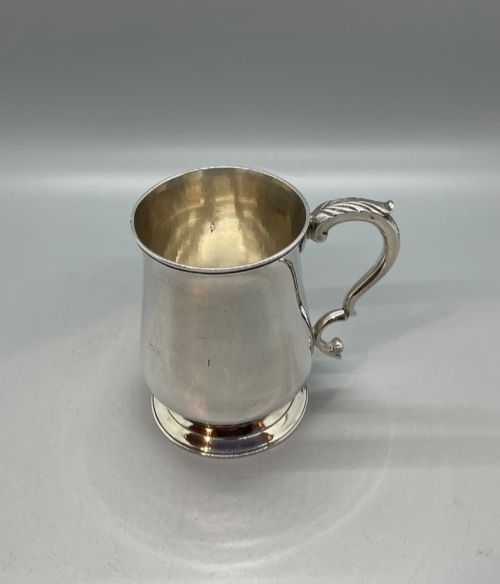
The pieces appearing on this page include heavy sterling silver tankards bearing London and provincial hallmarks, alongside delicate Chinese export porcelain and English soft-paste porcelain from factories like Worcester and Lowestoft. You also find utilitarian pewter flagons and gleaming Old Sheffield Plate from the latter decades of the period.
Originating across England, Germany, and China, these drinkware items reflect the shifting social rituals of tea and ale consumption. Collectors select them for their tangible connection to Georgian tavern life and domestic parlour culture.
Materials and Construction
Silversmiths hammered sheet metal into cylindrical bodies, soldering scrolled handles and reinforced rims to create solid sterling vessels designed to withstand heavy use. Pewterers cast tin alloys in multi-part moulds, producing flat-lid and dome-lid flagons with substantial heft.
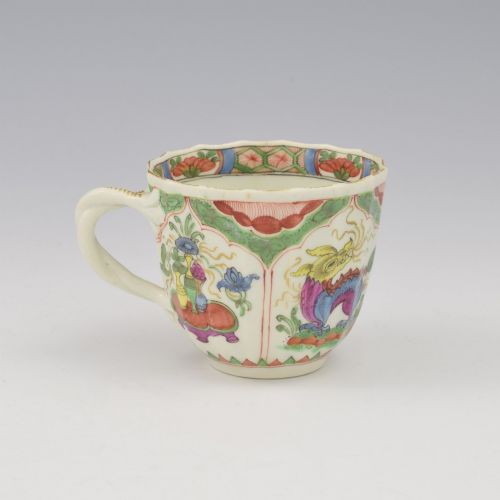
Potters shaped soft-paste porcelain and creamware on the wheel or pressed clay into moulds, applying hand-painted underglaze blue, enamels, and famille rose palettes before kiln firing. Old Sheffield Plate manufacturers fused a thin layer of silver onto a copper core, yielding durable plated tankards with rich metallic lustre.
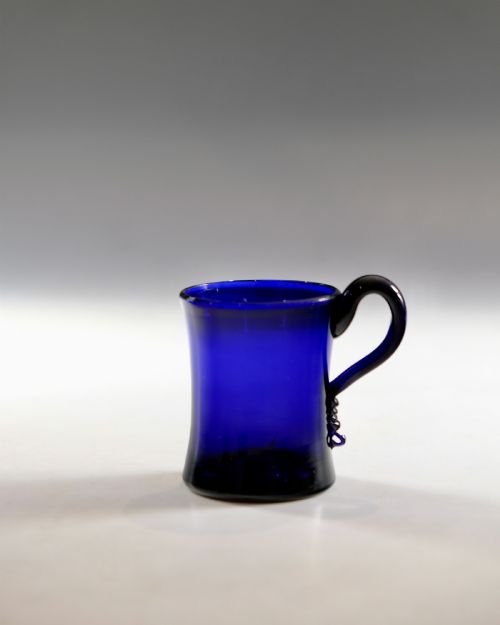
Listings feature eighteenth-century drinking vessels spanning English sterling silver, Chinese export porcelain, and Old Sheffield Plate.
Distinctions in Quality
The refinement of painted decoration on porcelain separates standard factory output from exceptional studio work, seen in crisp hand-pencilled Chinese figures and intricate Chinoiserie scenes. Metalwork quality rests on the clarity of maker marks, crispness of chased repoussé ornamentation, and the structural integrity of applied handles.
Richard Chaffers·John Payne·William Grundy·Richard Morton·Burgum & Catcott·George Smith II
The 18th Century Mug Glossary
- Old Sheffield Plate
- A composite material made by fusing a thin sheet of silver to a thick copper base under heat and pressure. This technique produced durable tableware before the advent of electroplating in the nineteenth century.
- Soft-paste porcelain
- An artificial ceramic body fired at lower temperatures than hard-paste porcelain, composed of clay, glass frit, and alabaster. English potteries utilised this mixture extensively during the mid-eighteenth century.
- Tankard
- A large, tall drinking vessel featuring a single handle, frequently fitted with a hinged lid during this period. These containers were traditionally utilised for ale or beer.
- Chinoiserie
- European artistic style reflecting Chinese motifs and decorative techniques, popular throughout the Georgian era. Artisans applied these imaginative landscapes and figures to porcelain and lacquerware.
- Hallmark
- Official stamp applied by an assay office to precious metal items to guarantee purity and origin. These symbols reveal the city of testing, the specific year, and the maker.
18th Century Mug: Frequently Asked Questions
How do I clean silver tankards?
Wash silver pieces gently in warm water using a mild, phosphate-free dish soap and a soft cotton cloth. Dry them thoroughly immediately afterward to prevent water spotting.
Avoid abrasive polishes and chemical dips that strip away historical patina and wear down engraved crests over time.
Can I drink from porcelain mugs?
Most antique porcelain and silver pieces remain structurally sound for holding cold beverages or warm tea. However, thermal shock from boiling liquids can occasionally crack historic ceramic bodies.
Hand washing is essential for preserving delicate overglaze enamels and fragile handles that cannot endure modern dishwashers.
How do I date pewter flagons?
Examine the lid style, handle shape, and touchmarks stamped into the interior base or rim. Flat lids and thumbpieces generally point toward earlier decades, while dome lids emerge later in the century.
Maker touchmarks often cross-reference with guild records to narrow down production years.