






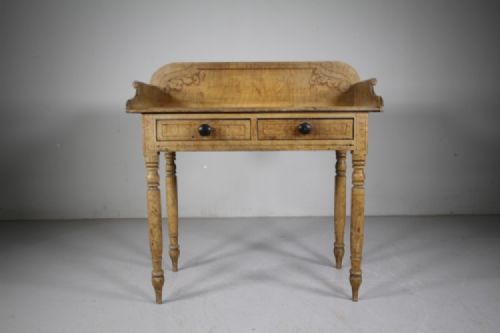
English Painted Side Table
An English painted side table brings colour and utility to a room, offering surface space finished in historic pigments across pine, oak and satinwood.
English Painted Side Table
When you search for an english painted side table, you encounter practical furniture designed for domestic spaces across the eighteenth and nineteenth centuries. These pieces encompass side tables, console tables, lamp tables, and prep tables originating from English workshops.
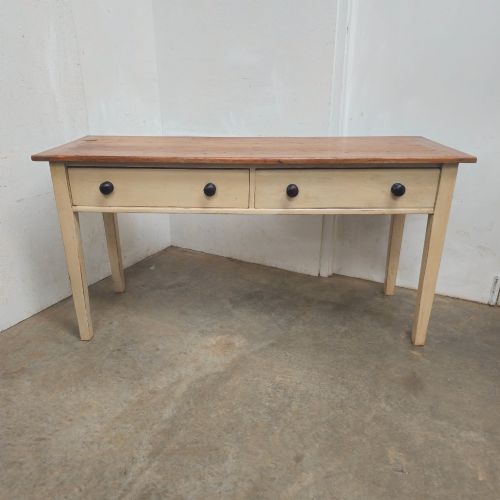
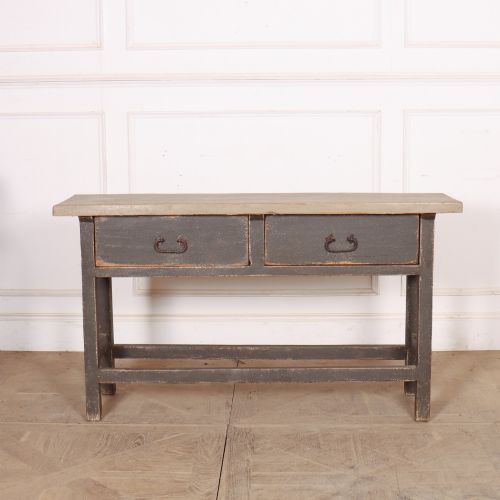
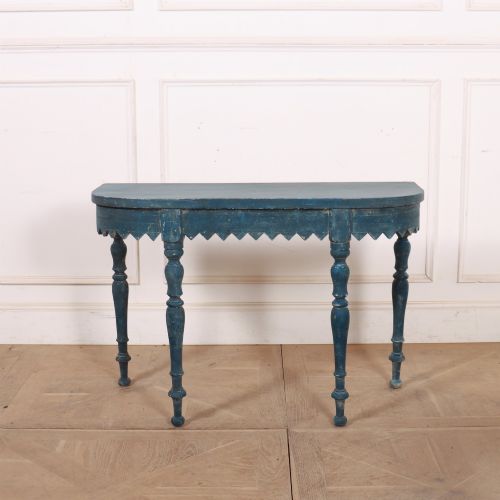
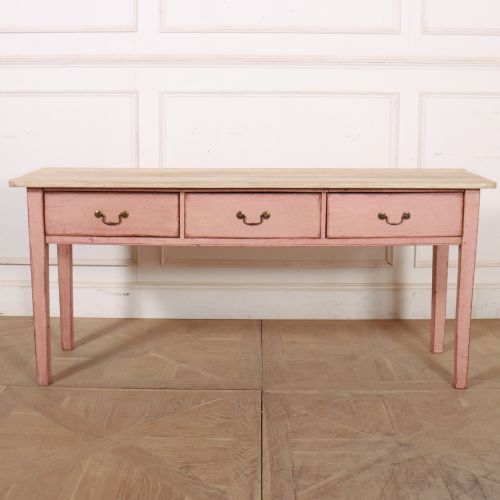
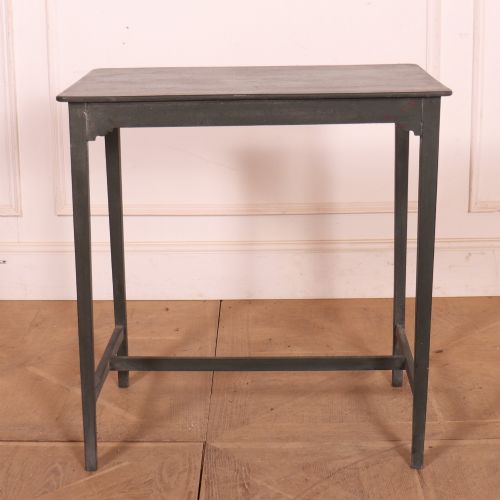
The version you are most likely to meet on this page is a pine or oak piece carrying either original or later paint finishes. These range from Georgian country items to Victorian and Regency examples configured as occasional tables, servers, and small console pieces.
Materials and construction
Carpenters built these items primarily using native timbers such as pine, oak, and beech, occasionally incorporating finer woods like satinwood for more formal reception furniture. Structural joinery relied on traditional methods suited to everyday domestic use in country houses and town residences.
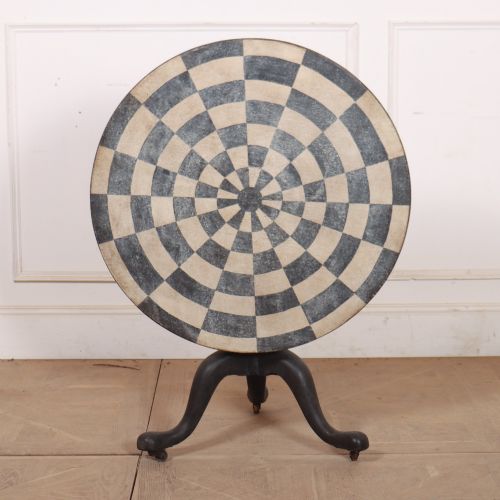
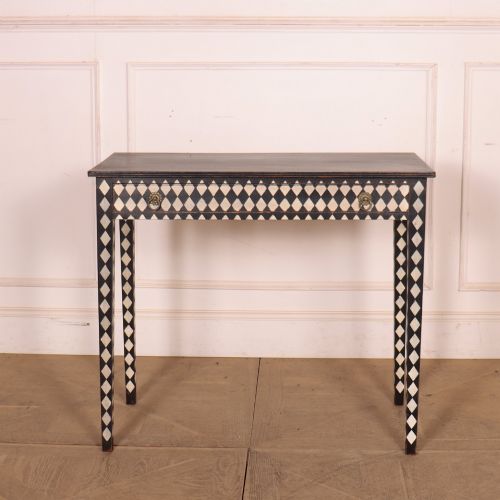
Surfaces received layers of lead-based or oil paints applied over decades, sometimes featuring decorative motifs such as Chinoiserie or faux bamboo detailing. The relationship between the timber substrate and the layered paint finish dictates the physical character of each survivor.
English Painted Side Table Retail Price Guide 2026
Typical asking prices for english painted side table among the pieces listed under this phrase on Sellingantiques today, from the lower quarter to the upper quarter. They describe what is for sale here now, not the wider market.
Some tables spent decades in dairies and prep rooms before earning a quiet retirement holding lamps in carpeted hallways.
Evaluating finish and integrity
The distinction between ordinary and exceptional examples rests upon the survival of the surface and the integrity of the timber beneath. Original paint schemes that retain their depth and natural wear carry greater historical weight than pieces subjected to heavy stripping or unsympathetic repainting.
Proportion and construction detail also divide the range, as simple country pine tables contrast with finely turned Regency bamboo-effect legs or Georgian satinwood console tops. The harmony between the original form and the decorative scheme determines the standing of an individual piece.
The English Painted Side Table Glossary
- Demi-lune
- A half-moon shape used for console tables and side tables designed to stand flat against a wall. This profile became popular during the Georgian and Regency periods.
- Dresser base
- A low rectangular cabinet or table featuring drawers or cupboards, utilised for storage and serving in country houses. Many surviving examples received painted finishes over oak or pine.
- Chinoiserie
- European decorative style inspired by Chinese art, featuring painted motifs of landscapes and figures. It appears on cabinets and tables from the early twentieth century and earlier.
- Prep table
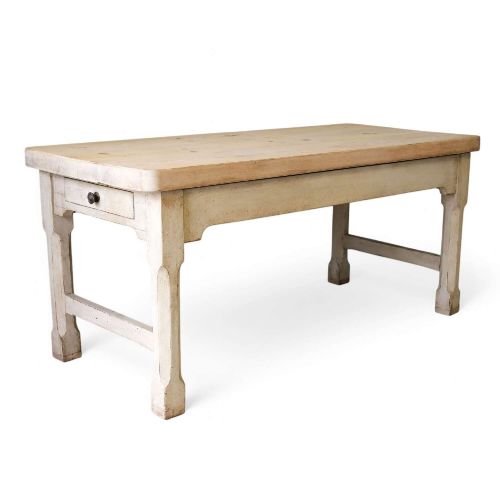
- A utilitarian work table constructed from sturdy timbers like pine or oak for kitchen or dairy use. These pieces often exhibit thick tops and robust legs designed for heavy tasks.
- Faux bamboo
- Wood turned or carved to imitate the segmented stalks of natural bamboo. This decorative technique appears on Regency and Victorian occasional and side tables.
English Painted Side Table: Frequently Asked Questions
What rooms suit an english painted side table?
These tables adapt well to hallways, living rooms, and bedrooms where surface space is needed without heavy visual bulk.
Their compact proportions allow them to function as lamp tables, small servers, or decorative stands against walls.
How do I care for antique painted surfaces?
Historic paint finishes require gentle dusting with a dry microfibre cloth and protection from direct sunlight and excessive moisture.
Avoid modern chemical polishes, which can soften or damage aged oil and distemper coatings.
Are these tables from the Georgian period?
Some pieces date to the eighteenth century, including Georgian and late seventeenth-century examples made from oak or pine.
Many listings also feature nineteenth-century Victorian and Regency interpretations of these earlier country forms.
What is the difference between original and later paint?
Original paint represents the primary decorative coating applied when the table was first manufactured.
Later paint indicates that the piece was redecorated at a subsequent date, which is common for utilitarian furniture kept in service across generations.