








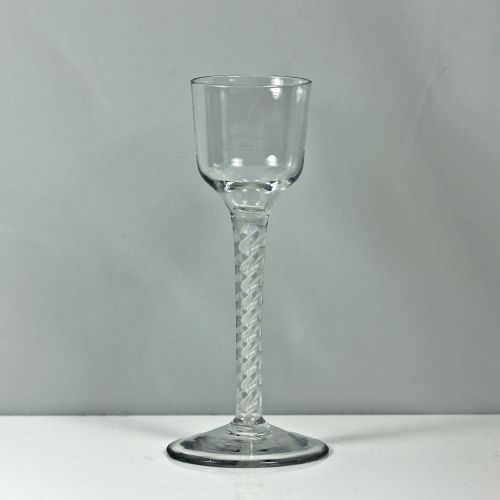
English Opaque Twist Stemware
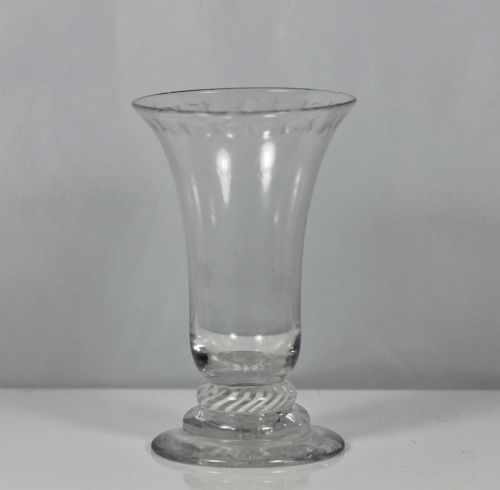
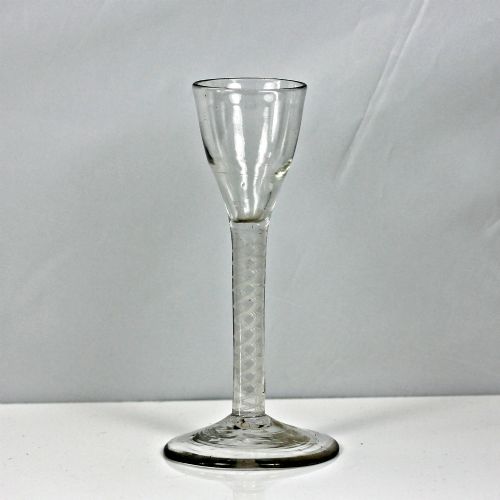
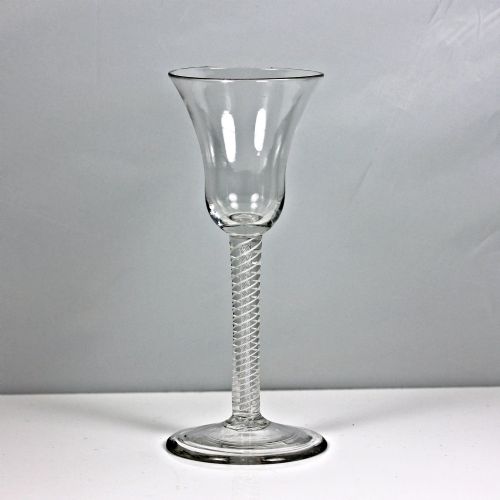
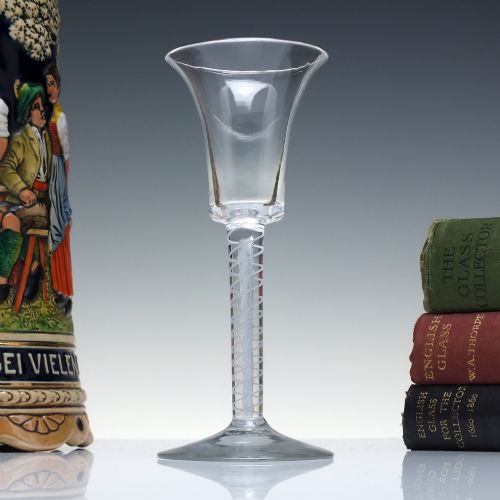
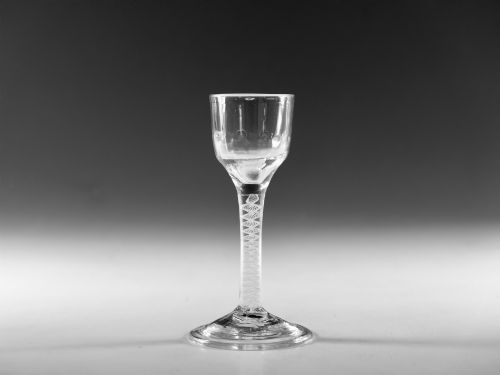
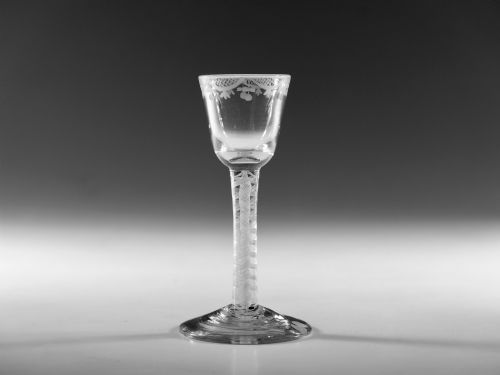
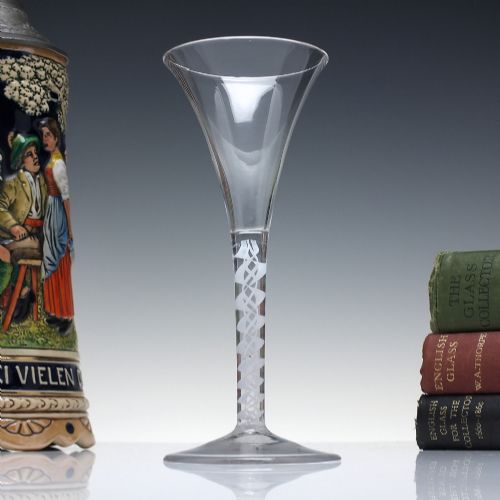
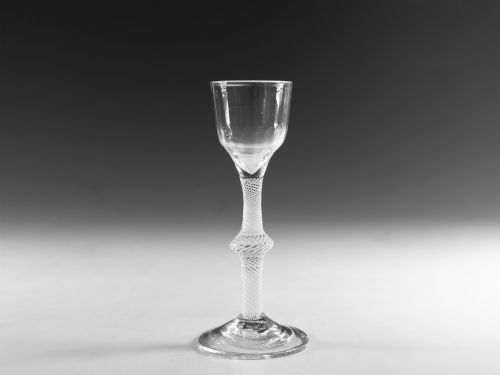
English opaque twist stemware combines brilliant lead glass bowls with delicate white enamel threads spun deep within the stem.
English Opaque Twist Stemware
These drinking vessels represent a pinnacle of Georgian glassmaking, originating primarily from the eighteenth century. When you search for english opaque twist stemware, you encounter wine glasses and ale glasses defined by their intricate, milky-white internal threads.
The pieces appearing on this page date largely from the mid to late eighteenth century, particularly around the seventeen-fifties and seventeen-sixties. Forms range from trumpet and ogee bowls to specialised ale and ships glasses, often featuring single or double series twists.
Makers shaped these drinking glasses from lead glass and lead crystal, incorporating enamel and clear glass components. The resulting forms demonstrate the refined Georgian taste for decorative stems that catch the candlelight during dining.
What varies in quality
Quality rests in the precision and complexity of the internal twist, distinguishing simple single-series strands from elaborate multi-spiral or mixed twist configurations. The crispness of the enamel threads and the clarity of the surrounding lead glass dictate visual depth.
Proportion and form elevate certain examples, such as those with balanced knops, flared bucket bowls, or flute-moulded ogee profiles. The finesse with which the bowl meets the stem and the finish of the pontil mark on the foot reveal the maker's mastery.
English Opaque Twist Stemware Retail Price Guide 2026
Typical asking prices for english opaque twist stemware among the pieces listed under this phrase on Sellingantiques today, from the lower quarter to the upper quarter. They describe what is for sale here now, not the wider market.
Georgian drinkers trusted these milky white spirals to make even watered claret look remarkably sophisticated under flickering candlelight.
The English Opaque Twist Stemware Glossary
- Opaque twist
- A stem containing white enamel threads formed into spiral patterns within clear glass. This decorative technique flourished during the Georgian period.
- Double series
- A stem construction featuring two distinct sets of internal twists, often pairing a central gauze or core with outer spiral strands. It creates a dense and highly textured visual effect.
- Ogee bowl
- An S-shaped drinking vessel profile curving out at the rim and in towards the base. This form appeared frequently on eighteenth-century wine glasses.
- Knop
- A decorative swelling or protuberance on the stem of a glass. Multiple knops provide both textural grip and visual punctuation.
- Pontil mark
- The rough scar left on the underside of the foot where the pontil rod was snapped away after shaping. Its presence confirms traditional hand-blown manufacture.
English Opaque Twist Stemware: Frequently Asked Questions
Are these glasses safe to use?
While these pieces are durable lead glass antiques from the eighteenth century, modern use carries risks of thermal shock or accidental impact.
Most collectors prefer to display them or handle them carefully on special occasions rather than use them for daily dining.
How do I date an opaque twist?
Dating relies on stylistic clues such as bowl shape, foot formation, and the complexity of the internal glass twists. Pieces from the seventeen-fifties and sixties often feature distinct proportional standards and manufacturing traits.
Comparing the twist configuration against documented Georgian examples helps narrow the period of production.
What is a mixed twist?
A mixed twist combines opaque white enamel spirals with clear glass air threads within the same stem. This technique demands advanced skill from the glassmaker.
Such stems offer a fascinating interplay of light and texture compared to standard single or double series opaque variations.
Why are some bowls flute moulded?
Flute moulding adds vertical ribs to the lower portion of the bowl, enhancing how light reflects through the lead glass. This decorative flourish was popular during the mid-eighteenth century.
It provides a subtle textural contrast to the smooth upper rim and the intricate stem below.