


English Oak Server
An english oak server provides sturdy utility and rich grain, bringing centuries of domestic history straight into a dining room or hall.
English Oak Server
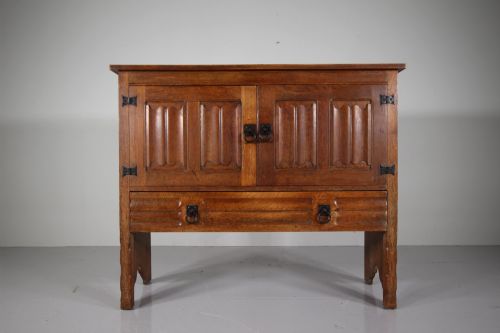
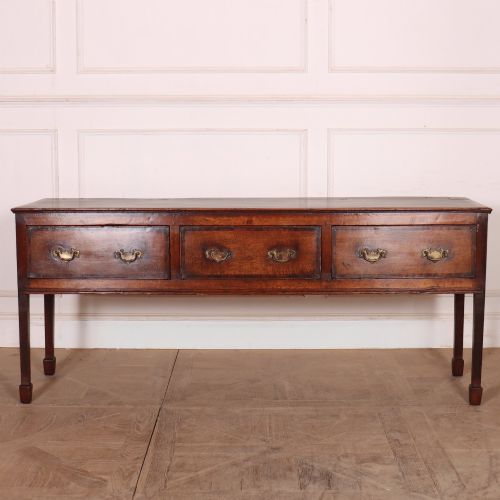
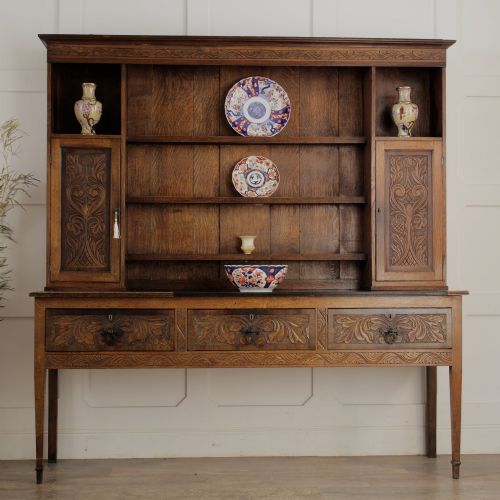
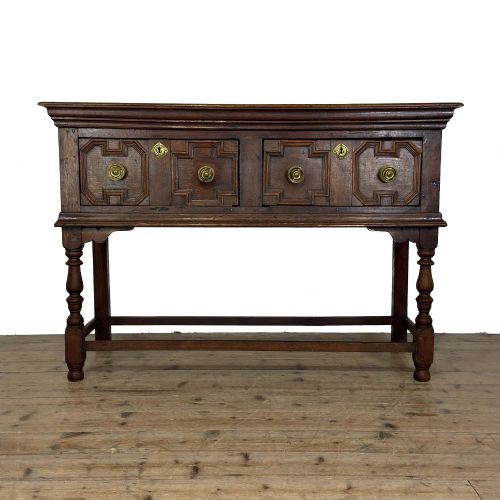
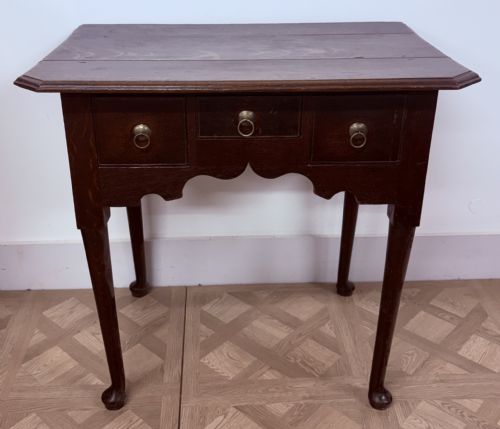
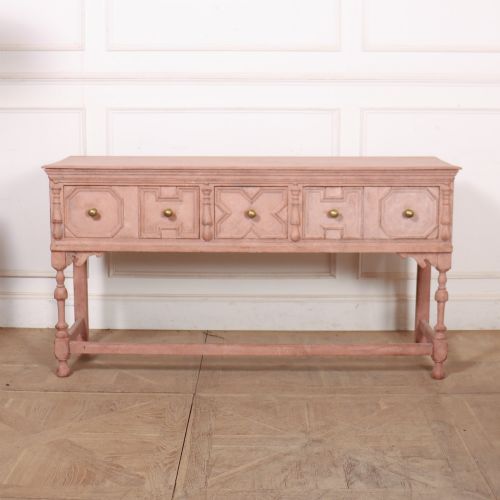
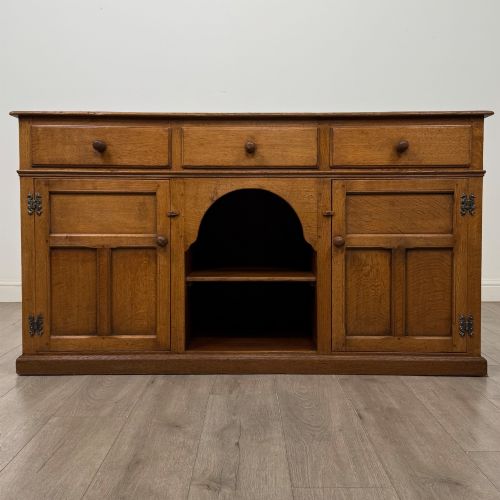
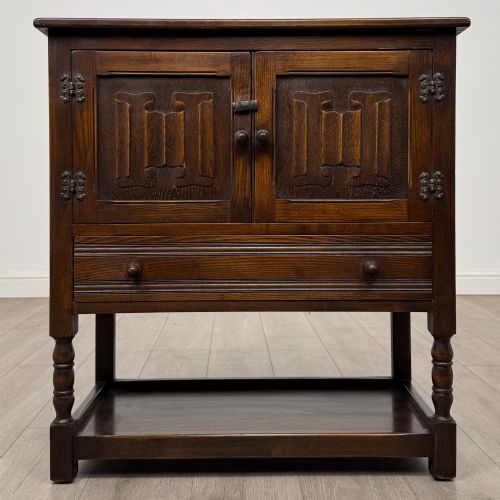
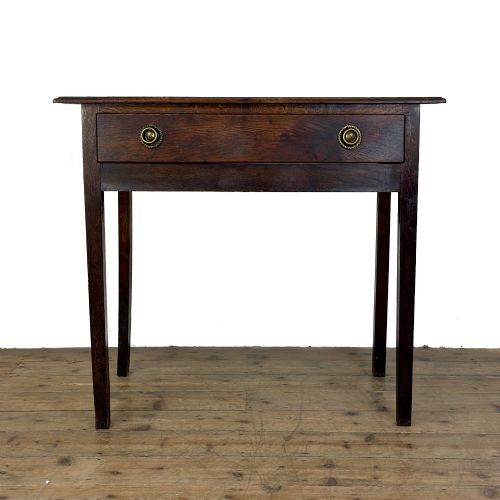
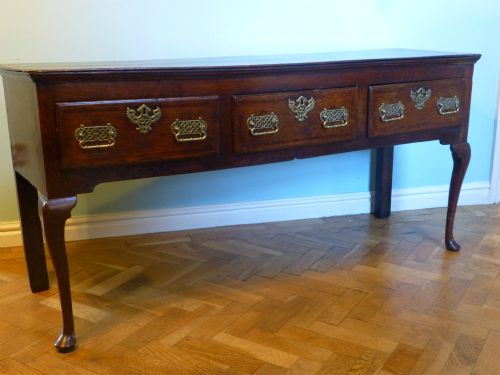
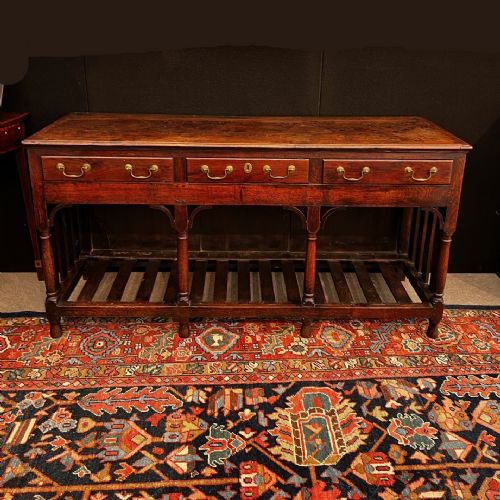
When buyers search for an english oak server, they encounter robust foundational forms built for domestic storage and food preparation in centuries past. These pieces bridge the gap between utilitarian workspace and display furniture, taking the shape of low dresser bases, serving tables, and buffets.
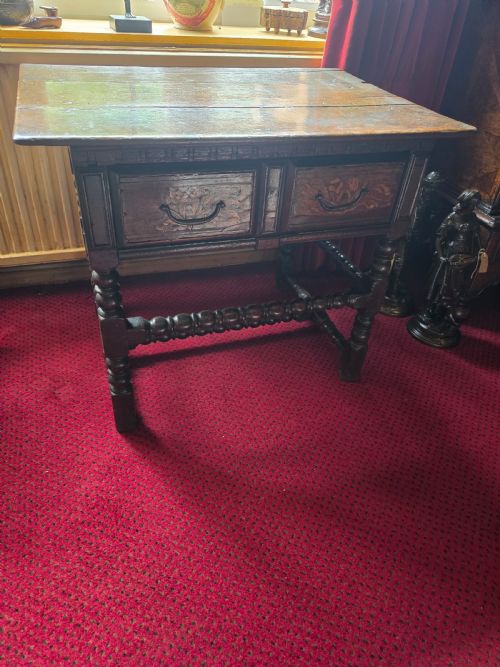
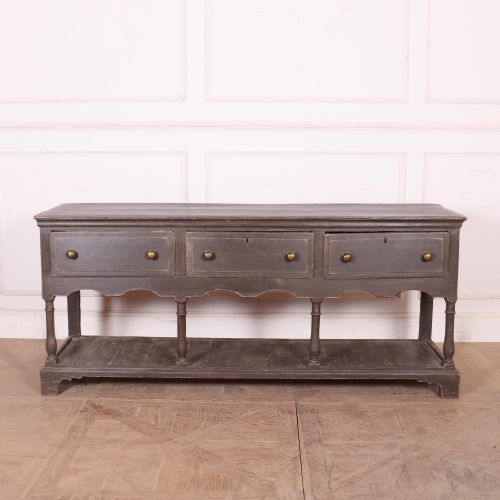
The version most frequently met on this page is the eighteenth-century oak dresser base or server, often retaining its original potboard shelf or multiple drawers. Alongside these, nineteenth-century revival interpretations and earlier seventeenth-century low tables appear with regularity.
Makers shaped these servers to handle heavy daily tasks, incorporating elm or fruitwood into secondary elements like drawer linings while keeping the primary structure firmly in oak.
How they were made
Joiners built these servers using solid oak planks assembled with mortise and tenon joints secured by wooden pins. Timber was quarter-sawn or plain-sawn by hand, yielding a dense board that resisted warping during kitchen use.
Surfaces were shaped with moulding planes, and drawers were constructed with hand-cut dovetails. Details such as geometric mouldings, carved panels, or applied wood inlay decorated the drawer fronts and cupboard doors.
Hardware combined iron hinges with brass drop handles or pulls, while certain pieces utilised paint finishes or bleached surfaces to alter the appearance of the native timber.
Common forms appearing across the inventory include dresser bases, sideboards, lowboys, and court cupboards.
What varies in quality
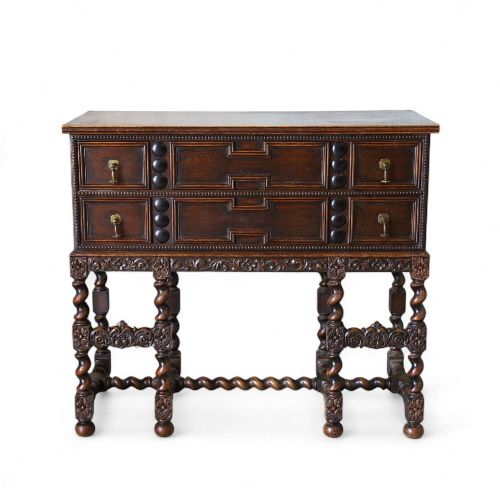
Quality rests in the proportion of the carcass and the crispness of the hand-carved details, such as geometric mouldings or barley-twist supports. Pieces retaining their original timber top boards and uncompromised potboard shelves stand far above those altered by later height reductions or top additions.
The integrity of the drawer construction, including the survival of early hand-cut dovetails and original brass or iron hardware, distinguishes superior cabinet work from later repairs. Selection of figured timbers, such as pollard oak or deliberate wood inlay, elevates the visual depth of specific examples.
The English Oak Server Glossary
- Potboard
- An open lower shelf fitted beneath a dresser base or server, originally intended to hold heavy pots and earthenware.
- Dresser base
- A low rectangular cabinet fitted with drawers and occasionally cupboards, serving as the foundational lower section of a kitchen dresser.
- Lowboy
- A small oak side table featuring one or more rows of drawers, raised on relatively tall legs.
- Pollard oak
- Timber taken from trees that were cut back close to the trunk to encourage dense, highly figured branch growth.
- Dovetail
- An interlocking joint formed by interlocking wedge-shaped fingers, utilised to join drawer sides to drawer fronts.
English Oak Server: Frequently Asked Questions
What is an english oak server?
An english oak server is a heavy wooden storage and serving table designed for domestic use in dining areas or kitchens.
These pieces typically feature a rectangular plank top above rows of drawers or cupboards, often resting on sturdy legs or an open potboard base.
How were these servers used?
Households utilised these servers to plate food, prepare dishes, and store heavy ceramics, cutlery, and provisions.
The wide top served as a functional staging area during meals, while the drawers and lower shelves kept everyday utensils close at hand.
How do I live with an oak server?
Living with an oak server involves placing it in a stable environment away from direct heat sources and sudden humidity shifts to protect the timber.
Routine dusting and occasional application of appropriate furniture wax maintain the rich lustre of the grain without sealing the wood.
How do I tell periods apart?
Distinguishing periods relies on examining construction methods, hardware types, and stylistic ornament such as geometric mouldings or cabriole legs.
Seventeenth-century pieces often display heavy framing and pegged joinery, whereas eighteenth-century examples lean toward refined proportions and cleaner lines.