



Edwardian Panelled Sideboard
An edwardian panelled sideboard is a robust dining room storage piece in oak or mahogany, offering deep cupboards and drawers for functional family living.
Edwardian Panelled Sideboard
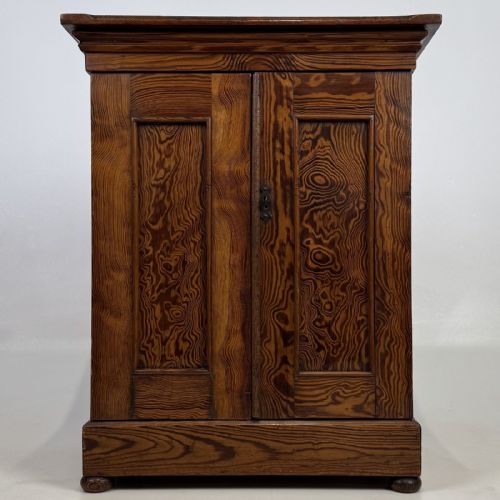
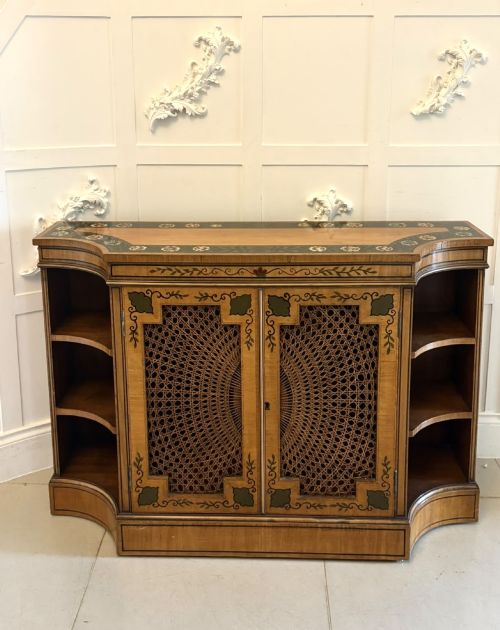
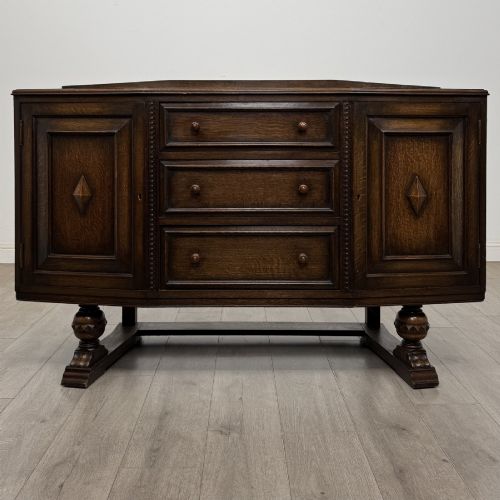
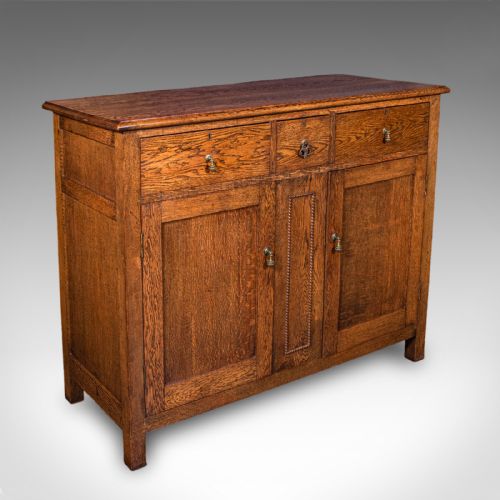
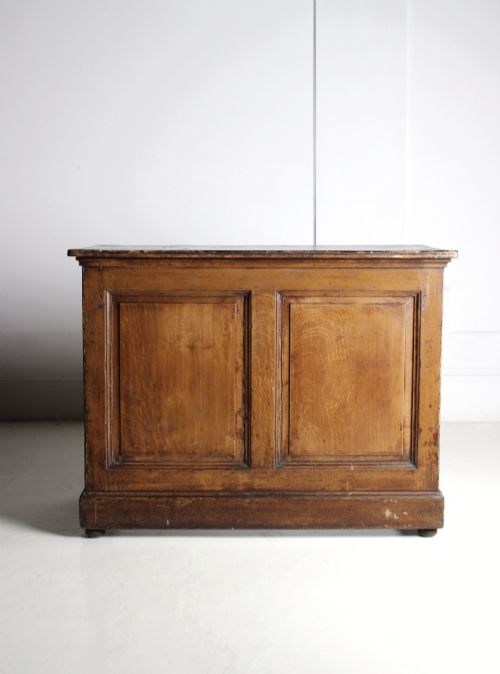
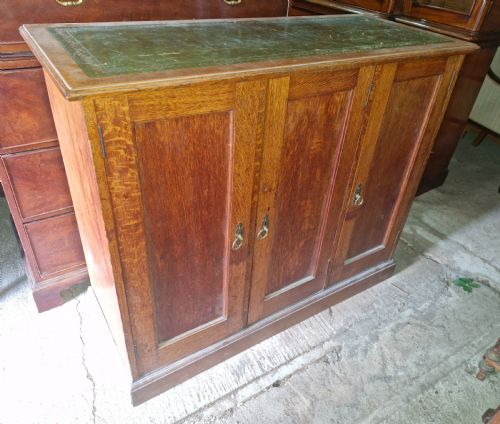
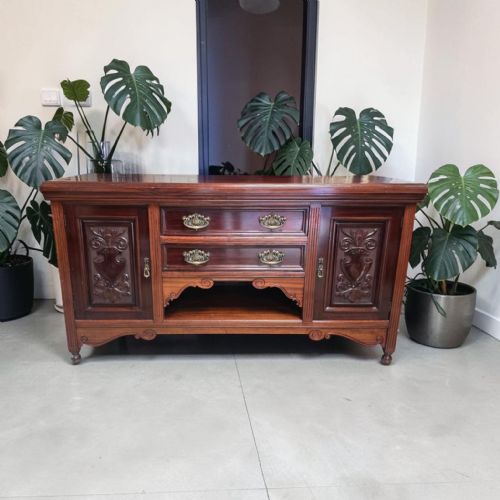
An edwardian panelled sideboard brings substantial storage to a dining space, combining cupboards, drawers and sometimes an open pot board base. These items take many forms on this page, appearing alongside dressers, cabinets and buffet variants from related periods.
Most examples found here date from the Edwardian era and the early twentieth century, though older Victorian and seventeenth century pieces also appear. Timbers range from golden oak and tiger oak to mahogany, satinwood and painted pine.
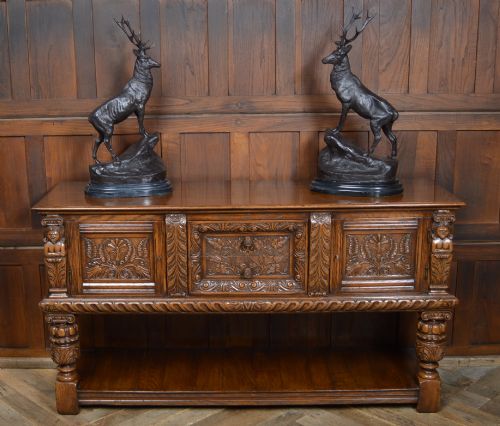
Stylistic influences vary widely across the selection, moving between plain English country utility, Jacobean Revival geometric panels, and the linear design of the Arts and Crafts movement. Buyers select these large storage units to anchor a dining room with period character and practical surface space.
Materials and construction methods
Solid timbers form the primary structure of these items, with oak and mahogany dominating the selection alongside satinwood, walnut and pine. Carpenters utilised panels, turned legs, raised galleries and geometric mouldings to articulate the timber surfaces.
Decorative detailing relies on carved motifs, leaded glass doors, painted panels and majolica inserts rather than applied veneers. Hardware typically incorporates brass handles and copper fittings to complement the dark or golden wood tones.
Edwardian Panelled Sideboard Retail Price Guide 2026
Typical asking prices for edwardian panelled sideboard among the pieces listed under this phrase on Sellingantiques today, from the lower quarter to the upper quarter. They describe what is for sale here now, not the wider market.
Several cabinets on this page feature colourful majolica ceramic panels, proving that nineteenth century dining rooms loved a splash of pottery.
Markers of quality and craftsmanship
Quality rests in the selection of timber and the precision of the joinery used in the panel construction and drawer assembly. Heavier hardwood carcasses with solid oak backs and drawer linings distinguish finer workshops from simpler utility pieces.
M. D. Miller & Sons·Shapland & Petter·Maple & Co
The Edwardian Panelled Sideboard Glossary
- Pot board
- An open lower shelf beneath a sideboard or dresser base used originally for storing pots and serving dishes. This feature appears frequently on country house and regional oak pieces.
- Jacobean Revival
- A nineteenth and early twentieth century style emulating seventeenth century English furniture. It is characterised by heavy geometric panels, bold turnings and dark oak.
- Majolica
- A type of earthenware decorated with colourful opaque glazes. These glazed ceramic panels occasionally accent the doors or backs of cabinets and sideboards.
- Demi-lune
- A half moon shape used for the footprint of commodes and side cabinets. This curved form allows the furniture to sit flush against a wall while offering internal storage.
- Raised gallery
- A low decorative upstand attached to the rear top surface of a sideboard or dresser base. It prevents items from sliding off the back edge.
Edwardian Panelled Sideboard: Frequently Asked Questions
What is an edwardian panelled sideboard used for?
These pieces serve as substantial storage units in dining rooms and living spaces, providing enclosed cupboards for tableware and wide drawers for cutlery and linens.
The flat top surface additionally functions as a serving area during meals or a display space for decorative objects and lamps.
How do I care for antique oak furniture?
Oak furniture benefits from a stable indoor environment away from direct heat sources and strong sunlight, which can dry out the timber.
Regular dusting with a dry cloth and occasional application of appropriate beeswax helps maintain the natural lustre of the wood finish.
Are these sideboards made of solid wood?
The majority of pieces recorded here utilise solid timbers such as oak, mahogany, walnut and satinwood for their main construction and panel work.
Carpenters built these items to withstand heavy daily use, employing thick boards for tabletops, sides and structural framing.
How do I distinguish Edwardian furniture from Victorian pieces?
Edwardian furniture generally exhibits lighter construction, brighter golden oak tones, and simpler decorative restraint compared to earlier Victorian counterparts.
Victorian items often feature darker finishes, heavier carved elements, and more elaborate ornamentation reflecting nineteenth century revival tastes.