


English Oak Mule Chest
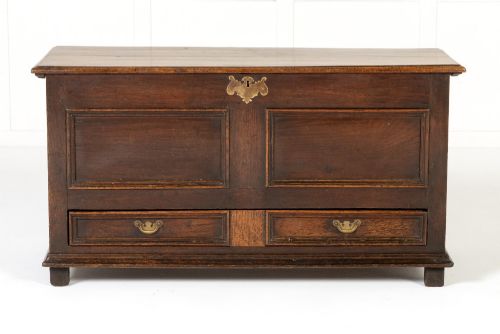
An english oak mule chest bridges the simple security of an old coffer with the practical addition of base drawers.
English Oak Mule Chest
An english oak mule chest combines a traditional lidded storage compartment with one or more lower drawers, creating a hybrid form that appeared in domestic interiors from the seventeenth century onward.
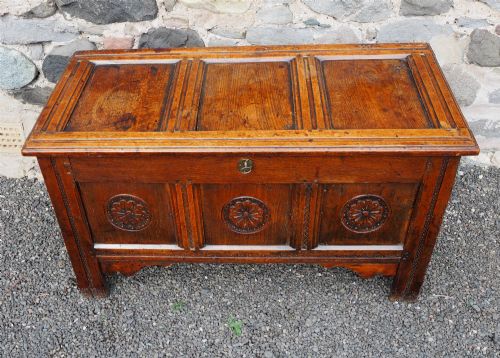
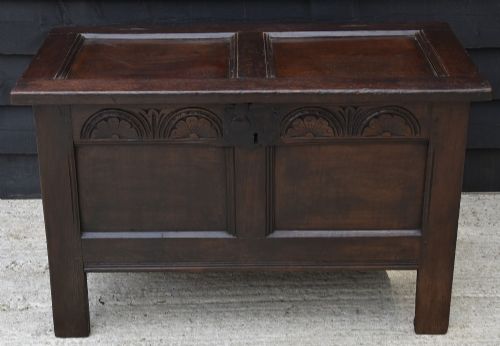
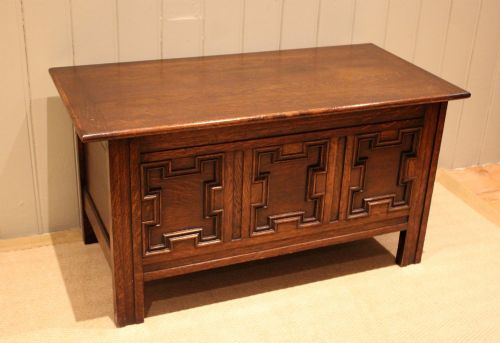
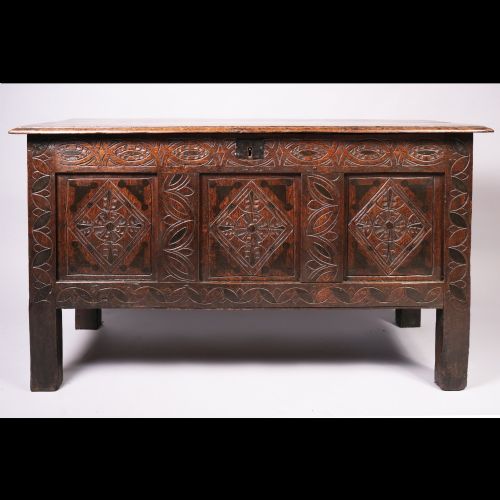
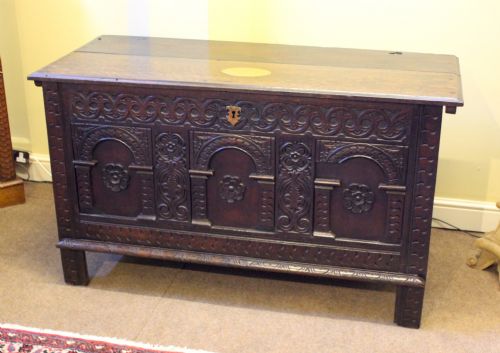
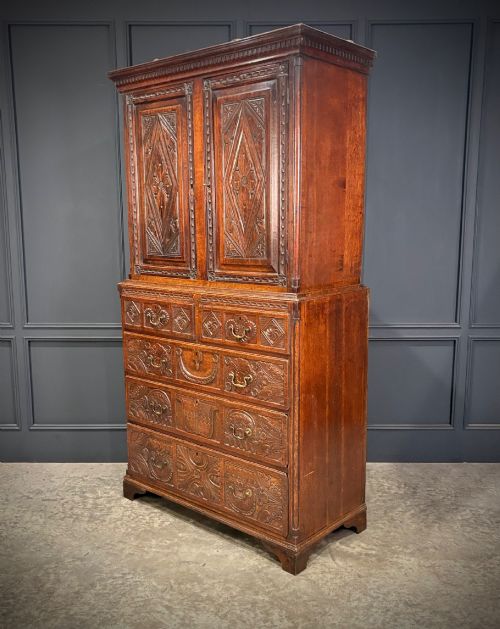
The pieces seen here range from seventeenth-century examples bearing geometric panels and split baluster appliques to later Georgian versions with clean lines and multiple drawers.
Makers fashioned these storage trunks for domestic utility, using sturdy timbers to hold blankets, linen, and household goods through generations of daily use.
Materials and construction methods
Carpenters relied principally on native oak, selecting boards for strength and figuring before joining them using traditional frame-and-panel construction to accommodate the natural expansion and contraction of the wood.
Iron and brass hardware, including hinges, lock plates, and drawer pulls, provided essential structural reinforcement while securing the heavy lids and functioning drawers.
Carving, geometric mouldings, and inlaid details were frequently applied to the front panels, demonstrating the decorative ambition of early English cabinet makers.
Some seventeenth-century chests bear initials carved by long-gone newlyweds who clearly wanted their storage furniture to outlive them.
Distinctions in construction and age
The integrity of the original timber and the depth of hand-carved detail set finer examples apart from plainer utility pieces or later reproductions.
Original brass or iron fittings and the survival of primary drawer bottoms indicate the level of care a chest received over centuries of domestic life.
Proportions dictate visual balance, with smaller proportions and crisp panel moulding commanding particular attention from collectors.
The English Oak Mule Chest Glossary
- Mule chest
- A storage chest fitted with one or more drawers beneath the main compartment. This form developed as makers sought easier access to stored textiles without opening the top lid.
- Coffer
- A heavy wooden box used for storage, typically featuring a hinged lid. They served as strongboxes and seating before dedicated wardrobes became common.
- Panel
- A flat piece of wood fitted within a surrounding frame. This construction method prevents the timber from warping as humidity changes.
- Geometric moulding
- Raised wooden strips arranged in repeating patterns on drawer fronts or panels. This technique added texture and shadow to flat surfaces.
English Oak Mule Chest: Frequently Asked Questions
How were mule chests used originally?
Households used these chests primarily to store textiles, linens, and garments that needed protection from dust and pests. The addition of drawers meant owners could reach frequently used items without disturbing heavy items piled on top.
Many examples also doubled as seating benches beside the fire or along bedroom walls when rooms were cramped and multifunctional.
How do I date an antique oak chest?
Dating relies on observing construction techniques, wood patination, and stylistic markers such as carved motifs, panel counts, and hardware types. Seventeenth-century examples often feature split balusters and geometric panels, while Georgian pieces tend to have smoother surfaces and multiple drawers.
Examining the backboards, interior timber colour, and tool marks helps separate genuine period construction from later alterations or reproductions.
How do I live with an antique chest?
These robust oak pieces adapt easily to modern living as coffee tables, window seats, or hallway storage for shoes and blankets. Their sturdy timber construction makes them remarkably durable for daily domestic use.
Keep them away from direct heat sources and sudden humidity shifts to protect the historical wood and preserve the natural wax finish over time.