
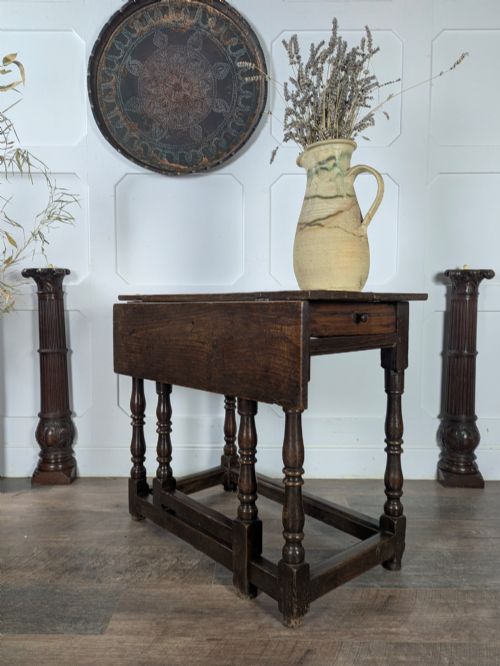
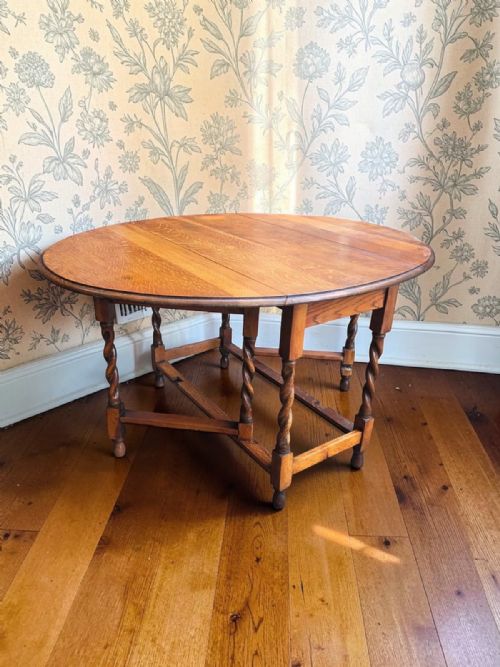
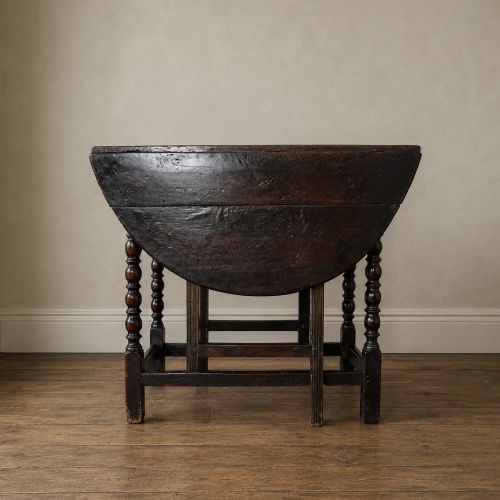
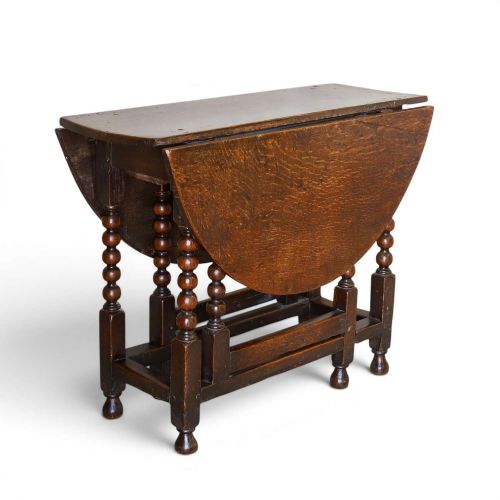
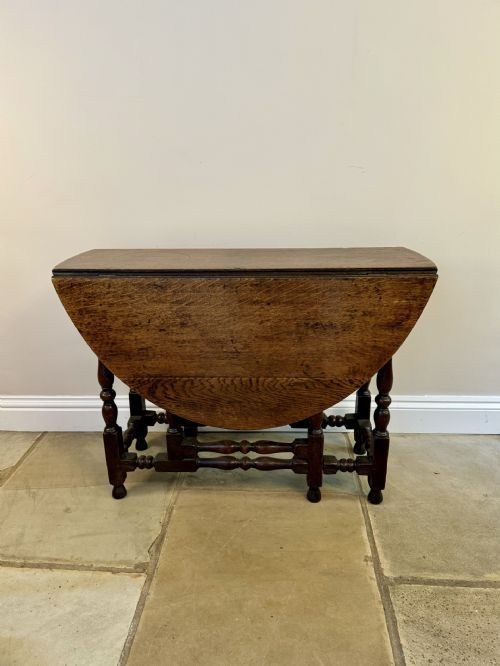
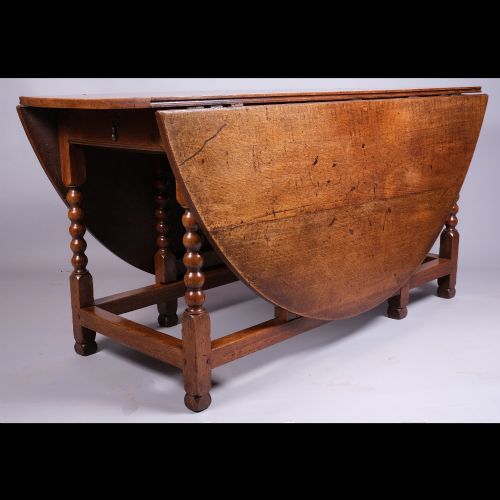
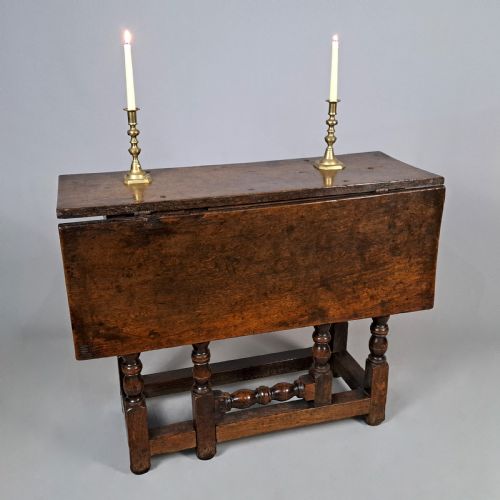


English Oak Gateleg Table
An english oak gateleg table provides folding timber leaves supported by swing legs, offering surface space that expands for dining.
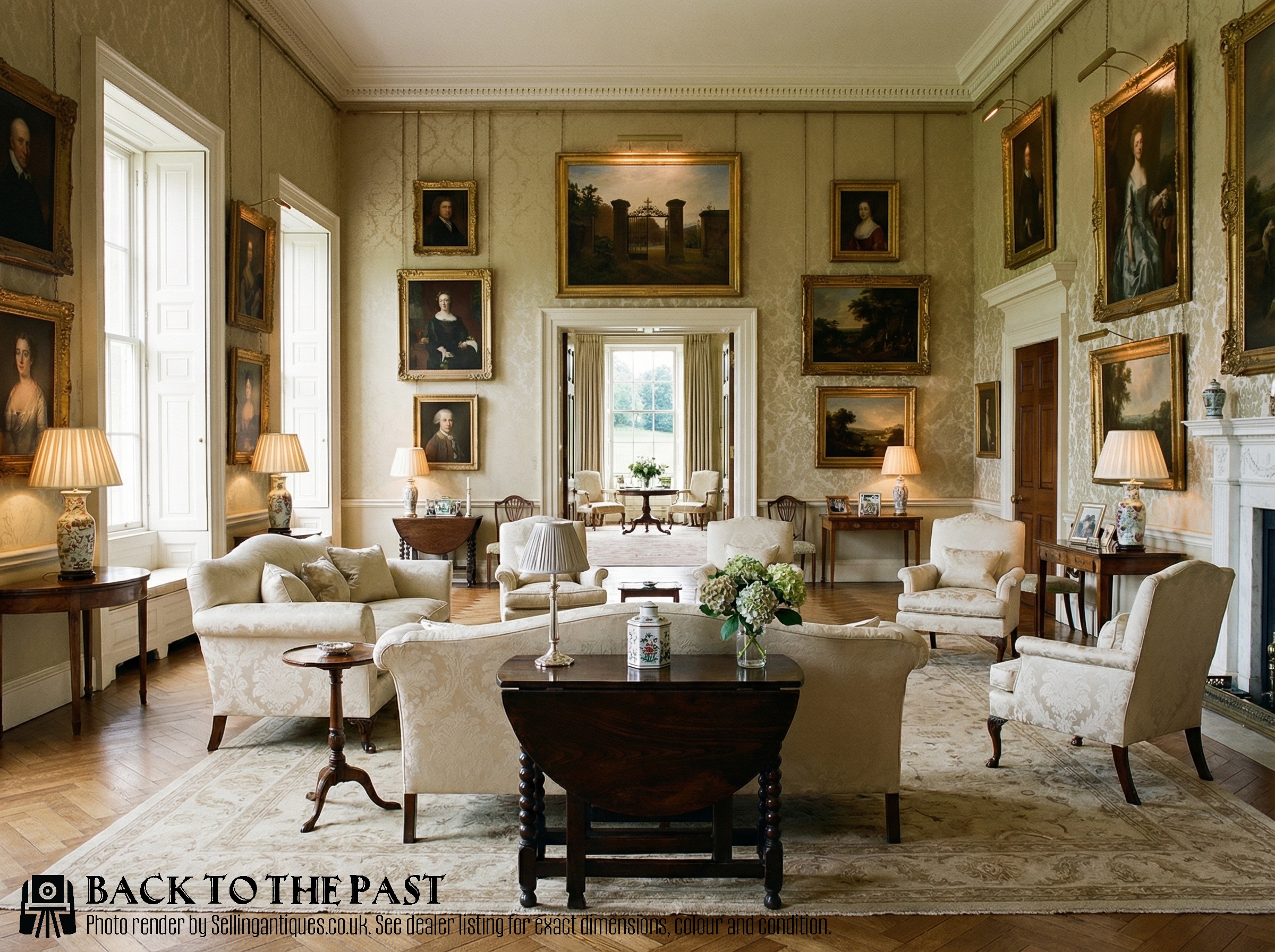
English Oak Gateleg Table
An english oak gateleg table brings hinged leaves together with pivoting legs that swing outwards to support the extended top. Buyers encounter forms ranging from compact side pieces to large dining surfaces intended for daily communal use.
The material record spans the seventeenth century, the eighteenth century, and later revivals from the twentieth century. These variations include small domestic formats alongside substantial multi-seat dining furniture.
Surviving examples display oval or rectangular tops above robust underframes. The design prioritises flexibility by folding flat against a wall when floor space is needed.
How they were made
Joinery relies upon solid timber joined with pegged mortise and tenon construction to sustain the movement of the folding leaves. Turners shaped uprights on a lathe into barley twist, bobbin, or baluster post profiles.
Hardware consists of iron hinges and occasional brass fittings securing the pivoting gate structures. Surfaces finished naturally over centuries, developing deep patination on the plain or solid timber.
English Oak Gateleg Table Retail Price Guide 2026
Typical asking prices for english oak gateleg table among the pieces listed under this phrase on Sellingantiques today, from the lower quarter to the upper quarter. They describe what is for sale here now, not the wider market.
Listings feature solid oak construction paired with iron and brass hardware across seventeenth, eighteenth, and twentieth-century periods.
What varies in quality
Proportion and structural harmony separate simpler provincial items from pieces with refined turnings and balanced leaf overhangs. The integrity of the pivoting gate action and the retention of original timber surfaces determine the standard.
Early seventeenth and eighteenth-century examples exhibit authentic patination and hand-tooled joinery details. Later twentieth-century revivals utilise similar oak timber but lack the depth of surface history found in earlier periods.
The English Oak Gateleg Table Glossary
- Gateleg table
- A drop-leaf table where hinged legs swing out like a gate to support the raised leaves. This mechanism allows the surface area to double when opened.
- Barley twist
- A spiral turning resembling a twisted rope, carved into wooden furniture legs and supports. This decorative technique appears frequently on seventeenth-century and revival pieces.
- Bobbin turned
- A series of rounded wooden spheres carved along the length of a leg or stretcher. The resulting profile resembles a string of beads or bobbins.
- Patina
- The surface sheen and colour developed by aged timber through handling, light, and waxing over many decades. Original surfaces show subtle variations in tone.
- Drop leaf
- A hinged table flap that hangs down vertically when unsupported. Raising the leaf creates a continuous extended surface.
English Oak Gateleg Table: Frequently Asked Questions
How do I use a gateleg table daily?
Keep one or both leaves dropped against the base for everyday placement against a wall as a side surface. Swing the pivoting gate legs outward to lock the leaves in place whenever extra dining space is required.
Fold the leaves down again to reclaim floor area once meals finish. This adaptability suits smaller rooms that require multi-functional furniture.
What is the difference between 17th and 20th century tables?
Seventeenth-century examples display period joinery methods, hand-carved turnings, and historical patina accumulated through centuries of domestic use. Twentieth-century revival pieces replicate these traditional forms utilising mature oak and mechanical woodworking techniques.
Early pieces show natural wear patterns on the touchpoints and hinges. Later interpretations offer similar rustic aesthetics with sturdier structural consistency.
How do I identify barley twist legs?
Barley twist legs feature a continuous spiral carved around a central wooden cylinder, resembling a twisted ribbon or rope. Turners shaped these profiles on a lathe during the seventeenth century and again during Edwardian revival periods.
This decorative turning adds visual movement to the underframe while supporting the weight of the hinged leaves.
Will an oak gateleg table seat six people?
Larger formats from the seventeenth and eighteenth centuries provide enough clearance and surface area to accommodate six diners comfortably when fully extended. Oval tops distribute leg placement to allow seating around the entire perimeter without obstruction.
Compact versions suit four seats or function primarily as side and coffee tables. Check the extended length and underframe clearance before planning seating arrangements.