




English Oak Dresser Base
An English oak dresser base brings grounded utility and centuries of honest craftsmanship straight into a modern kitchen or dining room.
English Oak Dresser Base
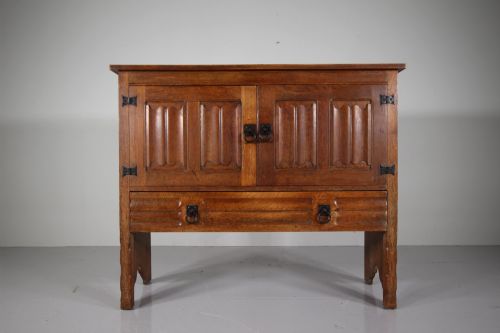
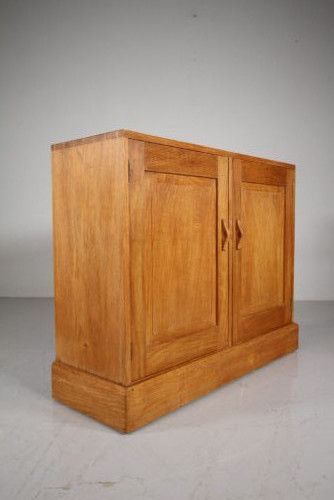
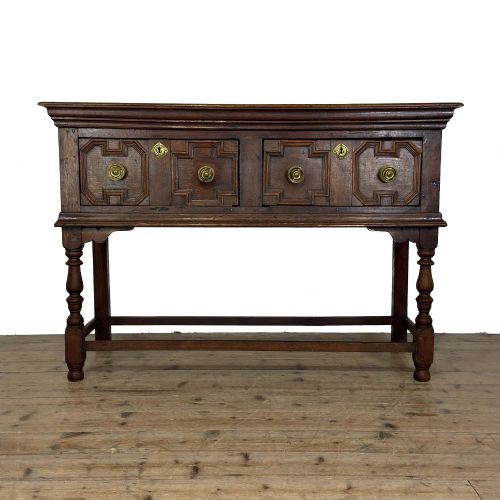
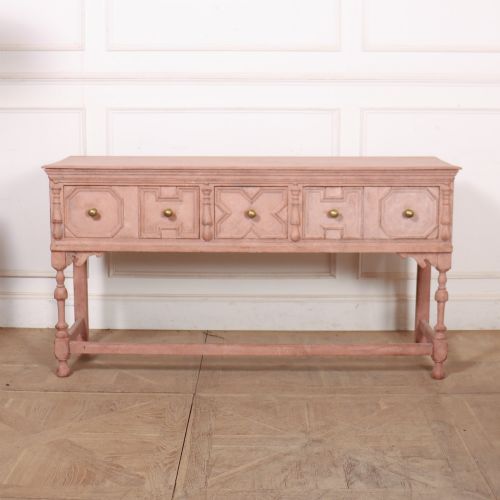
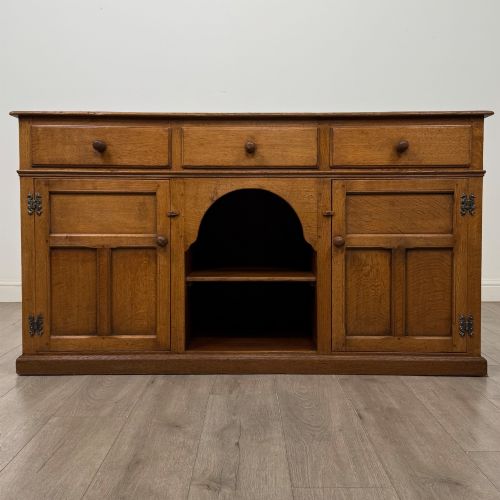
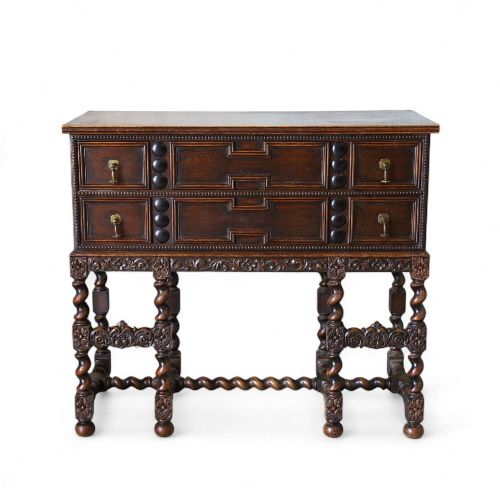
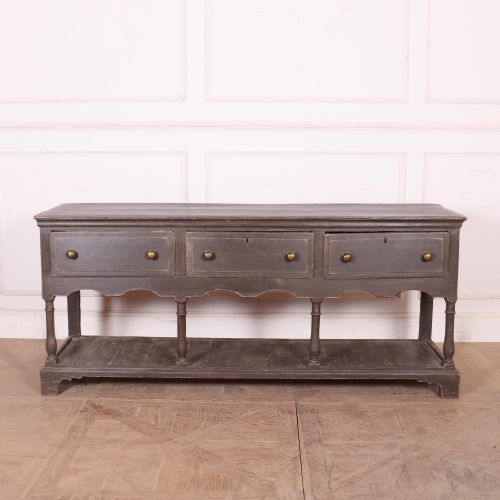
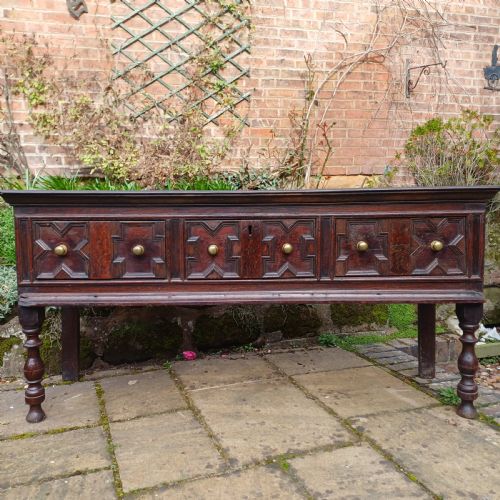
An English oak dresser base is a substantial utilitarian furnishing designed originally for domestic service and storage in the country house or farmhouse. The pieces found here span multiple centuries, stretching from the robust joined constructions of the 17th century through the refined proportions of the Georgian era and into later revival styles.
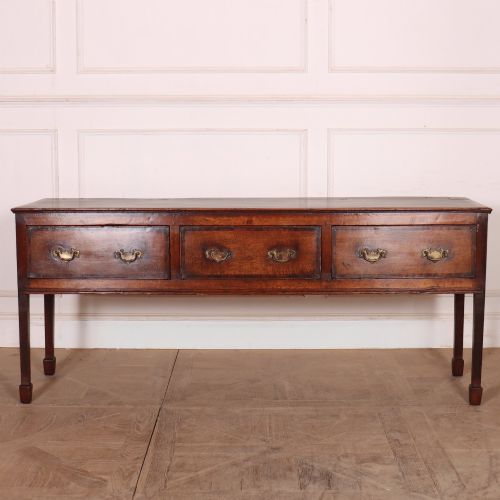
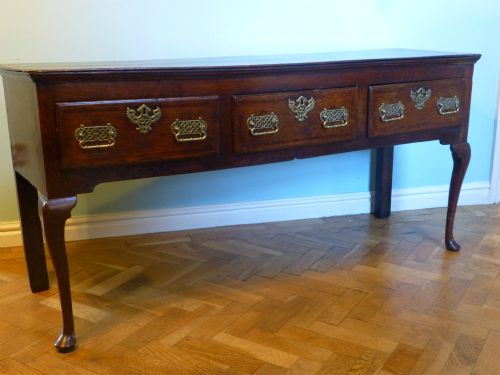
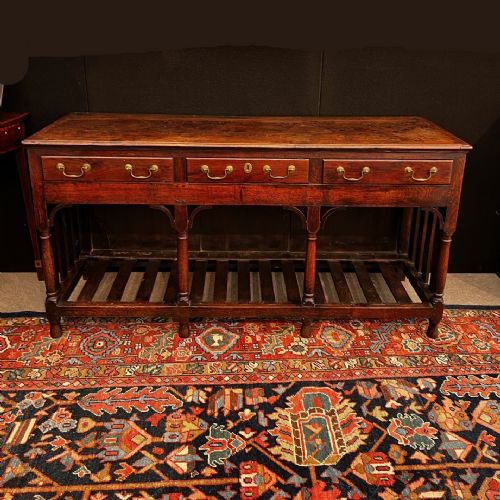
A buyer examining this selection will most frequently encounter 18th-century examples featuring low, horizontal profiles fitted with rows of working drawers and occasionally lower potboards. These utilitarian lower sections served as the primary work surfaces and storage hubs for domestic tableware long before fitted kitchens existed.
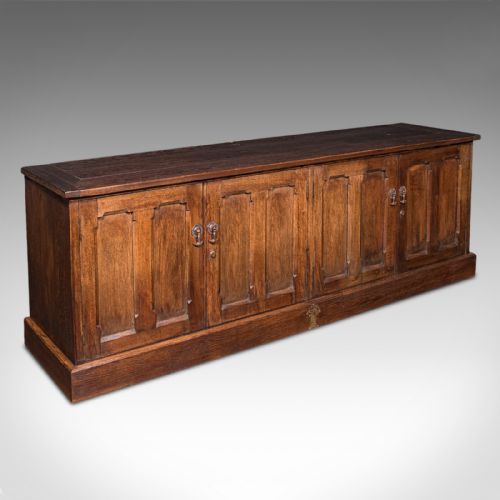
Alongside standard 18th-century forms, the inventory includes 19th-century interpretations and early 20th-century revival works that emulate earlier vernacular traditions. Whether displaying cabriole legs from the early 18th century or later barley-twist supports, these pieces retain the heavy timber framework characteristic of English cabinet-making.
Evaluating Quality
Quality in an English oak dresser base rests upon the integrity of its timber and the retention of its original structural components. Pieces retaining their original potboards, timber backs, and unreplaced drawer bottoms command greater appreciation among collectors.
The sophistication of the carving and the harmony of the proportions also distinguish finer examples from standard vernacular work. Subtle details such as crisp thumbnail mouldings around drawer edges or well-turned legs indicate higher workshop competence during the manufacturing period.
Some sturdy 18th-century survivors doubling as window seats prove that historic carpenters built furniture for multi-tasking long before modern apartments demanded it.
The English Oak Dresser Base Glossary
- Potboard
- An open lower shelf built into the base of a dresser, originally intended for storing heavy pots and ceramic serving platters. This structural shelf sits just above the floor, supported by the lower stile stretchers.
- Dovetail
- A traditional interlocking joint used to secure drawer sides to drawer fronts, prized for its tensile strength. Hand-cut dovetails show slight irregularities that help date the assembly to earlier periods.
- Stile
- A vertical framing member in panelled construction or leg supports that bears the primary vertical load of the furniture piece. Stiles run continuously from the floor to the tabletop framework in traditional joined work.
- Georgian
- A descriptive term for furniture produced during the reigns of the first four Georges, marked by classical symmetry and refined proportions. Pieces from this era often feature cleaner lines and polished brass hardware.
- Patina
- The deep, lustrous surface sheen developed over centuries through exposure to light, air, natural oils, and regular polishing. A rich patina distinguishes authentic antique timber from recently finished surfaces.
English Oak Dresser Base: Frequently Asked Questions
What is an English oak dresser base?
An English oak dresser base is a heavy wooden low sideboard featuring drawers and sometimes an open lower shelf. These pieces were originally built for country houses and farmhouses to store kitchenware and serve food.
Today, they function well as sideboards in dining rooms or as bases for modern kitchen prep surfaces. Their sturdy timber construction allows them to endure heavy everyday use.
How do I date an antique dresser base?
Dating relies on examining the joinery, timber selection, hardware, and overall style of the piece. Hand-cut dovetails, pegged joints, and characteristic mouldings help place a dresser within a specific century.
Comparing the construction methods to known examples from the 17th, 18th, or 19th centuries provides a reliable timeframe. Secondary woods used inside drawers also offer clues regarding the period of manufacture.
Can I use a dresser base in a modern kitchen?
These pieces integrate smoothly into contemporary kitchens as storage credenzas or serving islands. Their deep drawers hold heavy tableware, cookware, and linens securely.
Maintaining proper humidity levels in the kitchen protects the historic oak timber from excessive drying or warping. Regular waxing keeps the surface protected against minor spills.
What is the difference between a dresser and a dresser base?
A complete dresser traditionally includes both a lower storage base and an upper plate rack with open shelves for displaying ceramics. A dresser base consists solely of the lower table or cabinet portion with drawers.
Many surviving pieces are found today as bases alone, either because the upper rack was lost over time or because they were built exclusively as low sideboards.