


English Mahogany Bracket Clock
An english mahogany bracket clock brings mechanical precision and rich cabinet-making together in a compact form designed to sit proudly on a table or bracket.
English Mahogany Bracket Clock
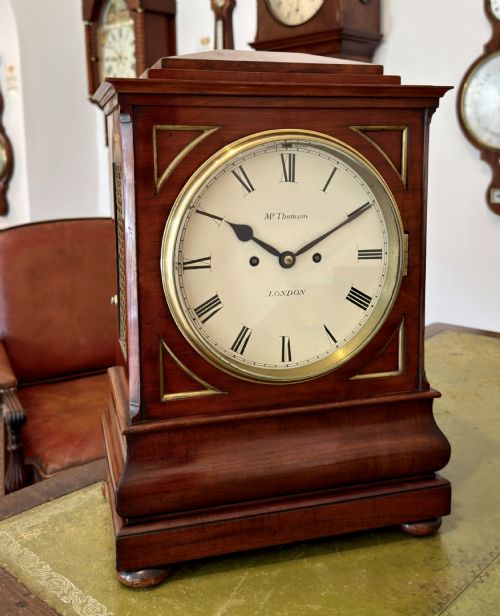
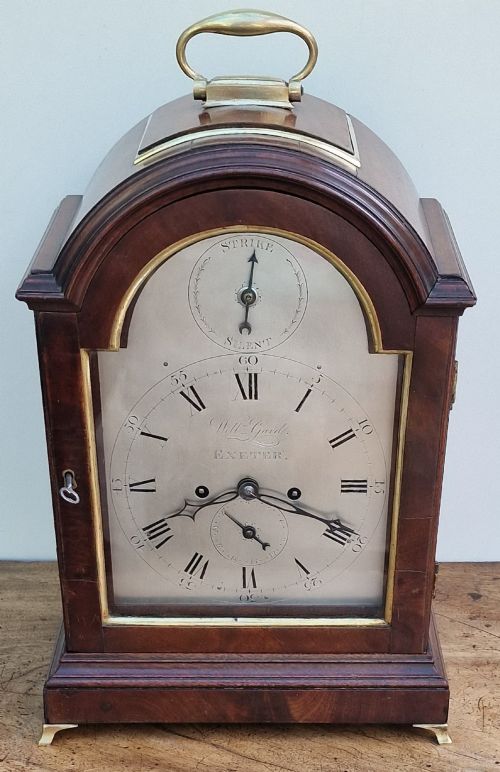
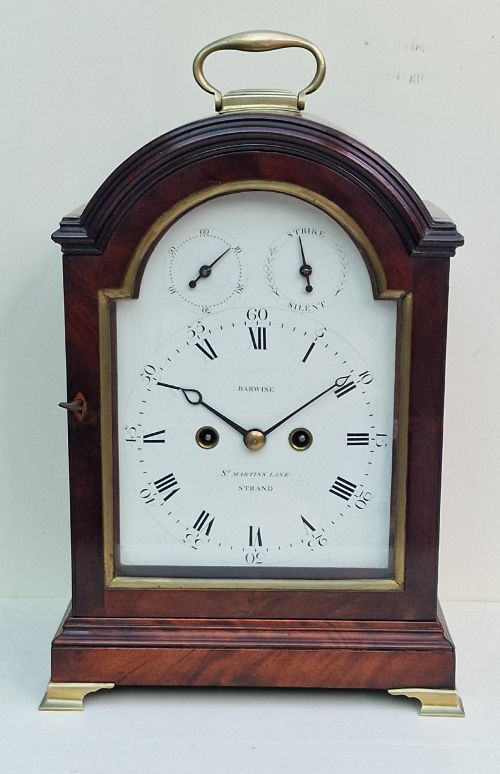
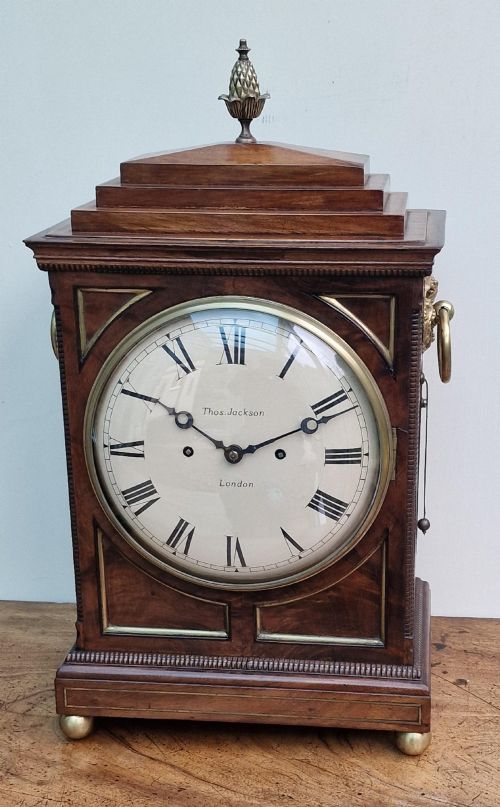
An english mahogany bracket clock combines functional timekeeping with refined timber cabinetry, originating primarily from the Georgian, Regency, and Victorian periods. These pieces span standard table clocks, library clocks, and mantel formats featuring architectural or curved wooden cases.
The versions most commonly met on this page date from the late eighteenth century through the nineteenth century, often driven by fusee movements housed within rich mahogany housings. Makers ranged from provincial watchmakers to prominent London firms, each producing substantial table timepieces intended for domestic prominence.
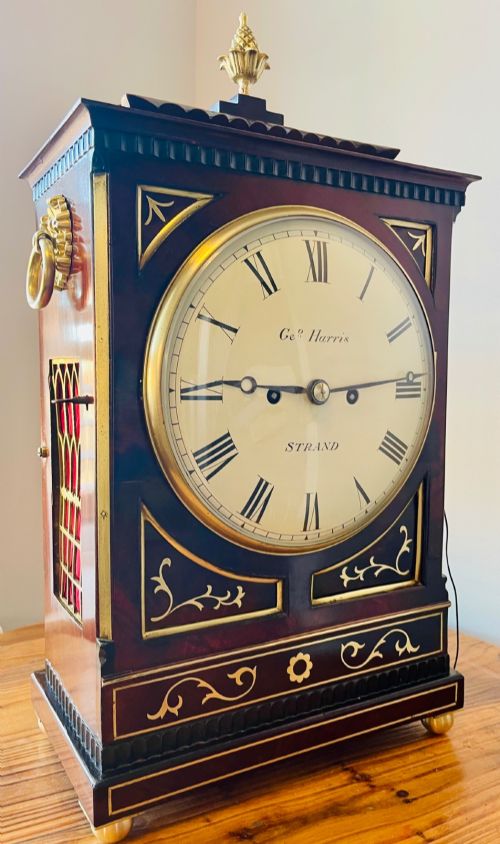
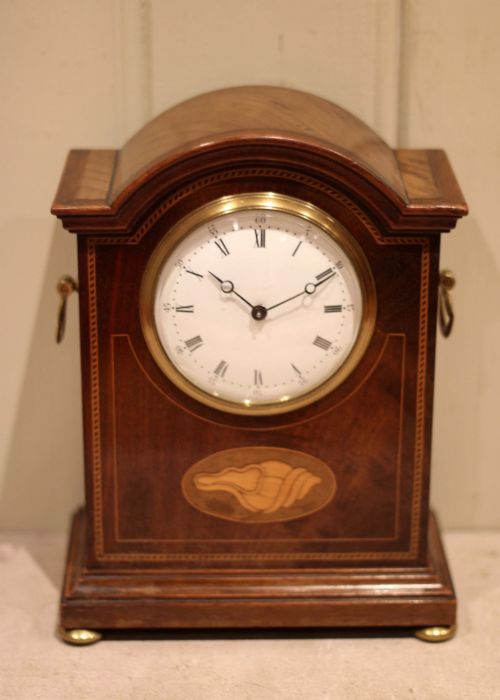
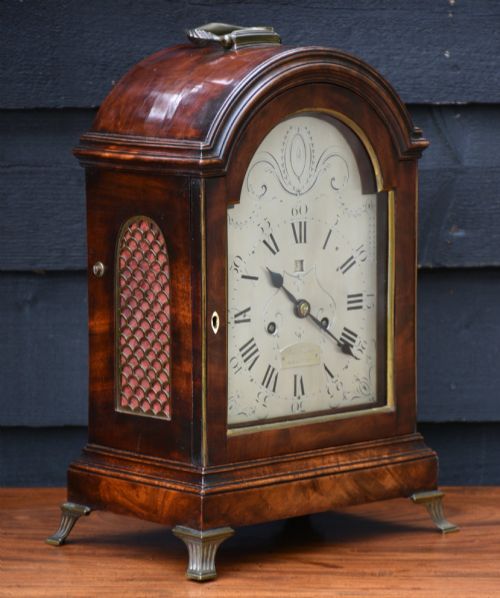
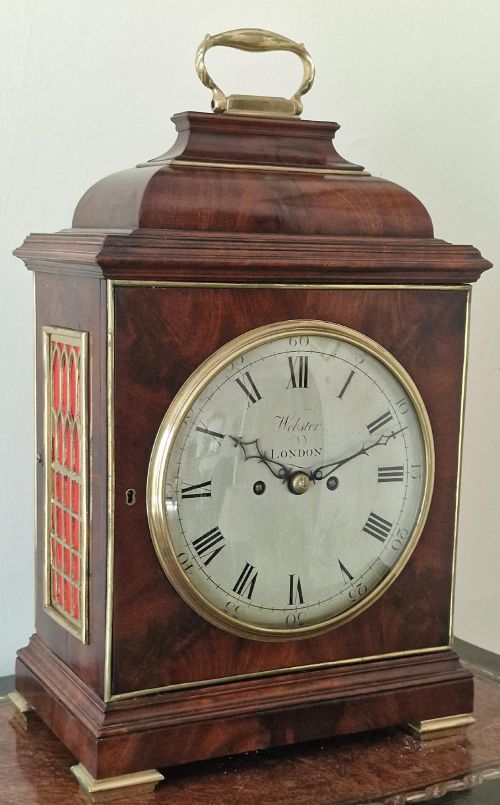
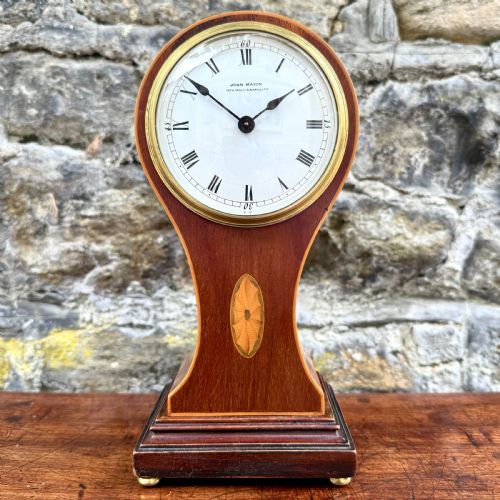
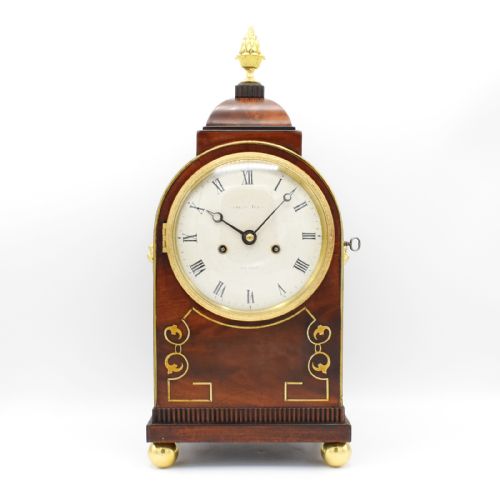
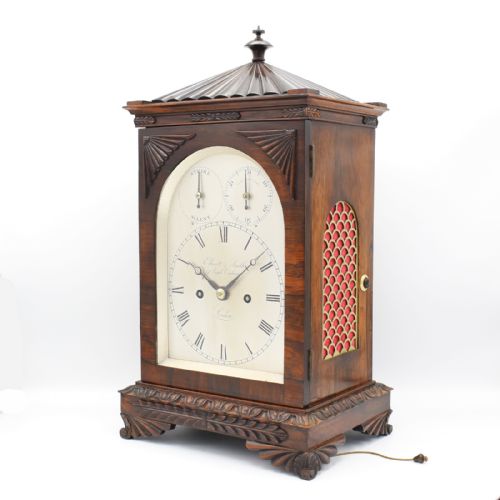
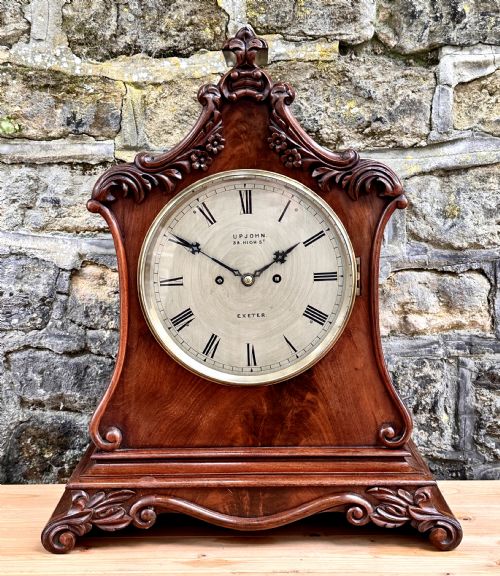
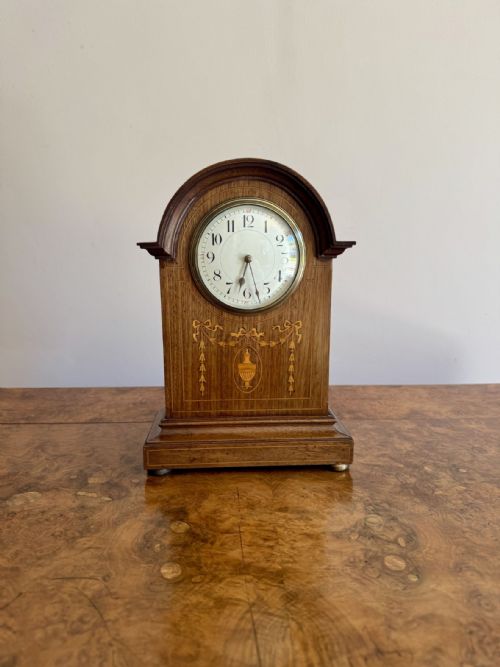
Variations in architectural styling include pad tops, balloon shapes, lancet arches, and pagoda crowns, sometimes accented with brass inlay or ebony details. Buyers seek these objects for their mechanical heritage as much as their dense, figured mahogany timber.
Materials and Construction
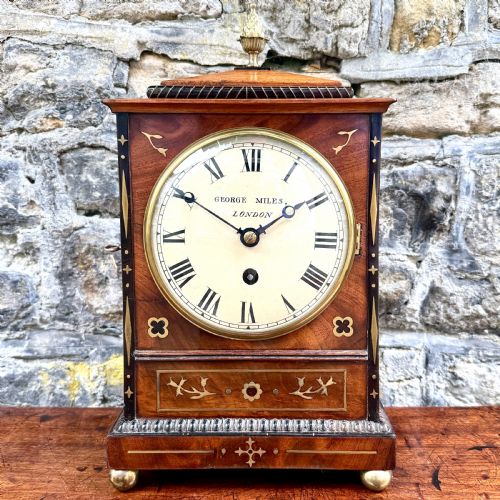
Cases rely on solid mahogany and flame mahogany veneers, frequently enriched with contrasting boxwood or satinwood inlay, ebony stringing, and cast brass feet, bezels, and handle mounts. The selection of dense timber provided a stable housing for intricate brass gear trains and delicate pendulum suspensions.
Movements are predominantly driven by fusee mechanisms, utilising a conical pulley and chain or cord to maintain even power as the mainspring unwinds. Dials feature painted enamel or brass chapters protected by curved glass panels, while sound emanates through silk-backed sound frets on the side panels.
Listings on this page span the Georgian, Regency, and Victorian periods, constructed from solid mahogany with brass, enamel, and glass elements.
Judging Quality and Craftsmanship
The refinement of the cabinetwork dictates much of the value, distinguishing simple provincial cases from elaborate London examples with intricate brass marquetry, carved pagoda tops, or finely figured flame mahogany veneers. Higher tier pieces exhibit integrated bracket feet and heavy cast brass mounts that fit flush against the timber housing.
Internal mechanical complexity also separates standard timepieces from striking or musical movements, such as those playing multiple chimes via complex gear trains. Signed backplates and maker signatures engraved onto the brass dials denote workshops of superior reputation.
Thomson of London·William Gard·Webster·Barwise·Charles Pratt·Ellicott and Smith·George Orpwood·Bush of London·L. Vick·Spurge Dunmow·Mappin and Webb·Francis Perigal·Thomas Moss·Dent·Cording of London·Piggin Norwich·Geo. Carter·Barrett·Paul Philip Barraud·Thomas Connold·Hyde of Salisbury·Grant·Warwick·Elliott
The English Mahogany Bracket Clock Glossary
- Fusee
- A conical pulley used in mechanical clocks to equalise the torque of the mainspring as it winds down. This device ensures consistent power delivery to the escapement for accurate timekeeping.
- Bracket Clock
- A portable mechanical clock originally designed to sit upon a matching wall bracket or table. Many retain handles on top for transport between rooms.
- Verge Escapement
- An early type of escapement mechanism controlling the release of the gear train. It relies on a crown wheel and a vertical rod with pallets.
- Lancet Top
- A pointed, gothic-arch shape utilised on the upper wooden case of certain nineteenth-century clocks. This silhouette echoes ecclesiastical architecture popular during the period.
- Sound Fret
- An openwork carved or fabric-backed grille set into the sides of the case. It allows the bell or chime to project audibly while keeping dust out.
English Mahogany Bracket Clock: Frequently Asked Questions
What is a fusee movement?
A fusee movement uses a conical pulley connected to the mainspring via a chain or cord, designed to equalise power output as the spring relaxes. This mechanical cleverness helps the clock maintain steady accuracy throughout its running cycle.
Most high-quality British table clocks from the Georgian and Victorian eras employ this system rather than standard barrel springs. Identifying a fusee drive involves looking through the back door for the distinctive spiraled pulley beside the brass plates.
How do I wind my bracket clock?
Winding requires inserting a matching winding key into the small arbours located on the enamel or brass dial face. Care must be taken not to overwind the mechanism, stopping as soon as resistance is felt against the spring.
Clocks featuring striking or chiming trains will possess multiple winding holes, requiring attention to each separate gear train. Keeping the key in a consistent place ensures the movement is maintained at regular intervals without force.
Where should I place a bracket clock?
These clocks are built for stable horizontal surfaces such as sideboards, mantelpieces, or dedicated wall brackets where vibrations are minimal. Placement away from direct sunlight and damp walls protects both the mahogany veneer and the internal brass components.
Because mechanical pendulums rely on a level surface to beat evenly, adjusting the feet ensures the tick remains balanced. Positioning the piece where the chime or strike can be heard enhances its daily domestic utility.
How do I date a mahogany clock?
Dating relies on examining case styles, dial materials, and maker signatures recorded within historical directories. Georgian examples often feature break-arch brass dials, while Regency and Victorian pieces frequently showcase painted white enamel dials and flame mahogany veneers.
Inscribed signatures on the backplate or dial provide a direct link to the active years of the maker or firm. Stylistic clues like Egyptian or Gothic revival motifs further narrow down the decade of production.