


English Lustre Porcelain
English lustre porcelain brings metallic sheen and bright colour to Victorian and Edwardian bowls, jugs and vases.
English Lustre Porcelain
English lustre porcelain pieces on this page span the nineteenth and early twentieth centuries, capturing Victorian styles alongside Edwardian and Art Deco designs. Buyers searching for english lustre porcelain encounter decorative bowls, vases, jugs, teapots, and ceramic figurines.
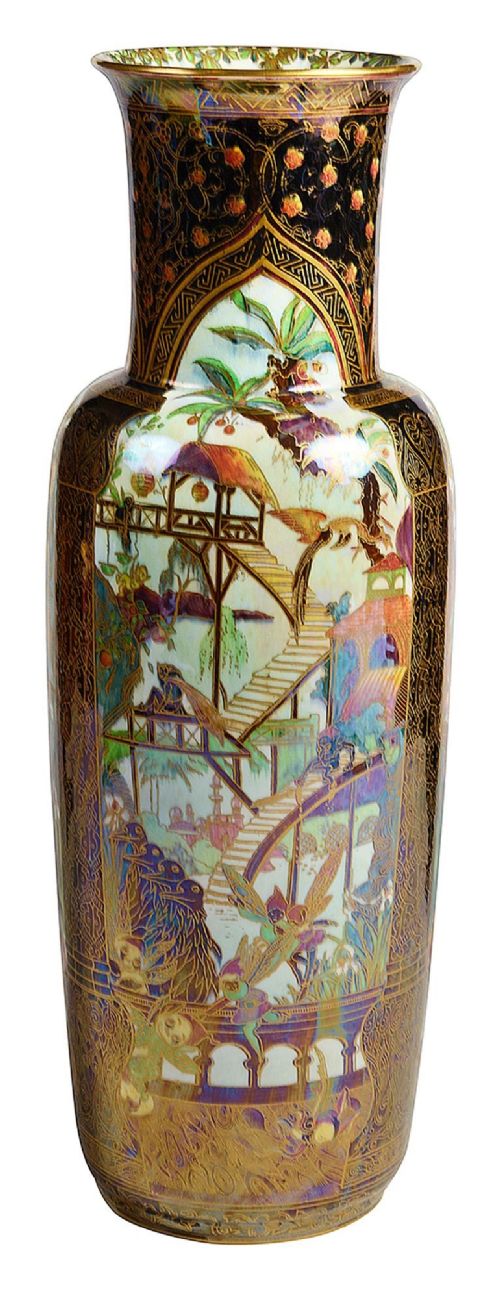
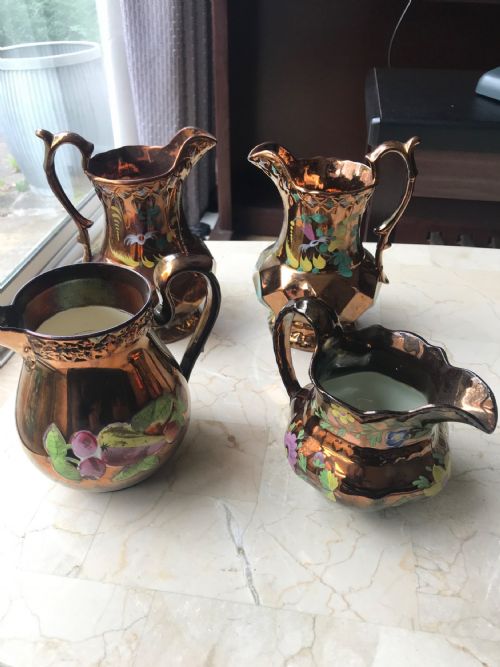
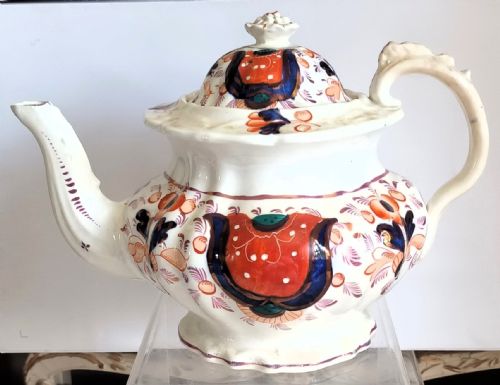
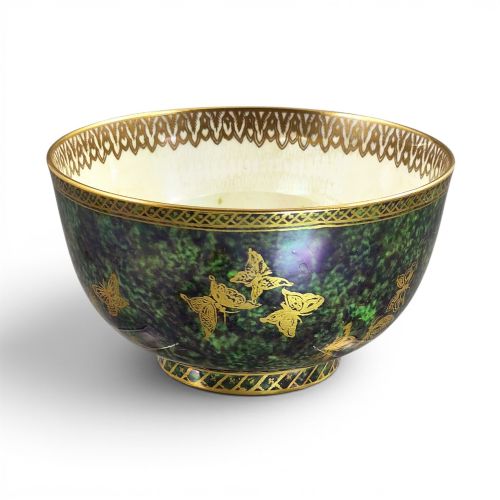
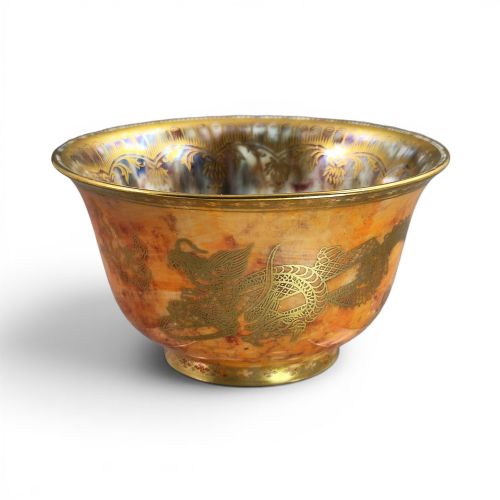
The selection ranges from Georgian Gaudy Welsh teapots and Victorian Staffordshire copper jugs to Edwardian Fairyland lustre bowls designed by Daisy Makeig-Jones. Smaller items such as miniature bowls and melba cups sit alongside larger octagonal bowls and vases.
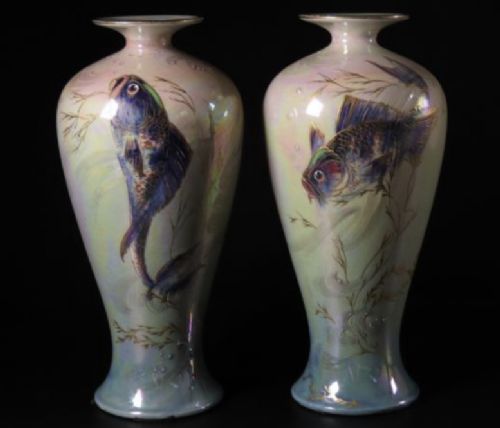
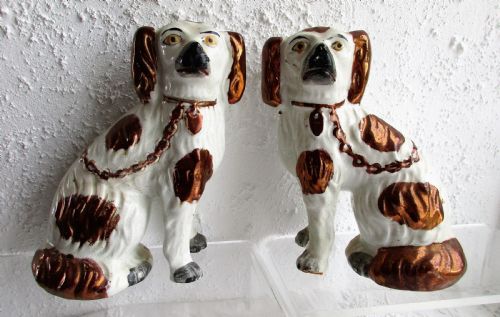
Staffordshire pottery comforter spaniels and hand-painted figures represent the figural side of these listings. Vases and bowls decorated with butterflies, fish, dragons, and abstract patterns dominate the ceramic forms available here.
Materials and technique
Potters combined porcelain, bone china, earthenware, and ceramic bodies with lustre glaze, enamel, and gold leaf. Hand decoration and metallic glaze applications created the characteristic iridescent finishes seen across these objects.
Specialised firing techniques allowed metallic oxides to bond with the glaze, producing the copper, gold, and multi-coloured reflective surfaces. Artisans hand-painted details such as fruit, foliage, and mythological scenes over the glazed earthenware and porcelain.
Watchful Staffordshire comforter spaniels sit ready to guard empty mantelpieces.
Quality variations
Execution of the painted and gilt decoration dictates the calibre of each piece, distinguishing simple utilitarian vessels from elaborate cabinet items. Precision in the application of lustre glazes and the complexity of patterns, such as detailed fantasy scenes or fish designs, separate standard production from masterworks.
The crispness of mould forms in Staffordshire figures and ceramic bowls affects visual impact. Intricate hand-painted motifs executed by named designers show higher artistic ambition than generic factory output.
Daisy Makeig Jones·Walter Slater·James Hodgkiss·Fielding s Crown Devon
The English Lustre Porcelain Glossary
- Lustre glaze
- A type of ceramic glaze containing metallic elements that produce an iridescent sheen upon firing. This technique creates the reflective copper, silver, and gold surfaces characteristic of these wares.
- Bone china
- A soft-paste porcelain incorporating bone ash for strength and translucency. English potteries utilised this material to achieve delicate, thin-walled vessels.
- Earthenware
- Porous pottery fired at lower temperatures than porcelain. Staffordshire makers used this common ceramic body for jugs, figures, and kitchenware.
- Enamel
- Opaque glass fused to ceramic surfaces through firing to add vibrant colour. Painters applied enamel pigments over the glaze before a final low-temperature fix.
- Octagonal bowl
- A vessel possessing eight distinct sides rather than a circular profile. Many decorative bowls utilise this geometric form to display complex exterior patterns.
English Lustre Porcelain: Frequently Asked Questions
What is English lustre porcelain?
English lustre porcelain covers ceramic pieces finished with metallic glazes that create an iridescent or reflective surface. These include bowls, jugs, and vases made during the nineteenth and early twentieth centuries.
Makers applied metallic oxides to earthenware, bone china, and porcelain bodies. The resulting objects display copper, gold, and multi-coloured sheens alongside hand-painted decoration.
How were lustre pieces decorated?
Decorators applied metallic glazes and enamel colours over a fired ceramic base before additional kiln firings. Motifs ranged from geometric patterns to detailed figures, butterflies, and imaginary landscapes.
Master designers like Daisy Makeig-Jones introduced elaborate fantasy scenes featuring fairylands, dragons, and birds. Other pieces relied on simpler hand-painted fruit or fish designs.
How do I care for lustre ceramics?
These antique ceramics require gentle cleaning with a soft, dry cloth to remove dust. Water and chemical cleaners can damage delicate metallic glazes and enamel details over time.
Display vessels away from direct sunlight to preserve the colours of the enamels and gold leaf. Handle octagonal bowls and delicate figurines carefully by their main bodies rather than protruding rims.
What periods do these pieces span?
The inventory spans the nineteenth century through the Edwardian era up to the 1920s. Georgian, Victorian, and Art Deco influences appear across the various ceramic forms.
Earlier nineteenth-century items include Staffordshire jugs and Gaudy Welsh teapots. Edwardian and later pieces feature the distinctive lustre bowls and vases of the 1910s and 1920s.