



Orange Lustre Bowl
An orange lustre bowl brings vibrant metallic sheen and rich colour to a room, catching the light in a way few other ceramics do.
Orange Lustre Bowl
When you search for an orange lustre bowl, you encounter earthenware and porcelain vessels finished with a metallic glaze that creates an iridescent surface. The pieces listed span from the nineteenth century into the twentieth century, covering Victorian, Edwardian, Art Nouveau, and Art Deco periods.
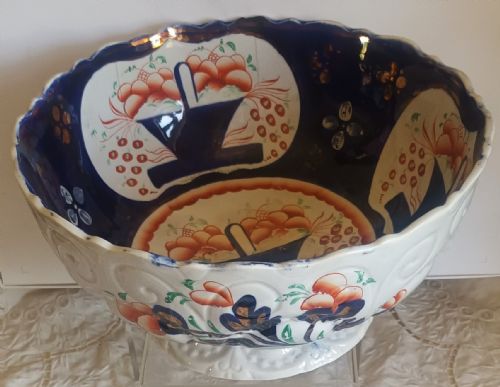
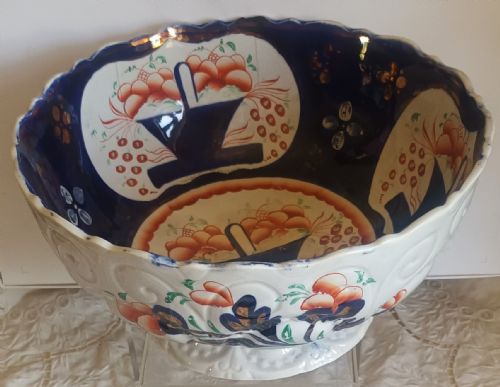
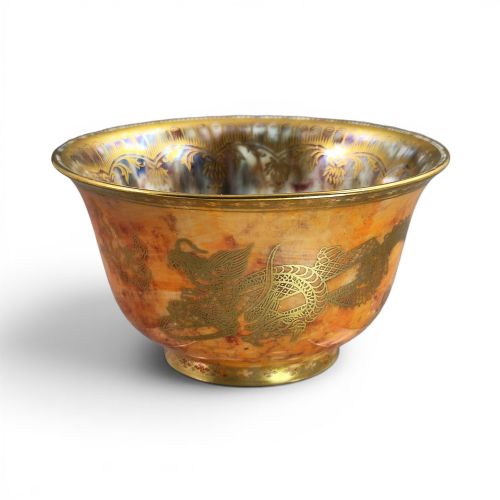
You are most likely to meet examples produced by Wedgwood and decorated by Daisy Makeig-Jones, alongside nineteenth-century Gaudy Welsh pottery bowls in patterns such as Basket of Flowers and Celyn. These range from octagonal and footed bowls to miniature sizes and basins.
The forms serve primarily as decorative bowls, utilising striking orange, red, and mottled tones combined with gold leaf and enamel details. Each piece reflects the aesthetic movements of its era, from traditional floral motifs to fantastical Fairyland and butterfly designs.
How they were made
Potters shaped the bodies from earthenware, porcelain, or bone china before applying the primary glaze. Artisans then integrated metallic elements and lustre glaze to achieve the characteristic shimmering finish.
Decoration often involved the application of gold leaf and enamel over the lustre glaze, requiring careful second or third firings in the kiln. This technique allowed makers to control the iridescent effects and secure intricate patterns onto the surface.
Listings feature earthenware and porcelain materials, employing lustre glaze, gold leaf, and enamel across the nineteenth and twentieth centuries.
What varies in quality
The depth and consistency of the lustre glaze determine much of the visual impact, with evenly applied mottled orange and rich metallic sheens commanding greater attention. The complexity of the painted or gilded ornamentation, particularly on detailed patterns, separates standard production from finer execution.
Condition plays a central role in the standing of a piece, specifically the preservation of the delicate enamel and gold leaf elements against the glaze. The crispness of the moulding on octagonal and footed forms further distinguishes the finer examples.
Daisy Makeig-Jones Wedgwood·Wedgwood
The Orange Lustre Bowl Glossary
- Lustre glaze
- A ceramic finish containing metallic salts that produce an iridescent, reflective surface upon firing. This technique creates the distinctive sheen seen on these bowls.
- Bone china
- A type of soft-paste porcelain incorporating bone ash, yielding a strong, highly white body that accepts fine glazes well. It forms the foundation for many twentieth-century pieces.
- Earthenware
- Porous pottery fired at lower temperatures than stoneware or porcelain, requiring a glaze to achieve watertightness. It provides the heavy base for nineteenth-century examples.
- Enamel
- Opaque glass applied to the fired ceramic surface as decoration and fixed with a subsequent low-temperature firing. It adds bright, permanent colour highlights to the design.
Orange Lustre Bowl: Frequently Asked Questions
Can I use these bowls for food?
These historical ceramics are intended primarily for display and decorative use rather than daily dining. The metallic lustre glazes and enamel decorations can be sensitive to acidic foods and frequent utensil contact.
Keep them safely on tables, sideboards, or in cabinets to preserve the finish.
How do I date a lustre bowl?
Examine the bottom of the piece for maker marks, registration numbers, and pattern codes associated with the factory. Stylistic clues such as Art Nouveau or Art Deco forms also narrow the production era.
Compare the specific lustre technique and motifs against known periods of manufacture.
What causes the iridescent finish?
The sheen results from a thin metallic film bonded to the surface of the glaze during a specialised kiln firing. Reducing oxygen in the kiln causes the metallic salts to separate and create the rainbow effect.
Different metal oxides produce distinct hues like the orange and copper tones found on these vessels.