

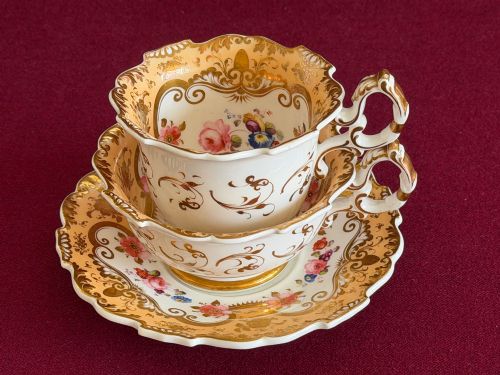
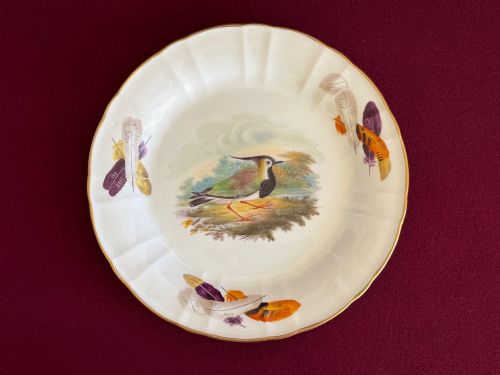
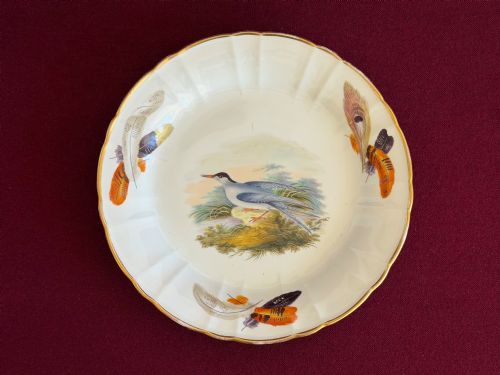
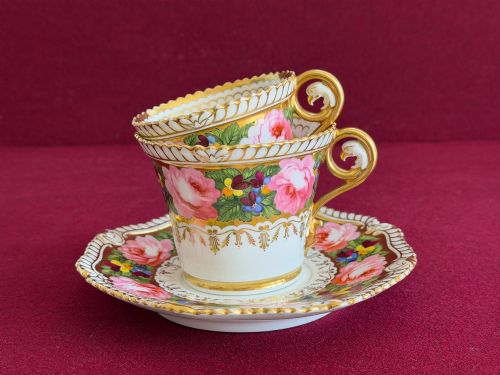
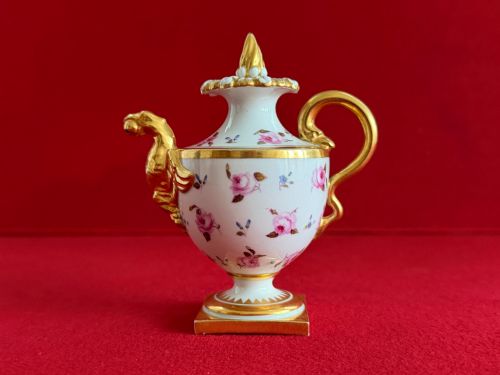
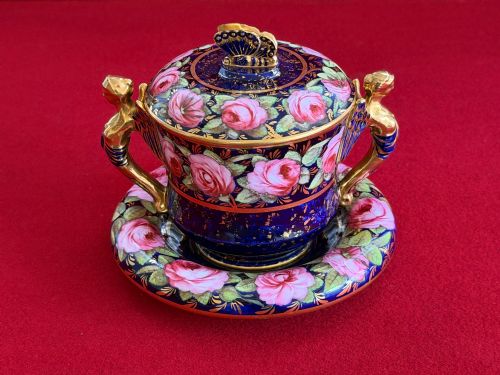
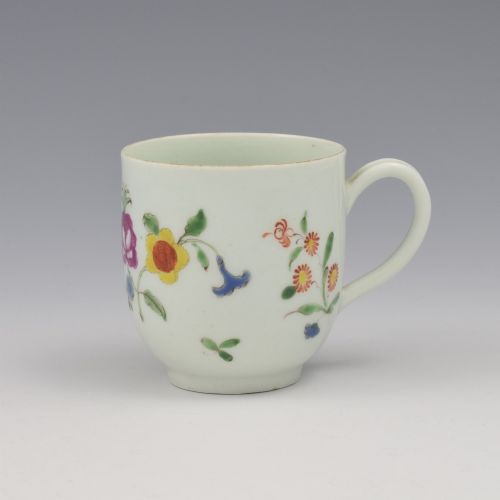
English Hand Painted Porcelain
English hand painted porcelain encompasses centuries of ceramic artistry, offering collectors finely decorated tablewares and decorative objects shaped by historic kilns.
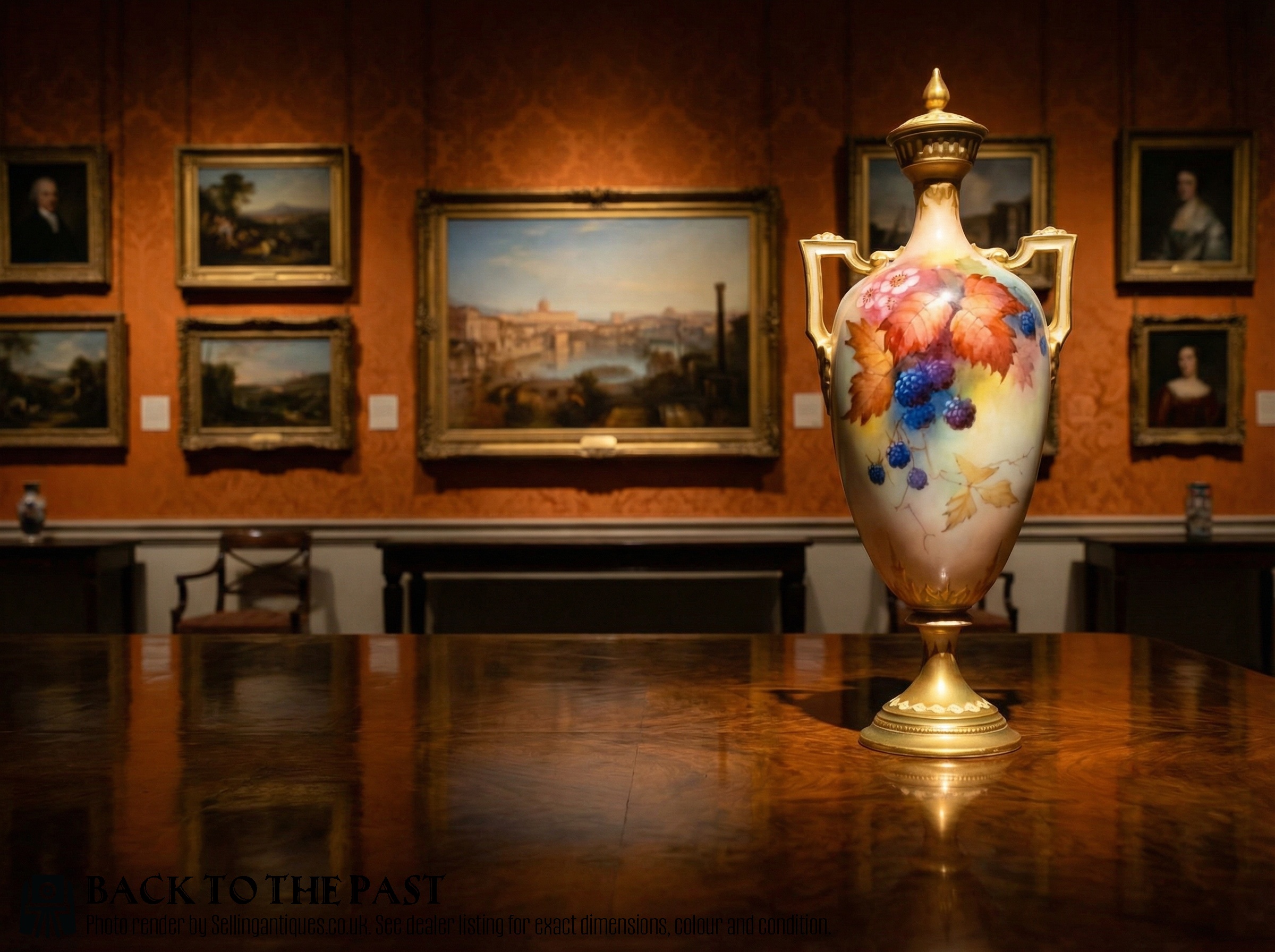
English Hand Painted Porcelain
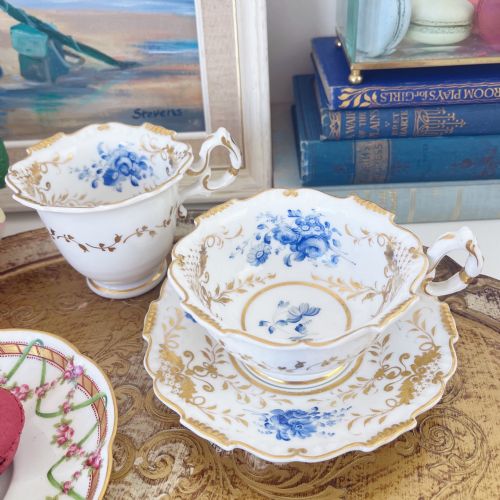
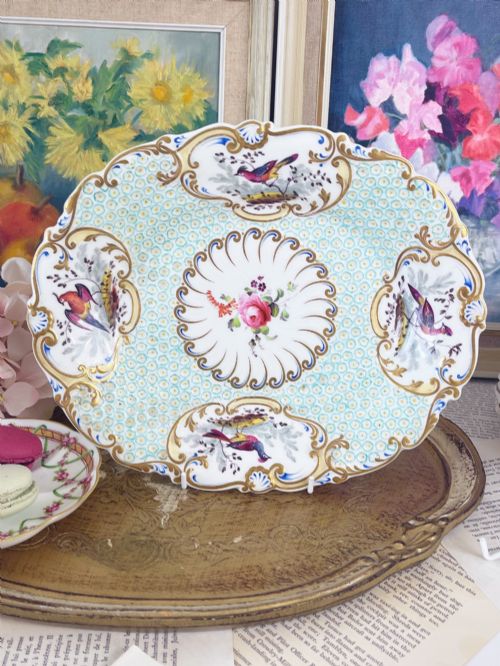
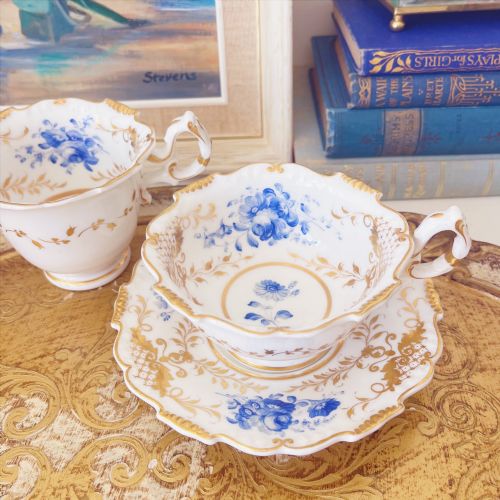
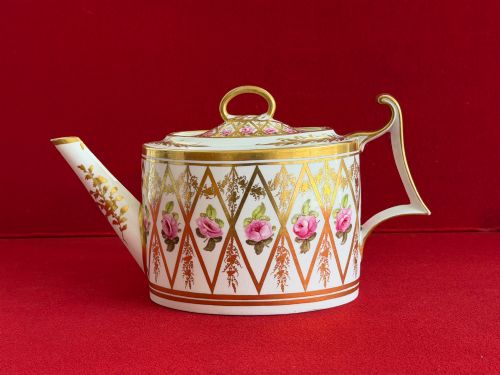
English hand painted porcelain includes domestic tablewares, cabinet plates, tea services, and decorative dishes produced across the eighteenth, nineteenth, and early twentieth centuries.
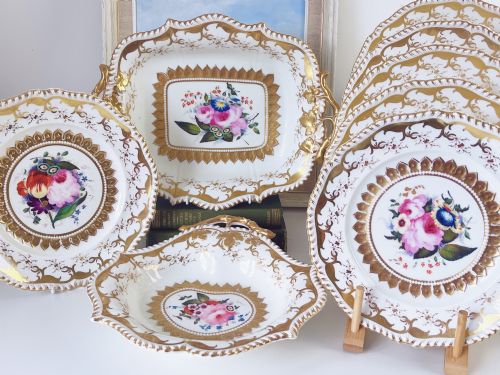
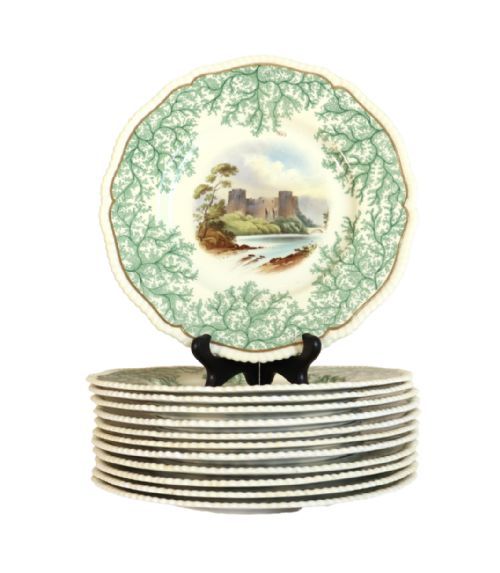
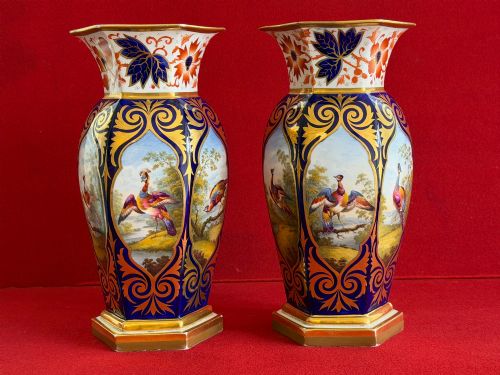
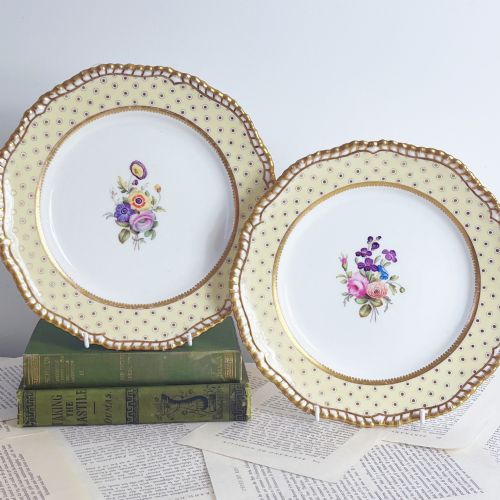
Cabinet plates, teacups, saucers, and serving vessels frequently display detailed botanical studies, birds, and landscapes applied by skilled factory artists.
The selection ranges from early soft-paste porcelain tea vessels of the mid-eighteenth century to robust bone china and Victorian decorative items.
How they were made
Potteries utilised traditional soft-paste porcelain and bone china bodies, shaping them on wheels or pressing them into moulds to create forms such as fluted sauce boats and bulbous teapots.
Painters applied enamel colours by hand, often incorporating rich gilding, gold leaf accents, and cobalt blue grounds before subjecting the pieces to high-temperature kiln firings.
Early Derby potters occasionally hid tiny painted insects inside teacups to surprise the drinker at the bottom of their tea.
What varies in quality
Quality rests upon the precision of the hand-painted brushwork, distinguishing standard floral repeats from finely executed botanical specimens or pictorial scenes by named decorators.
The sophistication of the porcelain body, the depth of the glaze, and the richness of the gilding further separate standard utility wares from exhibition-grade cabinet pieces.
Grainger Lee & Co·Spode·Flight Barr & Barr·H & R Daniel·Royal Doulton·Derby Porcelain·Wedgwood·Chamberlain Worcester·Richard Chaffers·Bow Porcelain·Coalport·Newhall·Grainger Worcester·Royal Worcester·Royal Crown Derby·Copeland & Garrett·Howell James·Mordan
The English Hand Painted Porcelain Glossary
- Soft-paste porcelain
- An early ceramic composition fired at lower temperatures, prized by collectors for its warm, slightly translucent body.
- Bone china
- A durable porcelain paste incorporating bone ash, developed in England to provide a whiter and stronger base for painted decoration.
- Cabinet plate
- A decorative plate intended for display in a cabinet rather than for daily dining use.
- Gilding
- The application of gold leaf or powdered gold to highlight rims, handles, and painted borders.
- Trio
- A matching set comprising a teacup, a coffee cup, and a saucer.
English Hand Painted Porcelain: Frequently Asked Questions
How do I care for antique painted porcelain?
Wash these fragile pieces gently by hand using lukewarm water and mild soap, avoiding dishwashers and harsh scrubbers that can damage the delicate enamel and gold leaf.
Store them securely in cabinets away from direct sunlight to preserve the vibrant hand-painted pigments over time.
Were these porcelain pieces meant for daily use?
Many nineteenth-century tea services and cups were produced for active household dining, though finer cabinet plates and painted baskets served primarily as decorative display items.
Examining the wear on the foot rim often reveals whether a piece saw regular service in the parlour or remained protected in a cabinet.
How can I tell eighteenth-century porcelain from later pieces?
Early pieces often utilise soft-paste porcelain bodies that show distinct translucency variations and unglazed foot rims known as fire cracks or pinhead marks from kiln supports.
Nineteenth-century items frequently employ refined bone china bodies with printed factory marks alongside the hand-painted decorator numbers.
What do factory marks tell us?
Underglaze blue or painted red marks identify the specific pottery and sometimes narrow down the decade of production based on changing corporate partnerships.
Unmarked pieces rely on stylistic clues, paste composition, and characteristic pattern numbers to connect them to historical workshops.