
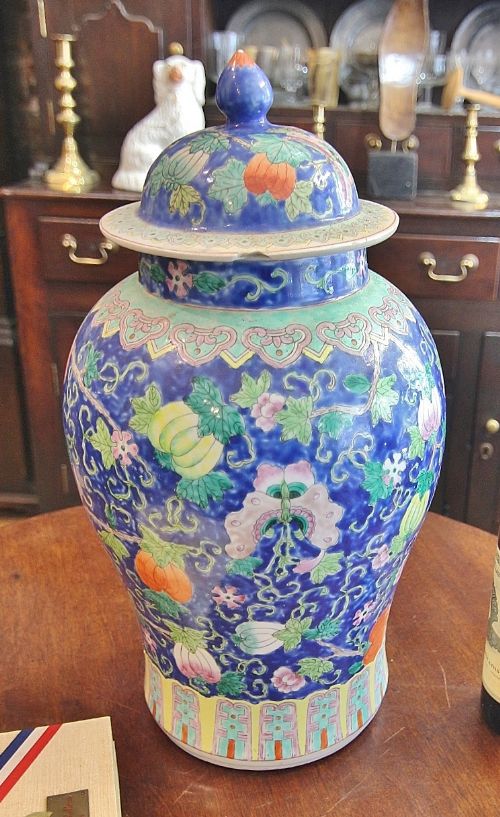


Covered Porcelain Jar Vase
Covered porcelain jar vases range from English bone china to Japanese Imari, offering enclosed vessels for display and storage.
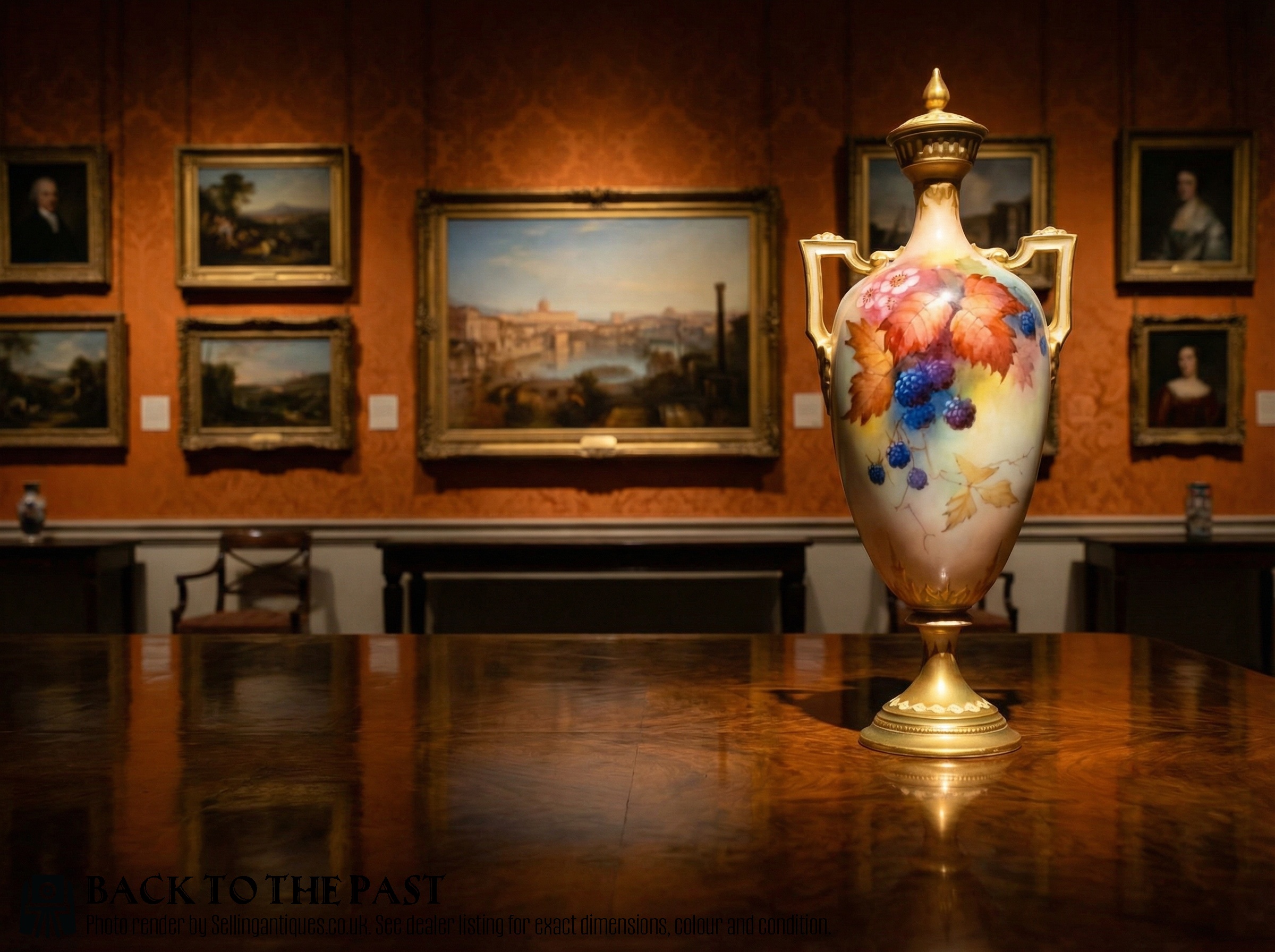
Covered Porcelain Jar Vase
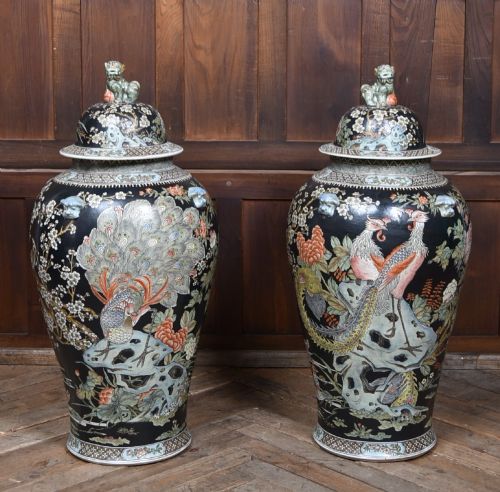
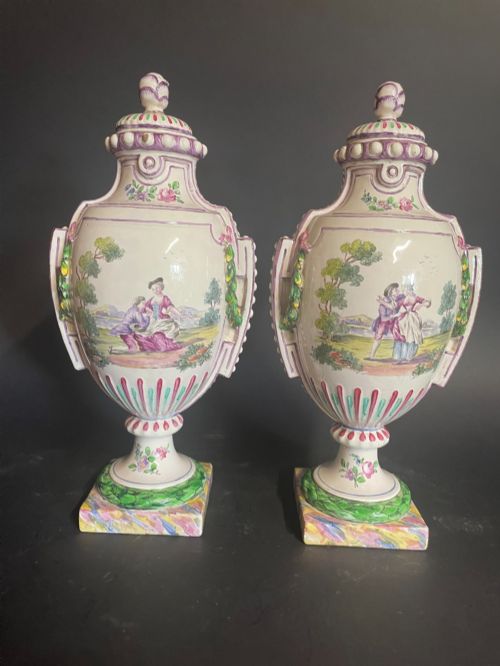
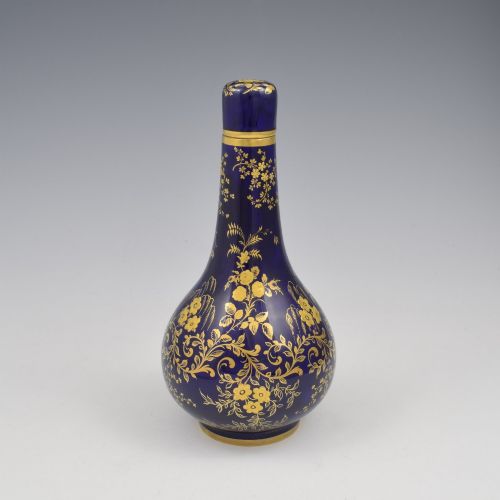
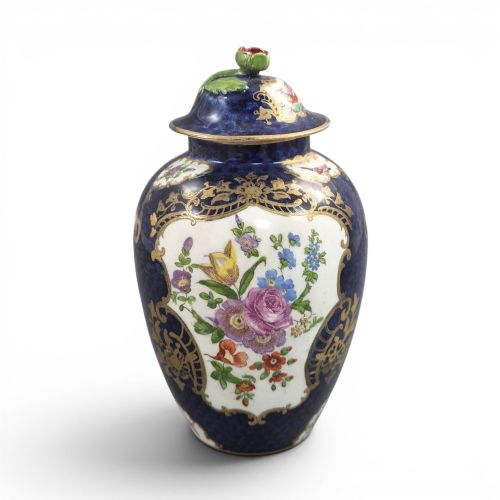
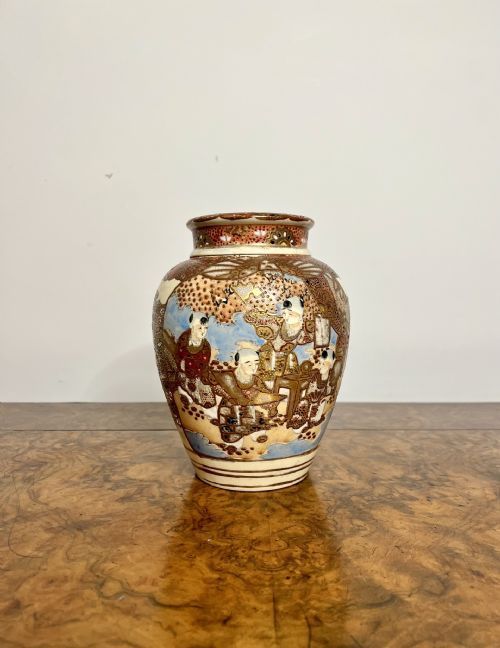
A covered porcelain jar vase combines the vessel form of a vase with a fitted lid, creating a unified silhouette used historically for storage or ornamental display. The pieces grouped under covered porcelain jar vase span English factories, French manufactories, and Japanese kilns across the nineteenth and early twentieth centuries.
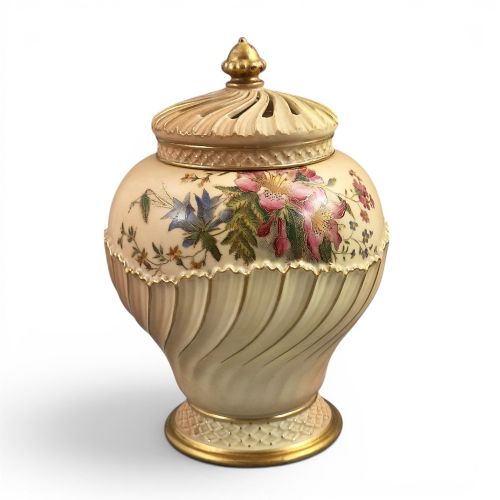
Buyers will encounter ginger jars, pot-pourri jars, and baluster vessels rendered in ceramic, earthenware, and porcelain. These items appear in domestic settings as mantel garnitures or large floor-standing decorative statements.
How they were made
Potters shaped the clay bodies on wheels or in moulds before applying glaze, enamel, and gold leaf or gilding. Hand-painted floral or figural decoration was fixed through kiln firing, sometimes combining underglaze blue with overglaze polychrome enamels.
Certain vessels incorporate bronze, ormolu, or gilt mounts attached to the porcelain body to secure the foot or rim, merging ceramic craft with metalwork.
Origin points span English, French, and Japanese kilns.
What varies in quality
Quality rests in the precision of the hand-painted brushwork, the crispness of the porcelain or earthenware moulding, and the depth of the glaze. Pieces bearing named factory marks or artist signatures demonstrate superior workshop standards.
The integrity of the matching lid, the preservation of the original gilding or gold leaf, and the weight of the ceramic body distinguish standard production items from exceptional workshop output.
Royal Crown Derby·Samson Paris·Sitzendorf·Royal Worcester·Coalport·Samuel Alcock
The Covered Porcelain Jar Vase Glossary
- Imari
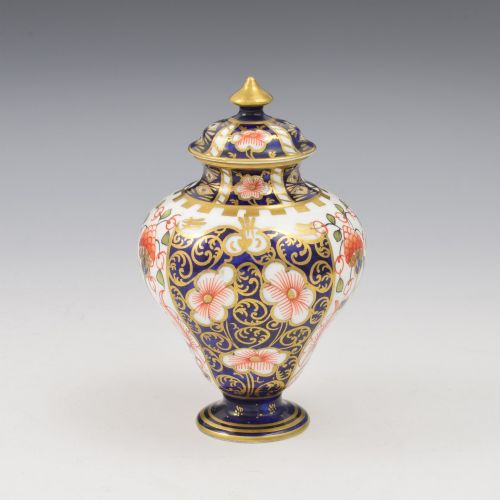
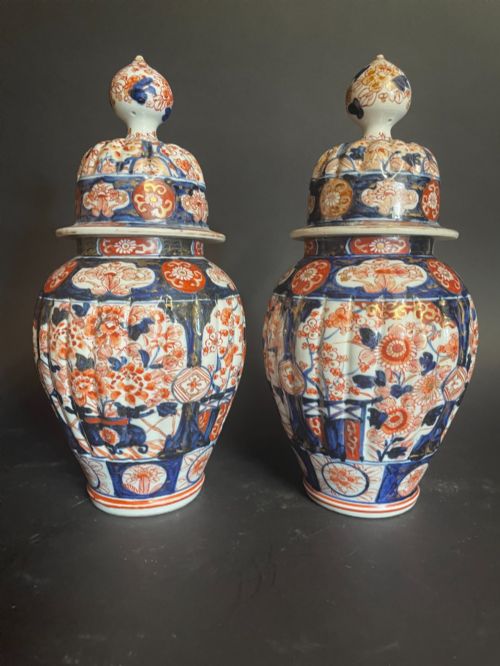
- A style of Japanese porcelain featuring a palette of underglaze blue, iron red, and gold. This decorative scheme originated in Arita and was widely copied by European factories.
- Baluster
- A vase shape with a rounded body that tapers toward the base and swells above a foot. The profile resembles a traditional architectural baluster.
- Ginger jar
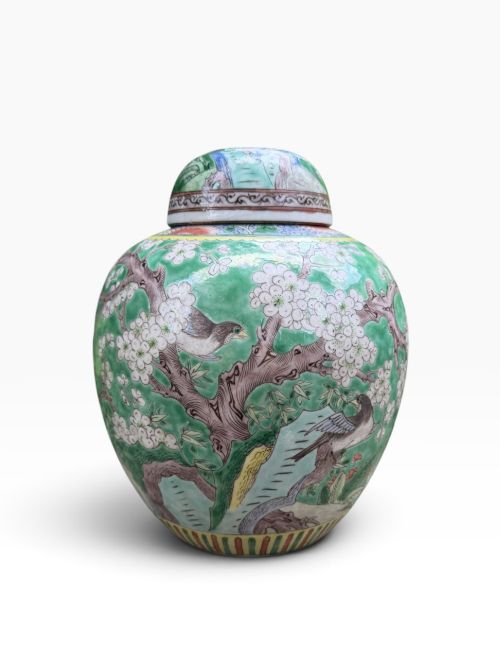
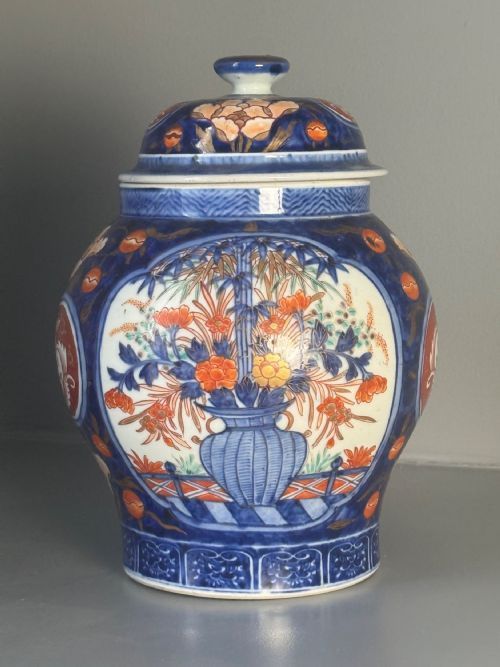
- A wide-mouthed storage jar of globular or ovoid form fitted with a domed lid. Originally made in China to store spices, they became popular decorative cabinet items in Europe.
- Pot-pourri
- A perforated vessel designed to hold dried flowers and scented spices. The pierced lids allowed fragrance to circulate through domestic interiors.
- Faience
- Tin-glazed earthenware produced in France and other European regions. It offers an opaque white surface suitable for painted decoration.
Covered Porcelain Jar Vase: Frequently Asked Questions
What were covered porcelain jar vases used for?
These lidded vessels served practical functions such as storing dry goods, tea, or spices in domestic households. Over time, their decorative qualities led to them being displayed on mantelpieces, tables, and cabinets as ornamental accents.
Larger floor jars and palace pieces were positioned in entrance halls and reception rooms to demonstrate status and interior taste. The inclusion of pierced lids on specific types allowed them to diffuse scents from dried floral mixtures throughout a room.
How do I care for antique porcelain?
Dust these ceramic vessels gently using a soft, dry brush to prevent accumulation on raised enamel or gilt surfaces. Avoid immersing pieces with metal mounts, ormolu, or delicate overglaze enamel in water.
Display the jars away from direct sunlight and areas subject to sudden temperature fluctuations to protect the glaze and decorative pigments. Handle the lids with care, lifting them straight up without applying pressure to finials or rims.
How can I distinguish Japanese Imari from European copies?
Examine the paste, weight, and characteristics of the foot ring beneath the vessel. Japanese Imari from kilns in Arita typically displays a gritty, dense porcelain body with characteristic iron-spotted spur marks.
European factories such as Derby or Samson created imitations using softer pastes, different glaze compositions, and distinct potting techniques. Analysing the blue underglaze tone and the application of iron red and gold enamel helps identify the origin.
Were lids always made with the jar?
Lids were thrown and fired alongside their respective jars to ensure a consistent ceramic body and glaze match. However, due to centuries of handling, many surviving vessels have replacement lids or married covers from later dates.
Inspecting the interior rim of the lid and the neck of the jar reveals whether the glaze and wear patterns correspond. Matching decoration and clay shrinkage provide indicators of original pairing.