

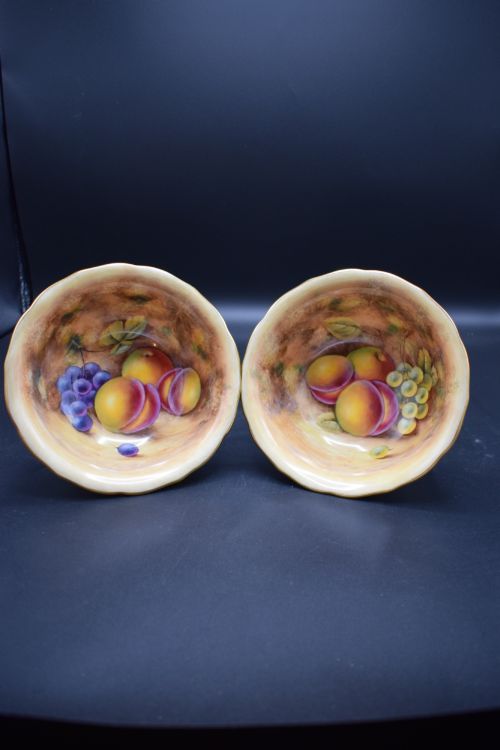


Royal Worcester Fruit Bowl
A royal worcester fruit bowl brings hand-painted orchard studies and rich gilding directly to the table.
Royal Worcester Fruit Bowl
A royal worcester fruit bowl represents a rich tradition of English porcelain painting, centring on detailed depictions of apples, pears, and berries. These pieces range from open decorative dishes and footed comports to specialised sugar bowls and large serving vessels.
The versions appearing most frequently on this page date from the early to mid-twentieth century, capturing the height of the factory's painted fruit school. Forms vary from simple rope-edge plates to boat-shaped vessels and heavy two-handled soup bowls.
Makers and artists working within this tradition utilised fine porcelain bodies as canvases for lush botanical scenes. Buyers seek them out for their vibrant palette and the individual touch of named studio hands.
What varies in quality
The distinction between standard production and top-tier work rests entirely on the skill of the painter and the complexity of the composition. Pieces bearing signatures from renowned studio artists display far greater depth in the fruit shading and leaf work.
The application of gold leaf and the weight of the porcelain body further separate ordinary tableware from exceptional cabinet pieces. Heavier gilding and intricate edge treatments, such as moulded rope patterns, indicate more ambitious manufacture.
Royal Worcester Fruit Bowl Retail Price Guide 2026
Typical asking prices for royal worcester fruit bowl among the pieces listed under this phrase on Sellingantiques today, from the lower quarter to the upper quarter. They describe what is for sale here now, not the wider market.
Several bowls feature painted insects tucked away near the fruit clusters, giving keen observers a tiny surprise hidden in the foliage.
Royal Worcester·Hadley·J Southall·Harry Ayrton·Richard Sebright
The Royal Worcester Fruit Bowl Glossary
- Bone china
- A type of porcelain incorporating bone ash, producing a durable, milky white body suitable for fine painting. It forms the base for many twentieth-century decorative pieces.
- Gilding
- The application of gold leaf or gold paint to ceramic surfaces, typically framing painted panels or outlining rims. This metal layer adds weight and visual warmth to the piece.
- Comport
- A raised pedestal bowl used for serving fruit or sweets at the table. These elevated vessels bring height and formal presence to a collection.
- Enamel
- Vitreous pigments applied over the glaze and fired at lower temperatures to achieve rich, opaque colours. It allows artists to render detailed fruit studies with lasting brilliance.
Royal Worcester Fruit Bowl: Frequently Asked Questions
How do I date a painted fruit bowl?
Dating relies heavily on the factory backstamps found on the underside of the porcelain, which changed symbols across different decades. Studio signatures and stylistic markers also help place the piece within the early to mid-twentieth century.
Comparing the shape and edge decoration against known production periods offers further clarity on the exact year of manufacture.
Are these bowls safe to use for food?
While these vessels were originally made for domestic service, most collectors treat them as display pieces to protect the delicate enamel and gold leaf. Regular washing can wear down the fine surface painting over time.
Displaying them in cabinets or on open shelves preserves the hand-painted details and original gilding for the future.
What does artist signing mean for value?
Signed pieces carry direct attribution to master painters who trained specifically at the factory, making their work highly sought after by collectors. A clear signature elevates a standard decorative bowl into an individual work of art.
Unsigned pieces remain fine examples of the factory's output but lack that specific personal attribution.