

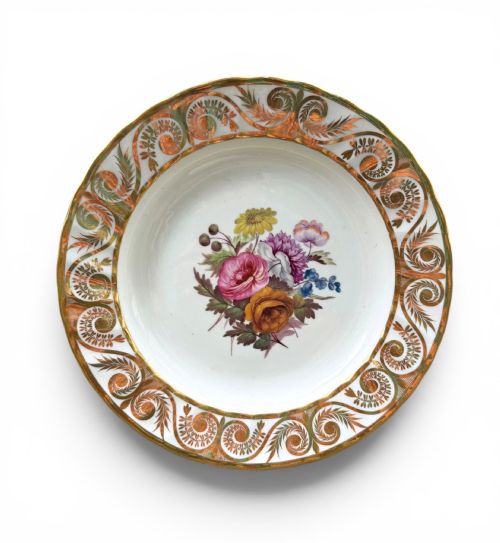


Gold Edge Porcelain Plate
A gold edge porcelain plate brings refined hand-painted botanical or figural artistry directly to the table or cabinet.
Gold Edge Porcelain Plate
When you search for a gold edge porcelain plate, you encounter functional and decorative vessels spanning the nineteenth and twentieth centuries. The selection encompasses cabinet plates, dessert plates, and soup dishes suited for formal display or service.
Most examples originate from prominent English factories such as Royal Worcester, Derby, and Copeland, alongside continental European workshops like Vienna. Forms range from standard circular dinner plates to rope-edge chargers and intricate cabinet dishes.
Materials and construction methods
Pieces are formed from fine bone china or traditional porcelain, providing a smooth white ground for detailed artistic work. Artisans then apply enamel pigments by hand to create floral motifs, fruit studies, and mythological scenes.
Gilding, gold leaf, or gold gilding lines the rims and accents the borders to frame the central imagery. Firing fixes the enamels and precious metals permanently into the glaze.
Gold Edge Porcelain Plate Retail Price Guide 2026
Typical asking prices for gold edge porcelain plate among the pieces listed under this phrase on Sellingantiques today, from the lower quarter to the upper quarter. They describe what is for sale here now, not the wider market.
Listings feature porcelain from the nineteenth and twentieth centuries, spanning the Regency, Victorian, and Edwardian periods.
Evaluating craftsmanship and artistry
Quality rests upon the skill of the hand-painted decoration, ranging from simple floral studies to complex signed figurative works by noted artists. The precision of the gilding and the weight of the porcelain further distinguish standard production ware from superior cabinet pieces.
Factory attribution also plays a role, with established makers demonstrating finer paste preparation and more sophisticated enamel palettes.
Royal Worcester·Derby·Copeland·Flight Barr And Barr·Mintons·Royal Doulton
The Gold Edge Porcelain Plate Glossary
- Cabinet plate
- A decorative ceramic piece intended primarily for display rather than dining use. These often feature elaborate hand-painted subjects and rich gilding.
- Bone china
- A type of soft-paste porcelain incorporating bone ash for enhanced strength and translucency. It forms the bright white body common in English tableware.
- Pate sur pate
- A method of porcelain decoration where wet white slip is built up in successive layers on a coloured ground to create a low relief cameo effect. Mintons utilised this technique.
- Gilding
- The application of gold leaf or gold powder to the edges and borders of ceramic items. This finish provides the characteristic metallic rim on these plates.
Gold Edge Porcelain Plate: Frequently Asked Questions
Can I use these plates for serving food?
Most antique cabinet plates and dessert plates are intended primarily for display or light service rather than heavy daily dining. The delicate hand-painted enamel and gold leaf require gentle handling.
Hand washing in lukewarm water preserves the fragile gilt edges and painted surfaces. Avoid abrasive scrubbers and dishwasher cycles to maintain the integrity of the antique porcelain.
How do I date a porcelain plate?
Dating relies on factory backstamps, paste characteristics, and stylistic markers such as Regency or Victorian design elements. Referencing known decorator signatures also helps narrow down the period.
Comparing the style of the hand-painted motifs with documented factory production eras provides a reliable timeline. Many pieces carry impressed or painted marks specific to certain decades.
What is the difference between a cabinet plate and a dessert plate?
Cabinet plates are generally designed for display in a cabinet or on a wall, often featuring intricate, high-value artistic scenes. Dessert plates were made as part of a dining service for serving the final course.
Over time, many surviving dessert plates transition into display pieces due to their decorative painted borders and gold rims. Both share similar porcelain bodies and fine artistic execution.
Who were some notable artists working on these plates?
Makers often employed skilled painters whose signatures appear on the front or reverse of the porcelain. Names recorded on these plates include Moses Webster, J Smith, Ayrton, Stinton, and David Dewsberry.
Signed works by recognised factory artists typically indicate a higher tier of quality and artistic effort. These individual touches transform factory blanks into distinct works of art.