
Antique Porcelain Fruit Plate
An antique porcelain fruit plate brings hand-painted orchard studies and cabinet display to the table.
Antique Porcelain Fruit Plate
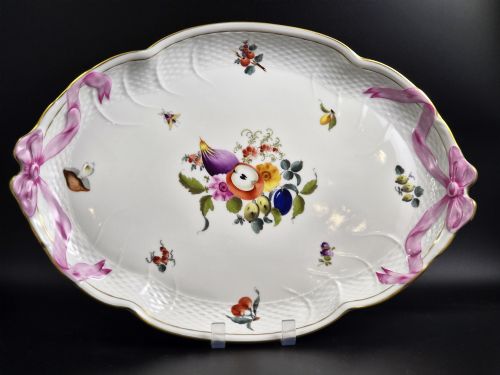
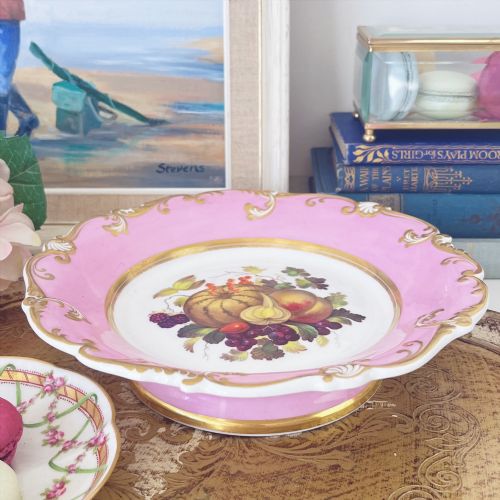
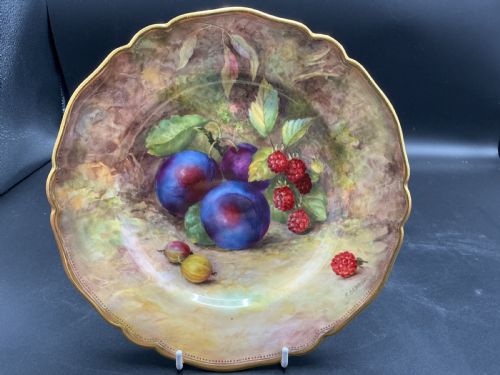
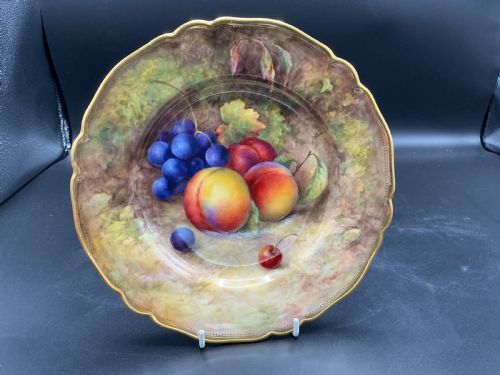
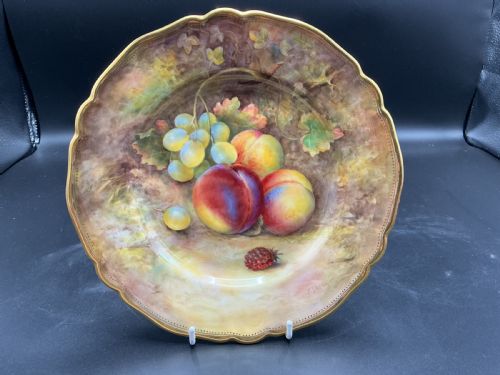
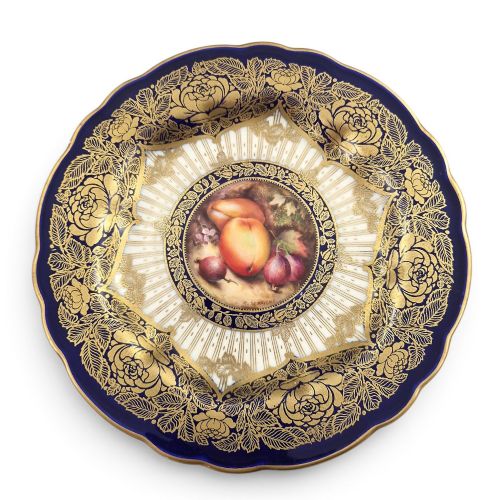
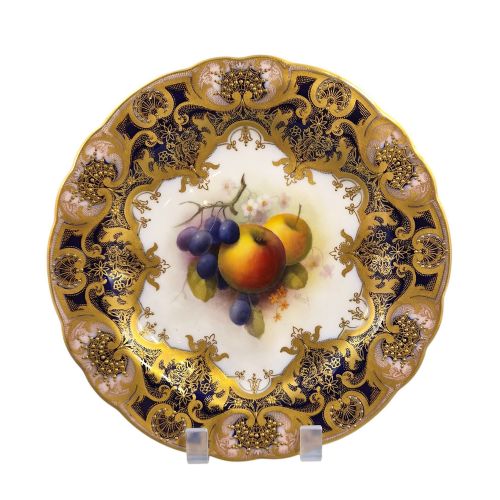
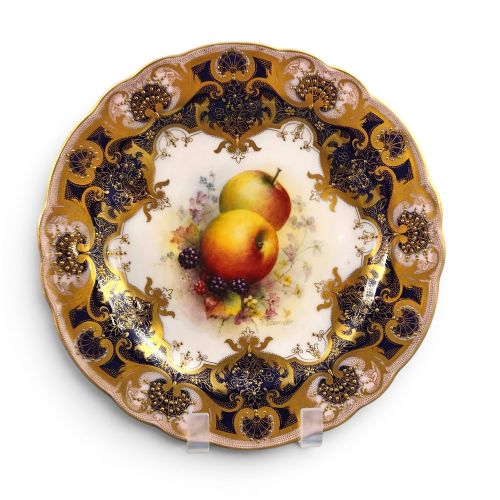
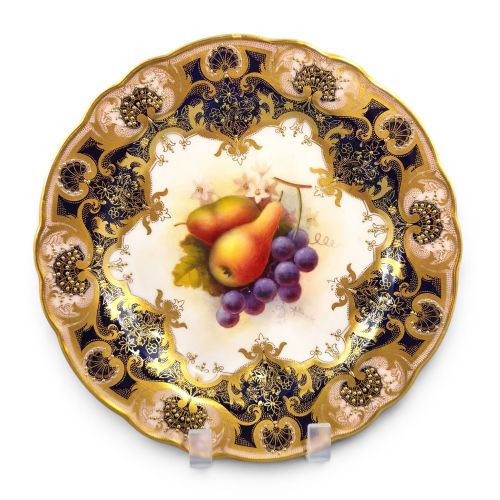
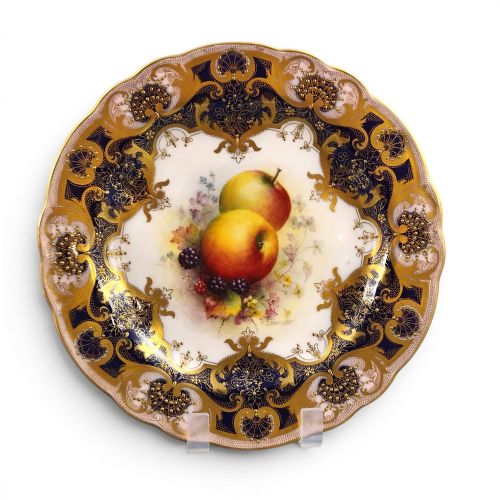
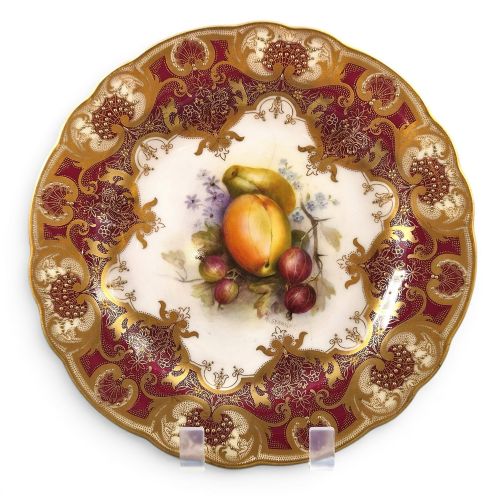
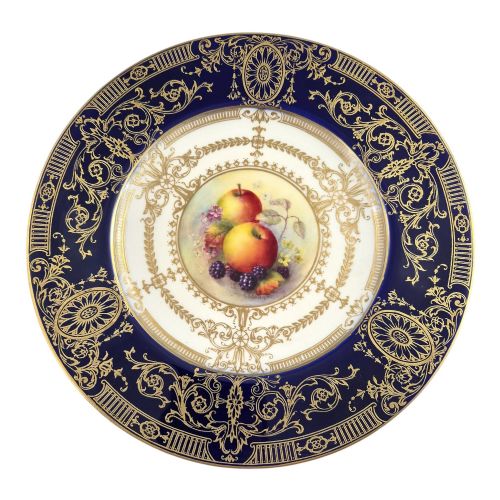
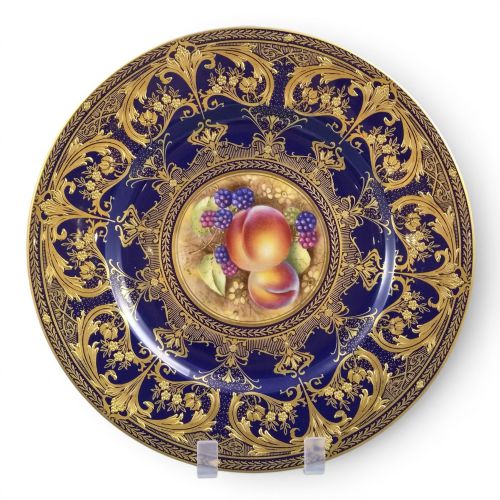
An antique porcelain fruit plate is a formal serving dish or cabinet display piece created for dessert courses and visual decoration. These items take the form of flat plates, scalloped dishes, footed comports, and tazzas designed to showcase painted studies of fruit.
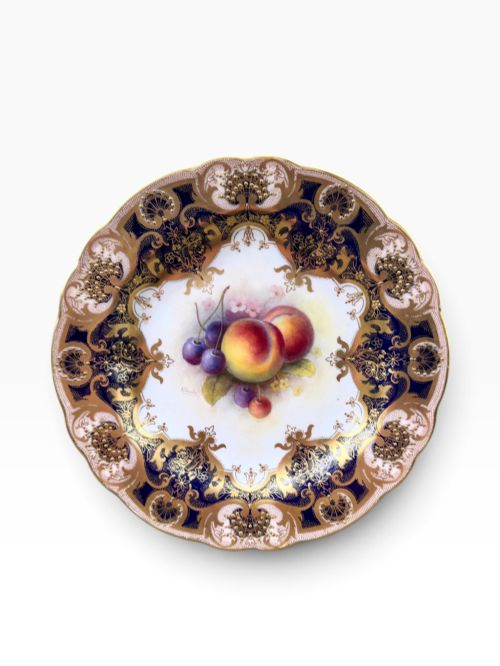
The selections span from eighteenth-century soft-paste pieces made by factories such as Dr Wall Worcester and Chelsea-Derby up through nineteenth-century Victorian services and twentieth-century Royal Worcester works. Buyers frequently encounter twentieth-century Royal Worcester cabinet plates featuring signed botanical artistry.
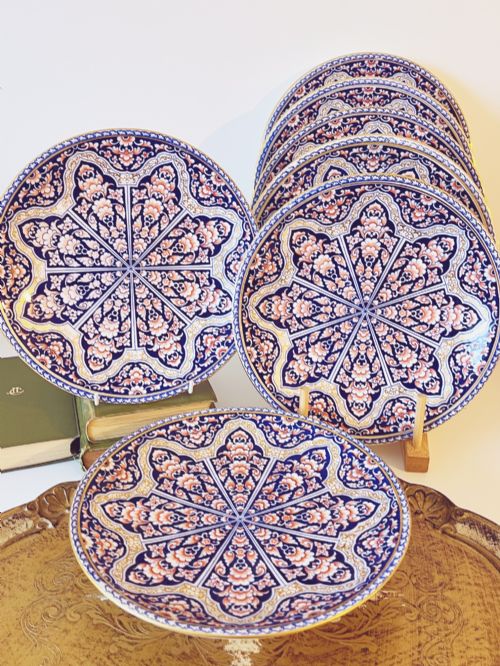
The grouping includes individual cabinet plates alongside larger dessert services and matched sets. Styles range from traditional English floral and fruit borders to Japanese Imari designs and Regency shapes.
How they were made
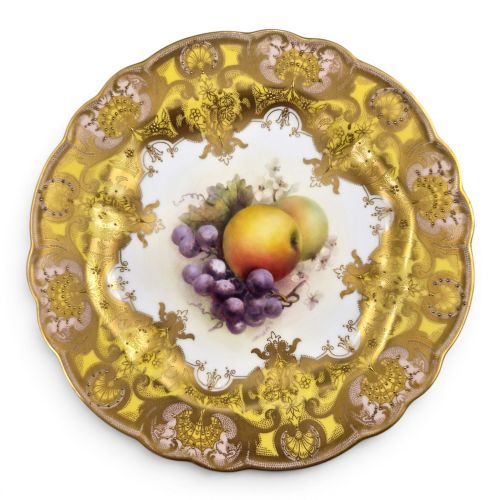
Maker workshops utilised hard-paste porcelain, bone china, and soft-paste porcelain shaped into plates, trays, and footed comports. Artisans applied enamel colours and gold leaf accents by hand, often combining gilding with rope edges or shell-moulded rims.
Painting techniques relied on detailed brushwork for naturalistic fruit studies, executed by specialised artists. Firing fixed the polychrome enamels and gold leaf securely onto the glazed ceramic body.
Listings feature eighteenth-century soft-paste porcelain alongside twentieth-century bone china cabinet plates.
What varies in quality
Quality rests upon the skill of the hand-painted decoration and the reputation of the artist responsible for the fruit studies. Named artists such as Richard Sebright, Albert Shuck, or Thomas Steele elevate a piece above standard factory output.
The crispness of moulding in forms like rope edges and shell shapes, together with the richness of the gilding and enamel preservation, defines the upper tier of production.
H & R Daniel·Royal Crown Derby·Royal Worcester·Royal Doulton·Kornilov Brothers
The Antique Porcelain Fruit Plate Glossary
- Comport
- A raised serving dish on a pedestal, used for fruit or sweetmeats during dessert services. These footed vessels match flat plates within larger dining sets.
- Cabinet plate
- A decorative ceramic dish intended for display in a cabinet rather than for daily dining use. They frequently exhibit high-detail painted scenes and gilt borders.
- Soft-paste porcelain
- An artificial porcelain composition fired at lower temperatures than hard-paste, common in eighteenth-century English factories. It yields a warm glaze and distinctive translucency.
- Gilding
- The application of gold leaf or powdered gold to ceramic rims and motifs. This technique highlights moulded edges and frames central painted compositions.
- Imari
- A decorative style originating in Japan, characterised by iron red, underglaze blue, and gold ornamentation. European factories adopted these distinct palettes on plates and dishes.
Antique Porcelain Fruit Plate: Frequently Asked Questions
How were these plates used?
These pieces served dessert courses, holding fresh fruit, sweetmeats, and confections at the conclusion of formal meals. Wealthy households utilised matched dessert services to display porcelain artistry during dining room gatherings.
Over time, many individual plates and service components transitioned from dining tables into enclosed display cabinets. Their detailed painted fruit subjects made them prime candidates for visual appreciation behind glass.
How do I date an antique plate?
Dating relies on factory backstamps, impressed numerical ciphers, and distinctive painter signatures recorded in ceramic reference guides. Stylistic clues such as rope edges, gilding patterns, and shape profiles also point toward specific decades.
Eighteenth-century examples display soft-paste bodies and specific painter hands, whereas Edwardian and twentieth-century pieces often carry clear date ciphers. Comparing the paste and enamel characteristics against known factory periods narrows the manufacturing span.
Can I use them for food?
While structurally sound, antique plates featuring hand-painted enamels and gold leaf require careful handling if used for serving. Historic glazes and delicate overglaze decorations can suffer from modern acidic foods and mechanical dishwashers.
Collectors generally reserve these items for display or gentle handling during dessert presentation rather than daily dining. Hand washing in tepid water preserves the fragile gilt rims and painted fruit details.
What is a dessert service?
A dessert service is a coordinated set of ceramic plates, comports, and tazzas designed for the final course of a meal. These multi-piece collections allowed hosts to present a unified aesthetic across the entire table.
Surviving sets often lack their full original complement, leading dealers to offer partial services or individual cabinet plates. Matching comports with flat plates indicates how these grand dining suites were originally arranged.