


English Gothic Frame
These English gothic frame selections bring together architectural Revival forms in oak, brass and glass for the interior.
English Gothic Frame
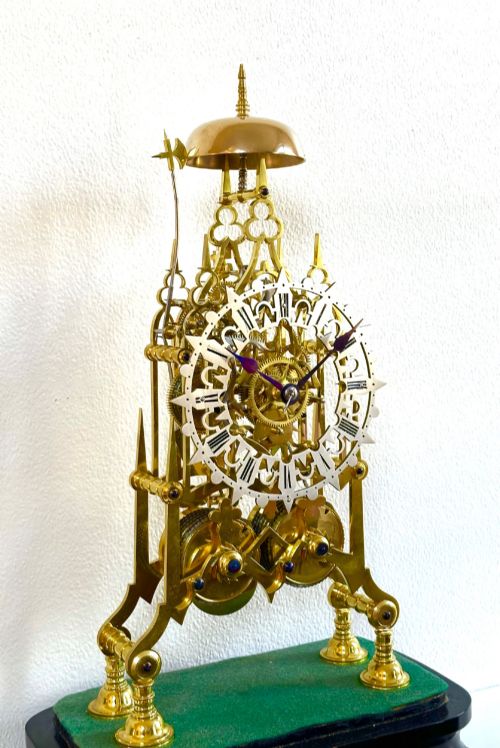
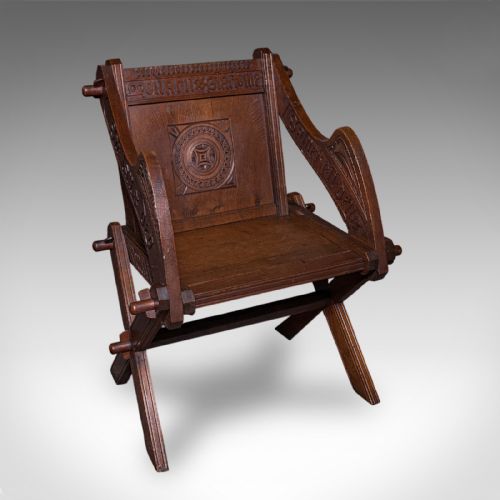
An english gothic frame encompasses architectural mirrors, skeleton clocks, and framed watercolours that draw upon ecclesiastical design traditions. Buyers searching for an english gothic frame typically encounter nineteenth-century oak furniture, such as Glastonbury chairs, alongside mirrors and framed architectural studies.
The evidence shows periods spanning from the Regency era through the Victorian period and into the Edwardian and twentieth centuries. Forms range from heavy seating and mirrors to intricate skeleton clocks under glass domes.
Makers and artists represented include Thwaites of London, Fred Lawson, George De Paris and Tom Dudley. Their works anchor the selection in verified historical production.
Materials and construction
The pieces rely heavily on oak, pitch pine and rosewood, often paired with brass, gesso, paper and glass. Woodwork involves carved detailing and architectural joinery suited to ecclesiastical and domestic settings.
Works on paper utilise monochrome ink and watercolour, housed behind glass within traditional framing. Metal elements appear in clock movements and silvered components.
Listings incorporate oak, pitch pine, rosewood, brass, paper, glass, steel and silvered metal across multiple centuries.
Assessing quality and character
Quality rests in the crispness of the carved architectural motifs and the integrity of the timber. Untouched surfaces and original glass or brass components distinguish finer examples from altered pieces.
The distinction between standard production and superior work lies in the depth of historical detail, such as the intricacy of gesso on mirrors or the complexity of double fusee clock movements.
Thwaites of London·Fred Lawson·George De Paris·Tom Dudley
The English Gothic Frame Glossary
- Gustav
- A stylistic term occasionally linked to revivalist design. It denotes heavy vertical emphasis and medieval inspiration.
- Double fusee
- A clock mechanism type utilising two fusee cones to maintain even tension on the drive chains. This ensures greater timekeeping accuracy.
- Gesso
- A plaster-based material applied to wood surfaces and moulded into relief decoration. It forms the raised ornamentation on mirrors.
- Prie Dieu
- A devotional chair designed for prayer, featuring a high back and a narrow kneeling shelf. They often appear in nineteenth-century oak or rosewood.
English Gothic Frame: Frequently Asked Questions
What is a Glastonbury chair?
A Glastonbury chair is a traditional wooden armchair with an X-form base and a sloping panel back. These pieces derive their design from ancient ecclesiastical seats.
They appear frequently in oak and pitch pine within nineteenth-century contexts.
How do I date a skeleton clock?
Dating skeleton clocks involves examining the movement style, such as single or double fusee mechanisms. Maker signatures and the presence of glass domes also aid identification.
Most surviving examples date from the Victorian era onwards.
What materials are used in these frames?
Construction materials primarily include oak, pitch pine and rosewood. Decorative elements often incorporate gesso, brass and silvered metal.
Works on paper utilise ink and watercolour behind glass.
Where were architectural watercolours made?
Architectural watercolours depict British cathedrals, abbeys and historic buildings such as Lincoln Cathedral and York. Artists worked on location or in studios using ink and watercolour washes.
These framed pieces date from the nineteenth and early twentieth centuries.