
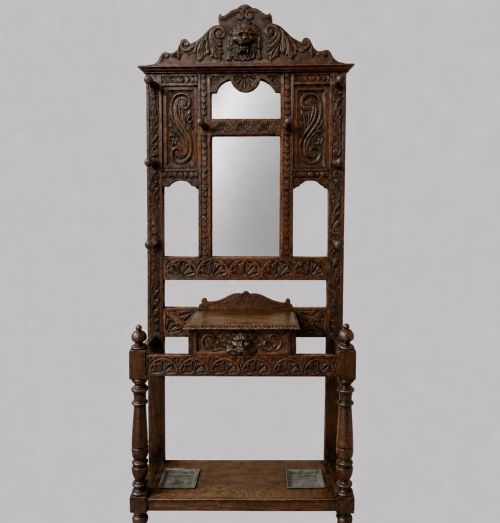


Edwardian Gothic Mirror
An edwardian gothic mirror brings solemn architectural weight and rich timber grain to an interior.
Edwardian Gothic Mirror
An edwardian gothic mirror brings together the austere verticality of medieval architecture and the warm domestic timber of the early twentieth century. Buyers seeking this form encounter robust wooden frames built with ecclesiastical motifs, pointed arches and chamfered edges.
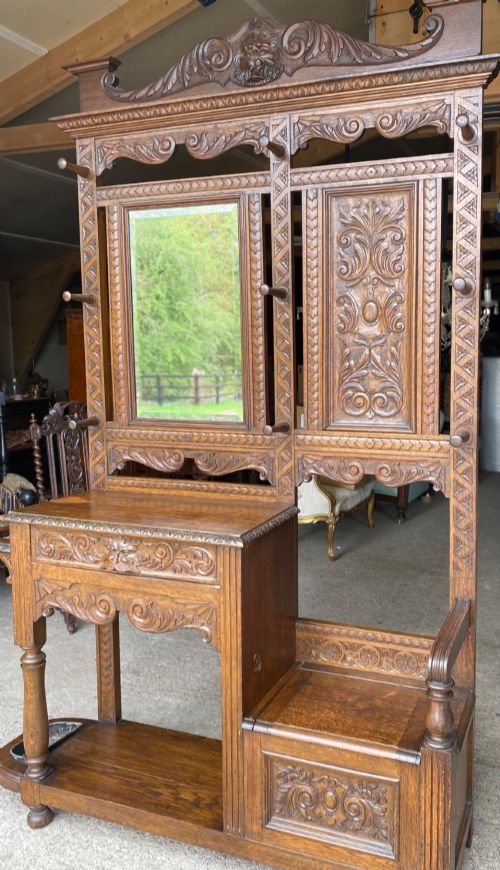
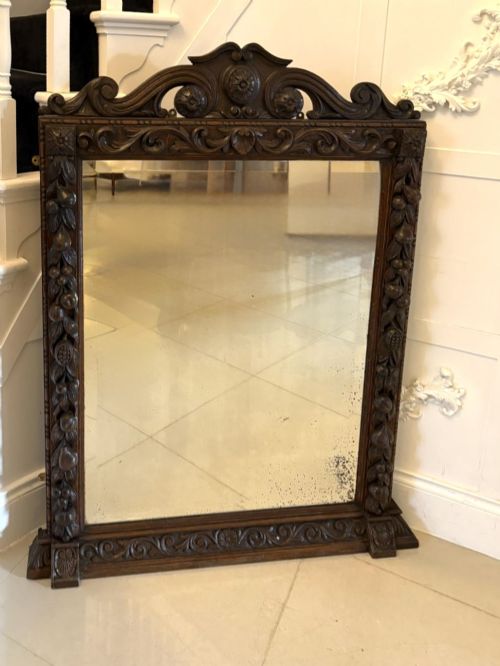
The versions most commonly met on this page combine structural oak timbers with circular or arched glass panels. These mirrors reflect both the revivalist mood of the period and the practical domestic requirement for sturdy hallway and principal room furnishings.
How they were made
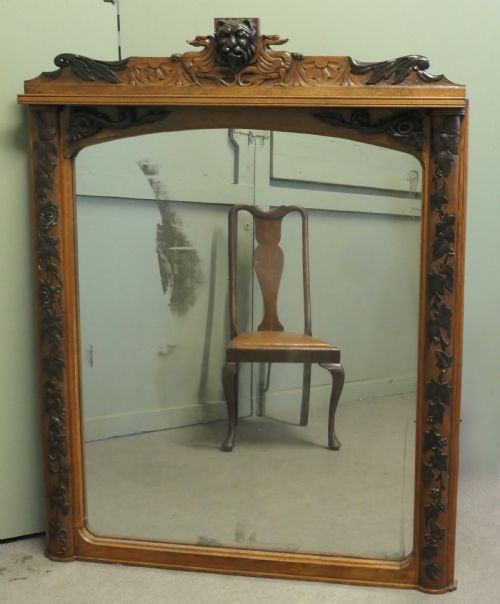
Makers constructed these frames predominantly from solid oak, sometimes augmented with gesso details or brass fixtures to highlight the structural lines. Timber was selected for grain pattern and strength, allowing deep relief carving without compromising the integrity of the frame.
Glazing typically involved thick glass plates, often bevelled at the margins to catch the light and add depth to the reflection. Backboards of simpler wood secured the glass within heavy rebated frames designed to withstand daily use.
Some oak mirrors hide fierce green man carvings amongst the foliage, watching silently over the hallway.
What varies in quality
The distinction between ordinary and superior examples lies in the depth and sharpness of the woodwork. Crisp hand-carved mouldings and well-proportioned tracery separate workshop pieces from mass-produced items.
Originality of components dictates the standing of a piece, particularly the retention of original glass plates and mounting hardware. Untouched timber surfaces with deep patination hold more character than heavily stripped or modernly varnished frames.
The Edwardian Gothic Mirror Glossary
- Gesso
- A plaster-like mixture applied to wood surfaces as a base for moulding or gilding. It allows crisp architectural details to be formed onto the frame before finishing.
- Bevelled Glass
- Glass with an angled edge polished around the perimeter. This technique creates a prismatic border that catches light and adds visual weight to the mirror.
- Gothic Revival
- An architectural and decorative style drawing inspiration from medieval design. It employs pointed arches, heavy timbers and ecclesiastical motifs adapted for domestic furniture.
- Arts and Crafts
- A design movement valuing hand craftsmanship and simple vernacular materials over industrial uniformity. It influences mirrors through honest joinery and visible timber grain.
- Puginesque
- A design style following the architectural principles of Augustus Pugin. It adheres strictly to authentic medieval structural forms and uncompromised Gothic detailing.
Edwardian Gothic Mirror: Frequently Asked Questions
Where should an edwardian gothic mirror be hung?
These pieces suit principal hallways, reception rooms or above heavy timber mantelpieces where their architectural presence anchors the room. Their dark wood tones demand adequate ambient light to reveal the carved details.
Because of their substantial weight, they require secure wall fixings anchored directly into masonry or solid studs rather than standard plasterboard.
How do I clean an antique mirror glass?
Use a soft cloth and a mild vinegar-based solution applied directly to the cloth rather than the glass. This prevents moisture from seeping behind the plate and damaging the silver backing.
Avoid commercial chemical sprays that can strip the historic finish from the surrounding timber frame or degrade vulnerable edges.
How do I date a gothic mirror?
Examine the timber species, the method of joint construction at the frame corners and the composition of the glass plate. Bevelled edges and specific backing woods often provide clues to whether a piece originates from the nineteenth or early twentieth century.
Stylistic markers such as Puginesque proportions or Arts and Crafts simplicity help narrow down the manufacturing era when combined with physical examination.
Can these mirrors be used in modern interiors?
The strong architectural lines of these mirrors provide a striking contrast against minimalist or contemporary walls. They serve as focal points that introduce texture and historical depth to sparse spaces.
Pairing the dark timber frame with neutral backgrounds allows the craftsmanship of the carving to stand out without overwhelming the room.