


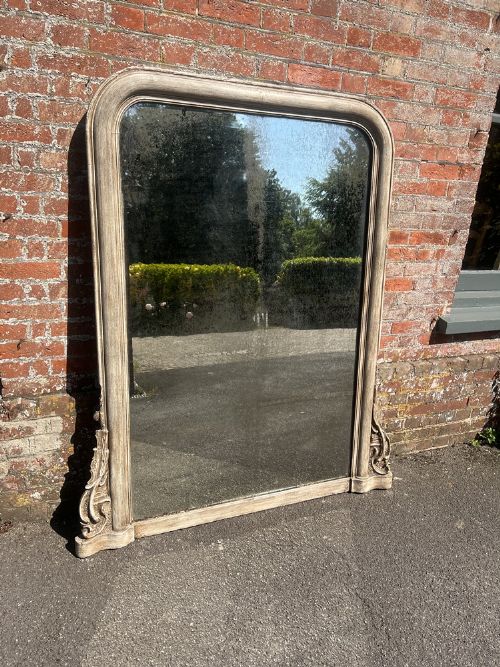


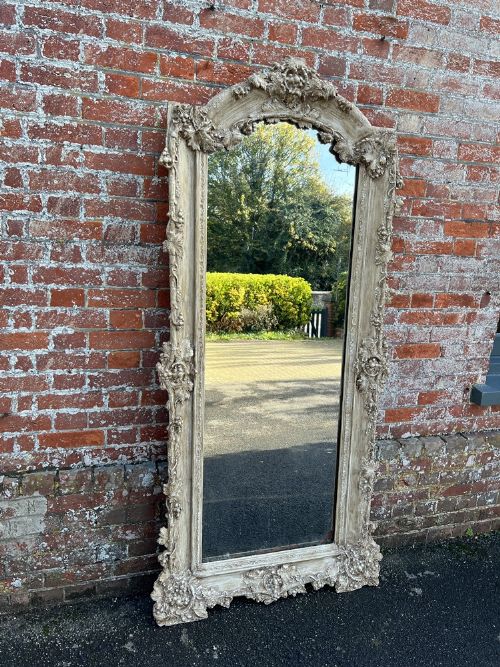


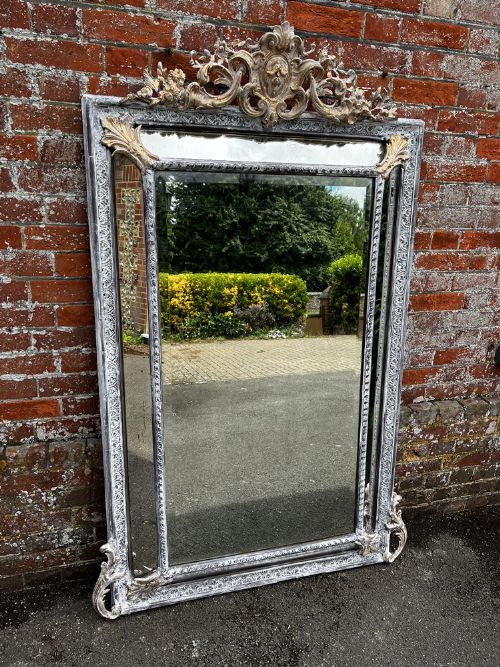


Grey Gesso Mirror
A grey gesso mirror brings substantial nineteenth-century French or English presence to a room, combining painted carved timber with moulded relief work.
Grey Gesso Mirror
When you search for a grey gesso mirror, you find wall mirrors, overmantel mirrors, and cushion frames dating from the mid-nineteenth century up to the Edwardian period. The typical piece combines carved wood with a built-up gesso surface, finished in grey paint that often shows varying degrees of distress.
French nineteenth-century examples dominate the selection, appearing in shapes such as arched top, shaped top, and rectangular cushion formats. English versions also surface, including circular gothic oak designs and substantial painted overmantels suited to period chimney breasts.
Materials and construction
Makers built these frames using carved wood as a foundational base, applying multiple layers of gesso to create crisp architectural mouldings and decorative relief details. This plaster-like mixture of chalk and binder accepted carving and smoothing before receiving coats of paint and sometimes underlying gold leaf.
Mirror glass sat within these heavy timber and gesso housings, often accompanied by original backing boards and fixings appropriate to nineteenth-century workshop practices. The grey painted finish was applied directly over the gesso, sometimes allowing earlier layers of gold leaf or white preparation to show through.
Frame materials recorded across the collection include carved wood, mirror glass, gesso, paint, oak, and occasional traces of underlying gold leaf.
Distinctions in quality
Quality depends upon the depth and crispness of the carved wood beneath the gesso, alongside the proportion of the frame moulding. Superior examples maintain sharp relief in their scrollwork, arched tops, or cushion profiles without excessive filling or soft edges.
The character of the grey paint layer also separates standard examples from finer pieces. Graduated patination, original surface weathering, and the deliberate exposure of underlying gold leaf provide visual depth that flat, modern repainting lacks.
The Grey Gesso Mirror Glossary
- Gesso
- A prepared mixture of chalk, gypsum, and glue applied to wood to create a smooth surface for painting or relief moulding. It forms the crisp decorative borders seen on nineteenth-century frames.
- Overmantel mirror
- A large horizontal looking glass designed specifically to hang on the wall directly above a fireplace mantelpiece. These pieces often feature arched tops to fit architectural chimney spaces.
- Cushion mirror
- A frame profile featuring a broad, sloping border that swells outward towards the edge, resembling a soft cushion. This distinctive French nineteenth-century shape catches light from multiple angles.
- Gothic Revival
- An architectural and decorative style drawing inspiration from medieval forms, appearing in Victorian and Edwardian pieces. It introduces pointed arches and structural oak elements to mirror design.
- Louis Philippe
- A mid-nineteenth-century French style characterised by restrained classical curves and simple arched tops. Mirrors from this period balance decorative gesso moulding with clean architectural lines.
Grey Gesso Mirror: Frequently Asked Questions
Where should I hang an overmantel mirror?
These large mirrors belong above a fireplace mantelpiece, where their proportions reflect the hearth and anchor the surrounding wall space.
Alternatively, hanging one opposite a window will draw natural light deep into the room and create an expanded sense of space.
How do I clean a gesso frame?
Dust the carved gesso surface gently with a dry, soft brush to remove accumulated particles without disturbing the painted finish.
Avoid liquid cleaners, damp cloths, or abrasive materials, as moisture softens historical gesso and causes the painted surface to flake.
Are these mirrors French or English?
The archive and current listings show a strong preponderance of nineteenth-century French pieces, particularly Louis Philippe and cushion frames with grey painted finishes.
English examples also appear, including nineteenth-century overmantels and Edwardian circular gothic designs incorporating oak.