






English Fusee Movement Clock
An English fusee movement clock is a precise timepiece driven by a conical pulley and cord or chain, prized for maintaining steady force as the mainspring winds down.
English Fusee Movement Clock
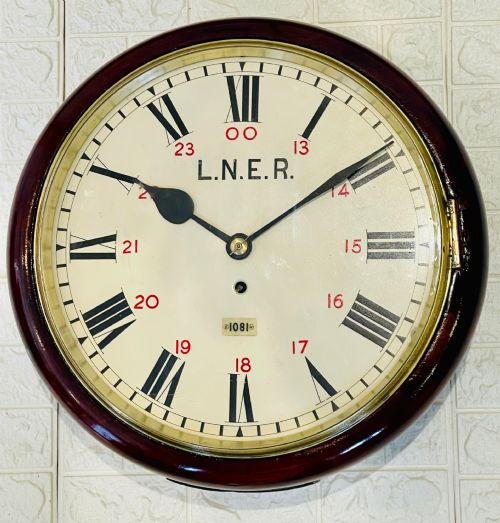
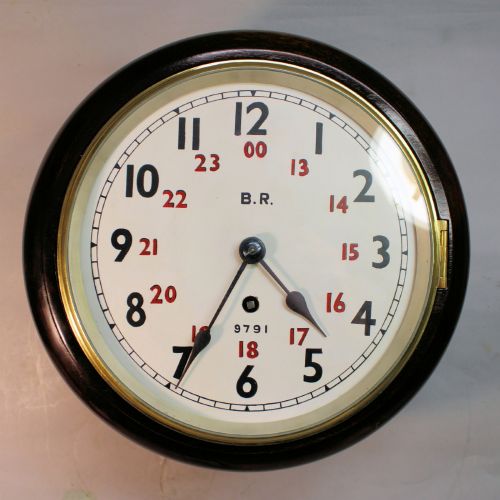
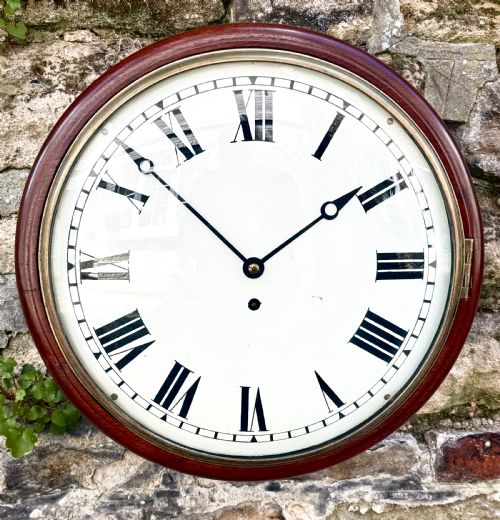
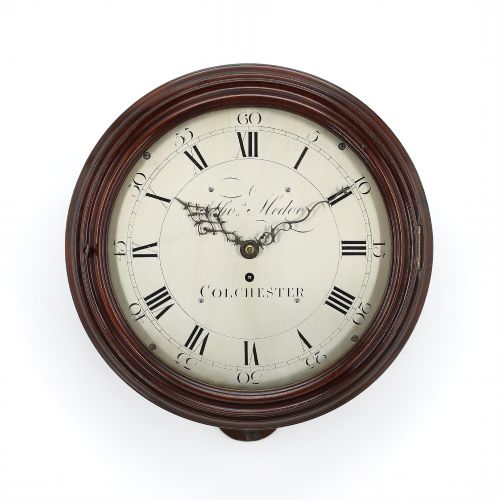
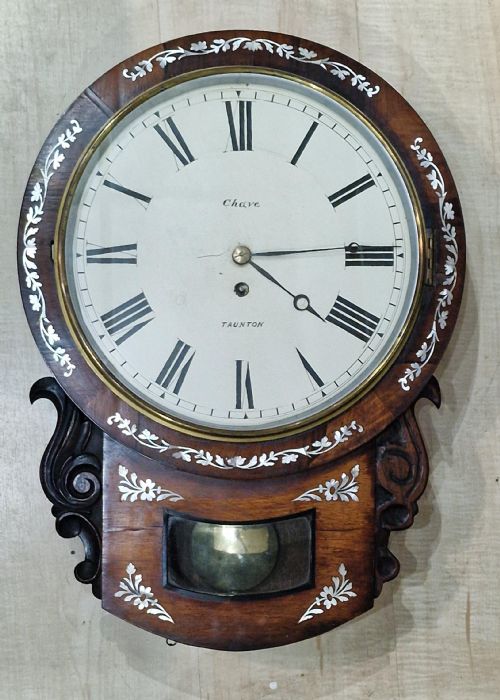
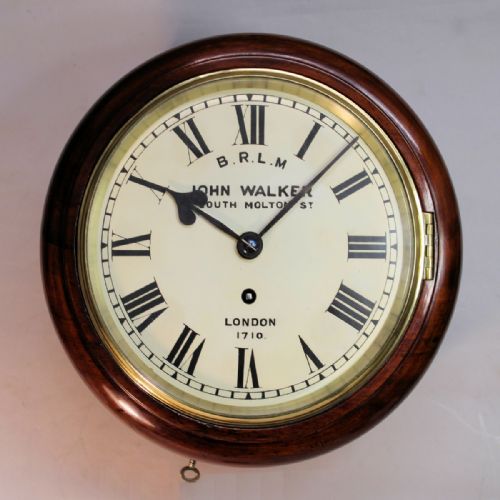
An English fusee movement clock appears in several distinct formats spanning the Georgian, Regency, and Victorian eras, with wall clocks and drop-dial railway timepieces forming a large share of the available pieces. These robust utilitarian dials served stations, offices, and public spaces, often built with sturdy mahogany or oak cases.
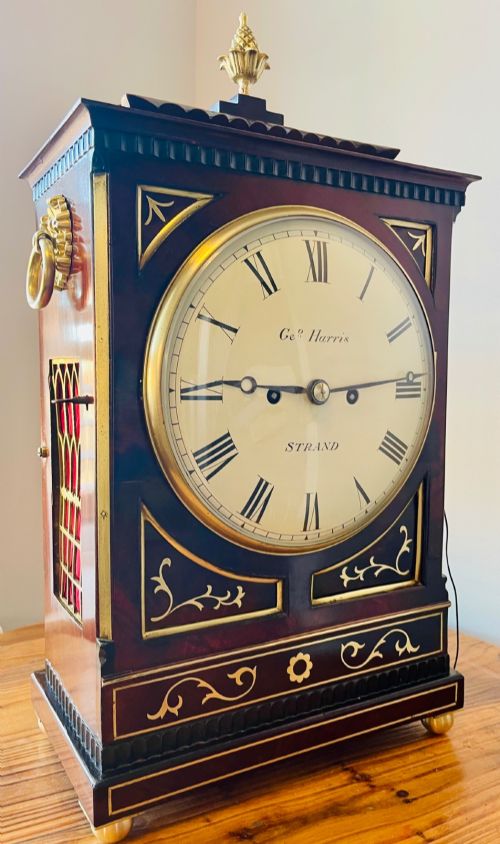
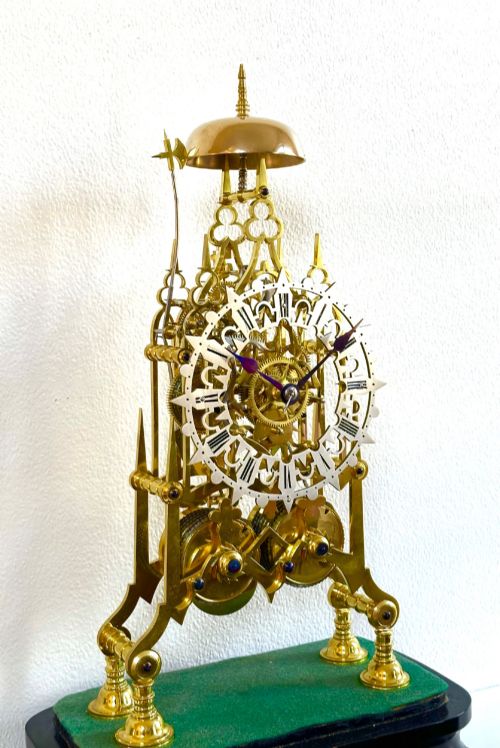
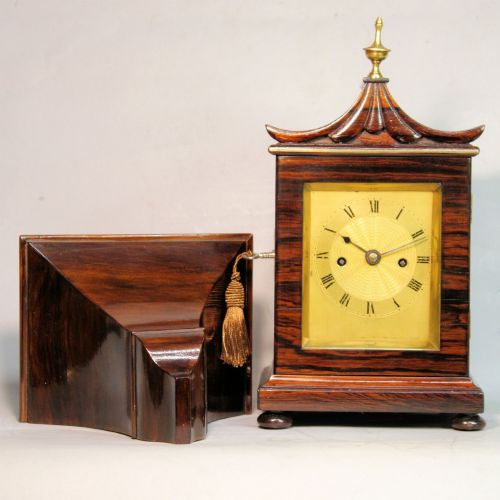
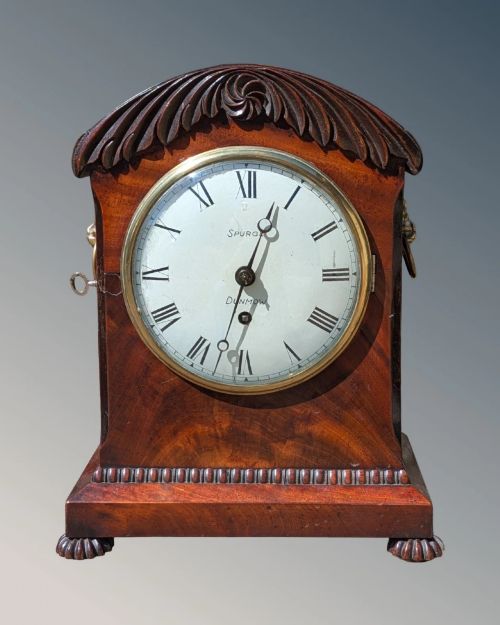
Bracket clocks and library clocks represent the more decorative domestic end of the spectrum, sitting on shelves or desks in rosewood, mahogany, or five-glass cases. Skeleton clocks under glass domes expose the intricate brass and steel wheel work directly to the eye.
Mantel clocks and tavern clocks round out the forms, occasionally featuring twin fusee movements that drive a bell-striking mechanism in addition to the timekeeping train. Originating from workshops across London and regional centres such as Taunton, Brighton, and Colchester, these pieces carry the lineage of British horology.
Materials and Mechanics
The construction relies on seasoned cabinet timbers like mahogany, rosewood, and oak to house the heavy brass and steel mechanical assemblies. Dial faces incorporate painted wood, convex glass, and brass bezels, often protected by locking side doors or hinged bezels.
The defining mechanical feature is the fusee itself, a grooved conical pulley connected by a chain or cord to the mainspring barrel. This clever design equalises the diminishing torque of the uncoiling spring, ensuring consistent force reaches the escapement throughout the running cycle.
Some railway wall clocks bear the scuffs of busy station platforms, quietly keeping time long after the last steam train departed.
Evaluating Horological Merit
Quality in an English fusee movement clock rests on the crispness of the movement engraving, the finish of the wheel work, and the original integrity of the case timbers. Makers who signed their backplates often invested greater skill into hand-finishing the arbors, pivots, and plates.
The proportional balance of the dial, the absence of excessive timber shrinkage or replacement bezels, and the smooth operation of the fusee chain distinguish a high-grade workshop product from a standard utility timekeeper.
Thomas Hedge of Colchester·John Walker London·William Payne·John Barwise of London·Phillips Brothers·Charles Raymond
The English Fusee Movement Clock Glossary
- Fusee
- A conical pulley designed to equalise the declining power of the mainspring as it unwinds. This mechanism ensures even tension is delivered to the gear train from full wind to empty.
- Drop-dial
- A wall clock configuration where the circular dial sits above an extended wooden trunk or box. This lower section accommodates the swing of a longer pendulum.
- Skeleton clock
- A timepiece built with open framework plates that expose the entire gear train to view. These are typically displayed beneath a blown glass dome.
- Anchor escapement
- A clock escapement mechanism shaped like a ship's anchor that controls the release of the wheel train. It works in tandem with the pendulum to regulate the ticking motion.
- Twin fusee
- A movement incorporating two separate fusee cones and trains within the same case. One side drives the timekeeping while the second powers a striking or chiming train.
English Fusee Movement Clock: Frequently Asked Questions
How do I wind a fusee clock?
Winding requires a dedicated key inserted into the dial or movement aperture, turning clockwise until gentle resistance signals a full wind. Care must be taken not to overwind older chain-driven mechanisms.
Most single and double fusee movements run for eight days per wind. Keeping a steady rhythm prevents sudden stress on the brass arbors.
Why does a fusee clock have a chain?
The fine steel chain links the spring barrel to the conical fusee pulley. As the spring loses tension, the chain rides higher up the wider cone diameter to maintain equal torque.
Gutline cords were also used in earlier models, but steel chains offer greater durability and strength under constant tension.
Where were railway clocks used?
Railway wall clocks hung in bustling station master offices, ticket halls, and platform junctions across companies like the L.N.E.R and GWR. Punctuality was vital for timetabling train movements.
These utilitarian dials prioritised clear black numerals and robust mahogany or oak cases to withstand vibration and heavy public use.
How do I date an English fusee clock?
Dating relies on stylistic clues in the case woodwork, signature engravings on the backplate, and the evolution of dial design from convex painted wood to flat brass. Regency and Georgian pieces often display finer cabinet veneers.
Makers recorded in trade directories provide a reliable baseline when signatures are present on the dial or movement plates.