



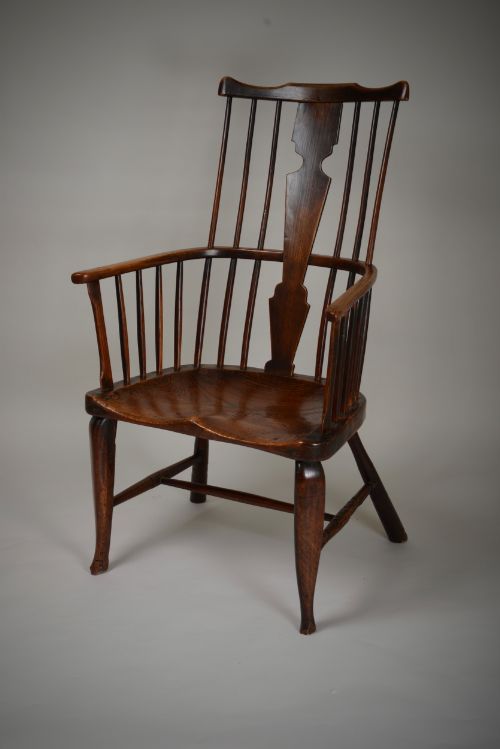
English Elm Windsor Seat
An English elm windsor seat brings a robust vernacular presence to a room through centuries of traditional country craftsmanship.
English Elm Windsor Seat
When you search for an english elm windsor seat, you encounter vernacular seating designed primarily for comfort and durability in domestic settings. The pieces span Georgian, Regency and Victorian periods, reflecting the evolving tastes of rural workshops.
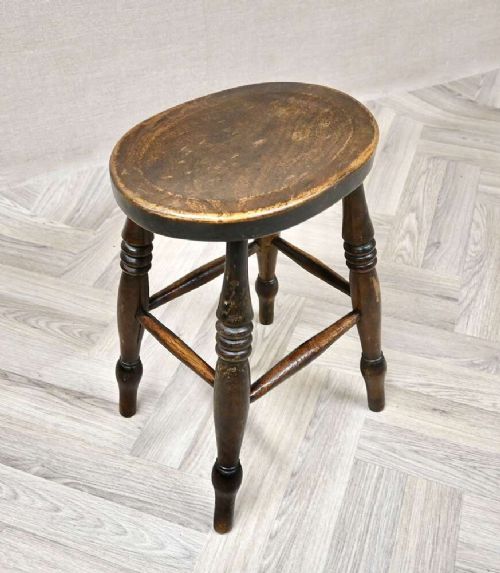
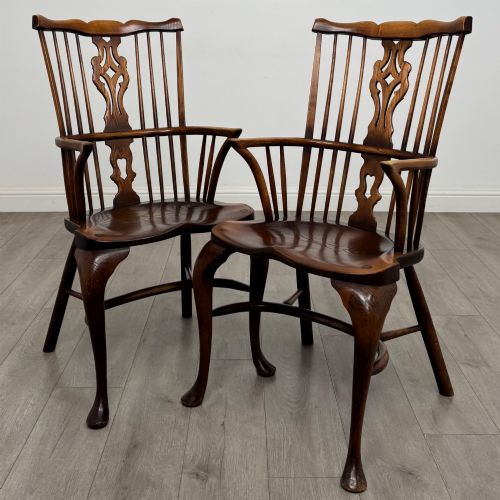
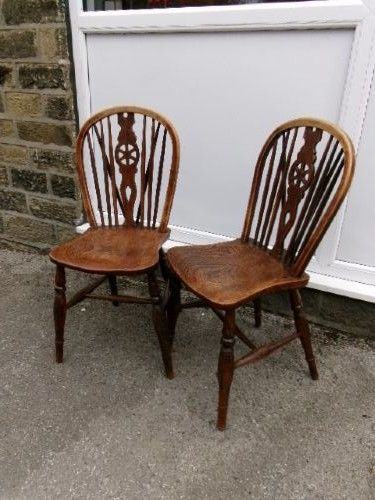
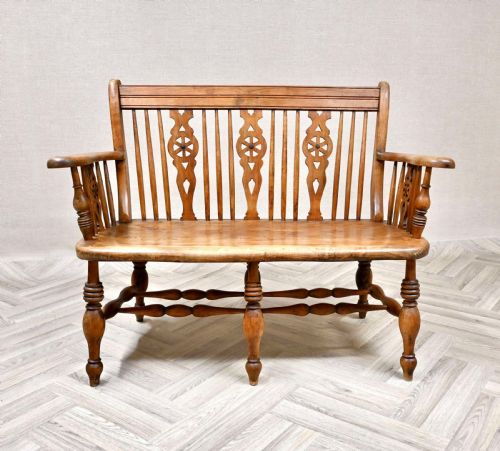
Armchairs and carver elbow-chairs dominate the offerings alongside sets of kitchen and dining chairs. You also meet stools, benches and settles constructed to serve utilitarian roles.
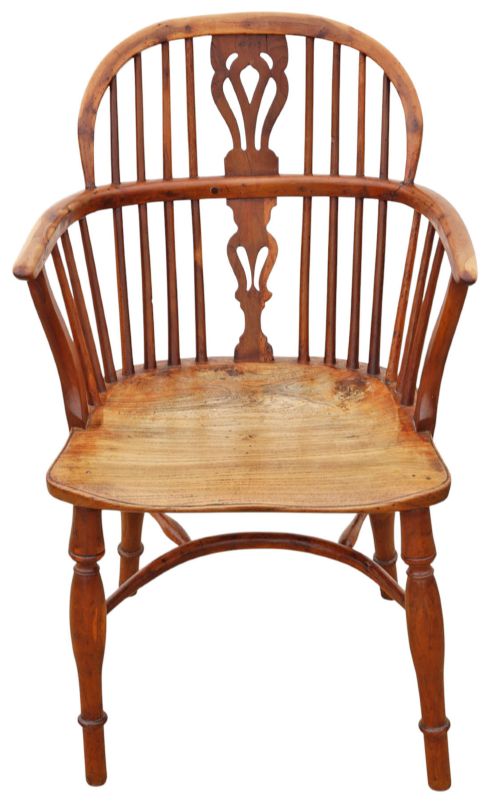
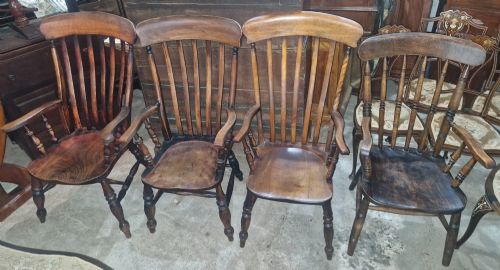
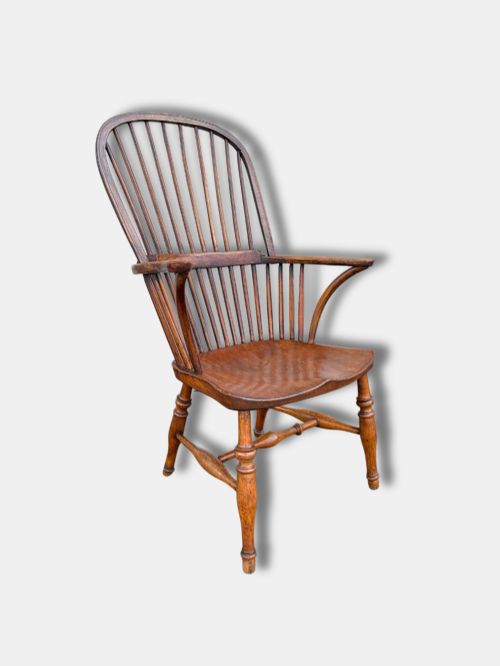
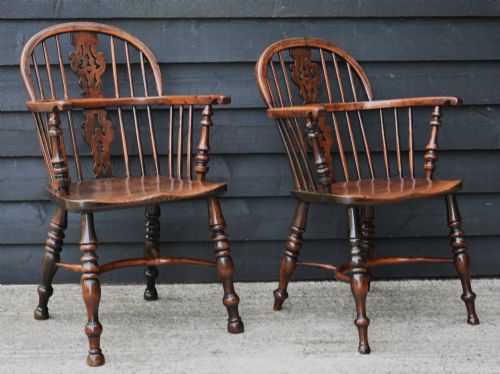
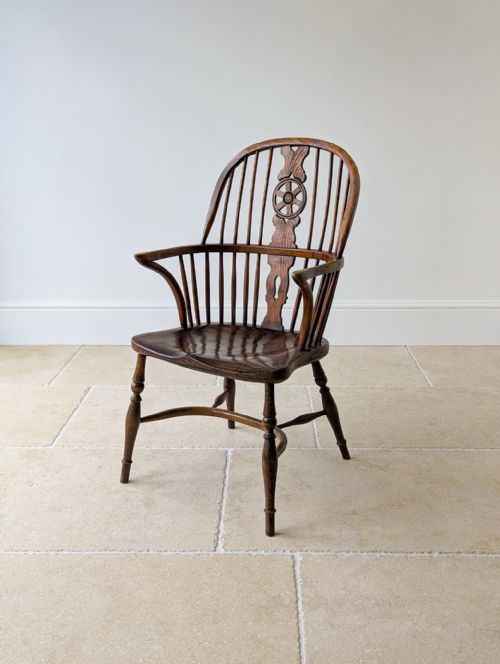
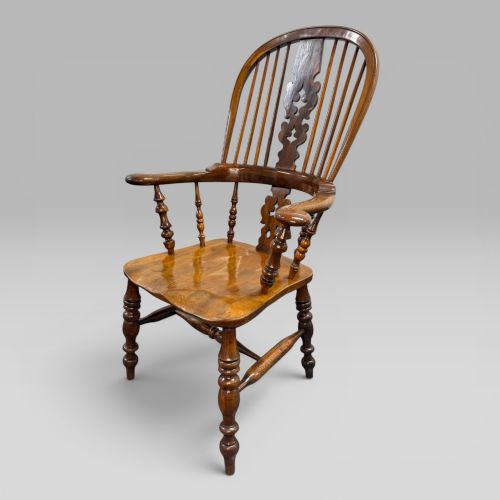
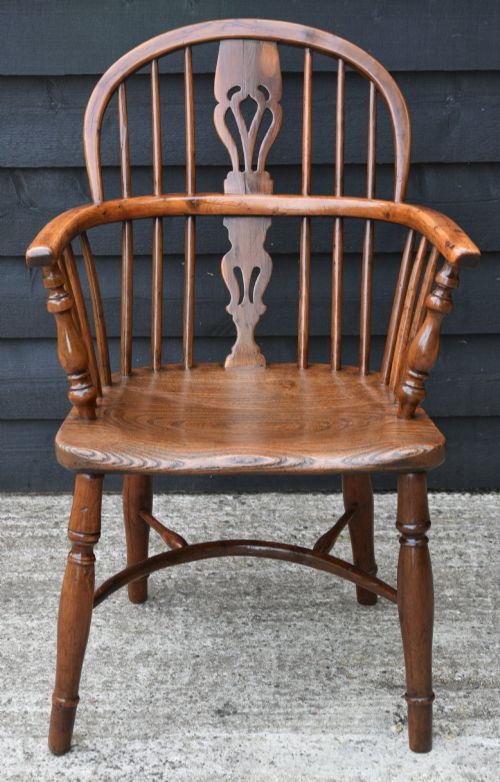
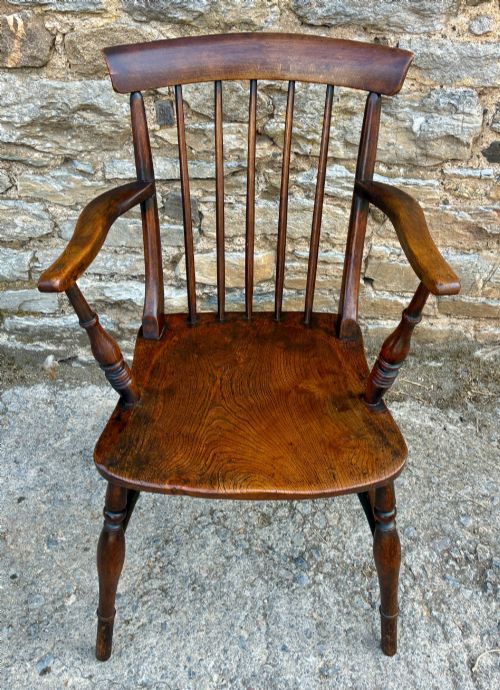
The most common form on this page is the classic Windsor armchair, frequently combining an elm seat with ash, beech or yew components. These diverse forms share a distinctive construction where legs and backs are wedged directly into a thick wooden seat.
Materials and construction methods
Makers utilised elm specifically for the solid seat slabs because its interlocked grain resists splitting under stress. Turned legs and spindles draw upon ash, beech, or fruitwood, providing rigid structural support.
Steam-bending techniques shaped the distinctive hoop backs, comb backs and wheelbacks characteristic of these traditional designs. Component parts were typically joined using wedged tenons and mortises rather than metal fixings.
Children shared in the vernacular tradition too, with miniature armchairs built down to scale for early nineteenth-century firesides.
Evaluating the craftsmanship
Quality rests in the selection of timber and the dexterity of the turning. A well-chosen elm seat displays a rich grain pattern while maintaining structural integrity.
The balance of the spindles and the comfort of the arms distinguish superior examples from standard utility seating. Original surface patination and minimal timber replacement elevate the standing of a piece.
Worksop
The English Elm Windsor Seat Glossary
- Windsor chair
- A wooden chair built with a thick solid seat into which the legs and back spindles are separately inserted. This construction method defines the entire tradition.
- Comb back
- A Windsor chair variation where the tall back resembles the teeth of a comb, often topped by a horizontal headpiece. These designs frequently date to the eighteenth century.
- Hoop back
- A continuous curved wooden bow forming both the backrest and the arms of the chair. Steam-bending creates this characteristic rounded silhouette.
- Splat
- A central vertical wooden strip set into the back of a chair for structural support and decoration. Various cutout shapes appear within regional vernacular styles.
- Smokers bow
- A low-backed armchair designed for comfortable seating in parlours or taverns, sharing construction traits with Windsor chairs. They often feature robust turned spindles.
English Elm Windsor Seat: Frequently Asked Questions
What is an english elm windsor seat?
It is a traditional wooden chair or bench featuring a solid elm seat combined with turned or bentwood back components. These vernacular pieces originated in rural workshops across Britain.
Craftsmen built them for domestic utility, resulting in sturdy furniture designed to withstand generations of daily use.
How do I date an english elm windsor seat?
Dating relies upon stylistic markers such as the shape of the backrest, the turning of the legs and the thickness of the seat. Eighteenth-century examples often feature comb backs, while Victorian pieces frequently incorporate wheelbacks or lathe backs.
Wear patterns and timber characteristics also help establish the period of manufacture.
Are these seats comfortable for daily use?
The saddle-shaped elm seats are ergonomically carved to fit the body, providing surprising support for wooden furniture. Adding a loose cushion can further enhance comfort for long periods.
Their robust construction ensures they remain practical for dining and fireside seating today.
What timbers were used alongside elm?
Makers selected ash and beech for spindles and legs because those straight-grained timbers take turning well. Yew wood frequently appears in high-status country chairs for its striking grain and durability.
Fruitwood occasionally forms part of the framework in regional variations.