





Traditional Windsor Rocker
A traditional windsor rocker brings organic warmth and sturdy vernacular craftsmanship to a fireside or bedroom.
Traditional Windsor Rocker
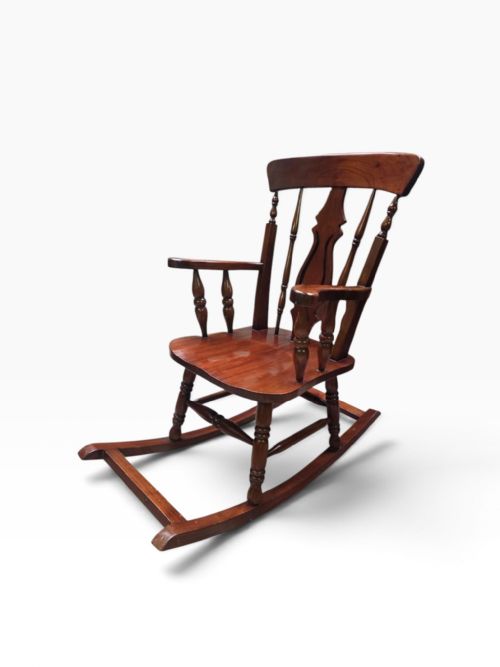
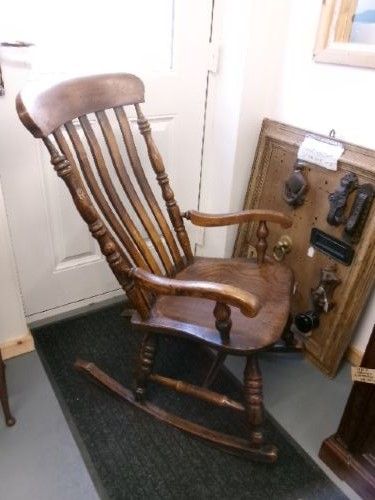
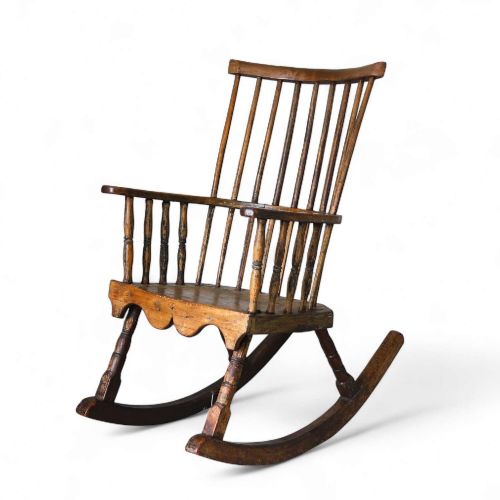
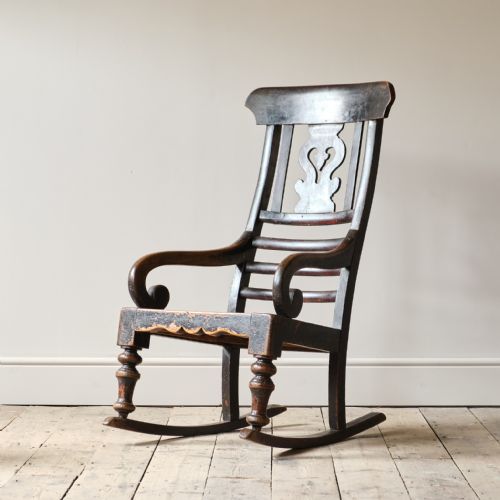
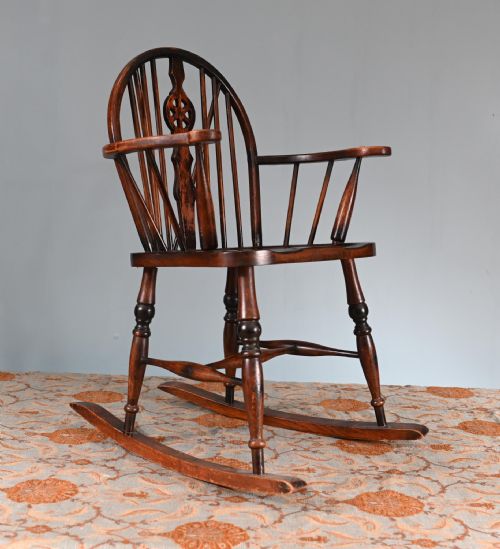
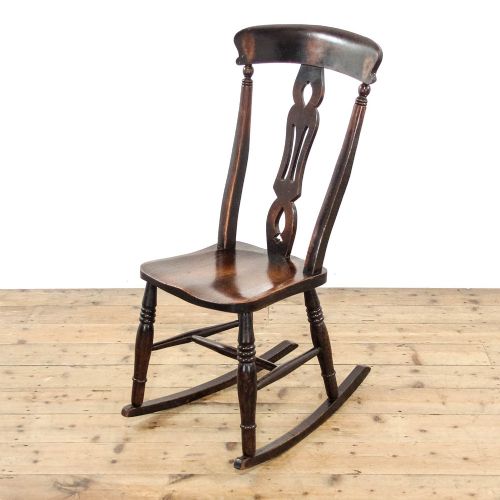
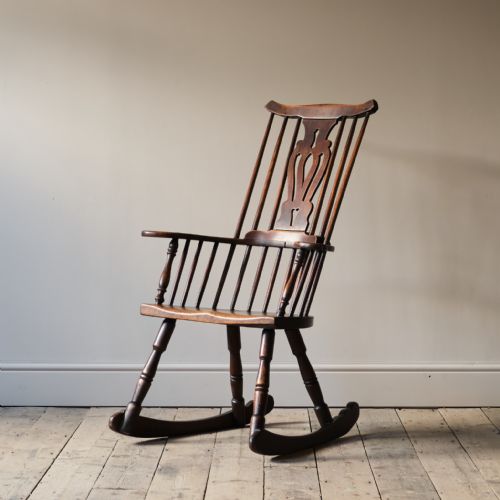
A traditional windsor rocker is a seated form built with an articulated wooden seat into which legs and back spindles are wedged directly, mounted upon curved wooden rockers. You are most likely to encounter Victorian and nineteenth-century examples alongside country-style and primitive vernacular interpretations.
The regional variations range from Thames Valley and Yorkshire farmhouse models to Swedish painted seating and child-sized iterations. These chairs serve primarily as fireside seats or nursing chairs, combining domestic utility with regional woodworking traditions.
How they were made
Makers utilised a combination of native timbers such as elm for the solid carved seats, ash and beech for the turned spindles and legs, and occasional sycamore, yew, or mahogany. These woods were chosen for their specific properties, allowing chairmakers to steam-bend backs and shape comfortable saddle seats.
Construction relied on traditional joinery techniques including wedged tenons and comb-backs, frequently finished with original paint or polished surfaces.
Traditional Windsor Rocker Retail Price Guide 2026
Typical asking prices for traditional windsor rocker among the pieces listed under this phrase on Sellingantiques today, from the lower quarter to the upper quarter. They describe what is for sale here now, not the wider market.
Every child-sized windsor rocker spent generations being tipped over, dragged across farmhouse flagstones, and used as a sturdy stepladder.
What varies in quality
Quality rests upon the selection of timber and the harmony of the turning, particularly in the balance of the spindle-backs and the depth of the sculpted elm seat. Early examples demonstrate finer proportion and more integrated regional design compared to later mass-produced variants.
The survival of original painted surfaces or rich patination on hardwoods like elm and ash elevates an individual chair, whereas heavy alterations or replaced rockers alter the integrity of the piece.
The Traditional Windsor Rocker Glossary
- Comb-back
- A Windsor chair variation where the top rail resembles the teeth of a comb, featuring upward-extending spindles. This style provides additional back support.
- Wheelback
- A design incorporating a pierced wooden splat shaped like a cartwheel in the centre of the backrest. It is a common feature on nineteenth-century vernacular seating.
- Vernacular
- An architectural and craft descriptor denoting objects made by local artisans using regional materials rather than following high-style academic designs. These pieces reflect local domestic needs.
- Thames Valley
- A specific geographical region known for distinctive eighteenth and nineteenth-century Windsor chair production, often using yew wood and elaborate turnings. These chairs are notable for their refined construction.
Traditional Windsor Rocker: Frequently Asked Questions
What is a traditional windsor rocker?
A traditional windsor rocker is a wooden armchair featuring turned spindles inserted into a solid carved seat, mounted on curved rockers. They emerged from vernacular woodworking traditions across Britain and Scandinavia.
These chairs were designed for domestic utility, commonly utilised as fireside seats or nursing chairs in farmhouses and country homes.
How can I tell the age of a rocker?
Age is determined by timber selection, construction methods, and regional style indicators. Eighteenth-century models often feature Thames Valley origins and yew or elm construction, whilst nineteenth-century examples show wider variations like wheelbacks or comb-backs.
Examining the wear on the rockers and the patination of the wood helps confirm the period of manufacture.
What woods were used for these chairs?
Chairmakers used native hardwoods chosen for strength and flexibility. Elm was the preferred timber for the solid saddle seat due to its resistance to splitting.
Ash, beech, and oak provided the structural rigidity needed for legs and spindles, whilst finer pieces occasionally incorporated yew or mahogany.
Are these chairs comfortable for daily use?
The saddle seats are ergonomically carved to fit the body, and the angled spindle backs offer supportive seating. Their rocking action makes them practical for relaxation.
Placing a cushion on the elm seat can enhance comfort for extended sitting periods in a living space.