

English Country Carver
An English country carver is a sturdy vernacular armchair built for farmhouse and cottage interiors from native timbers.
English Country Carver
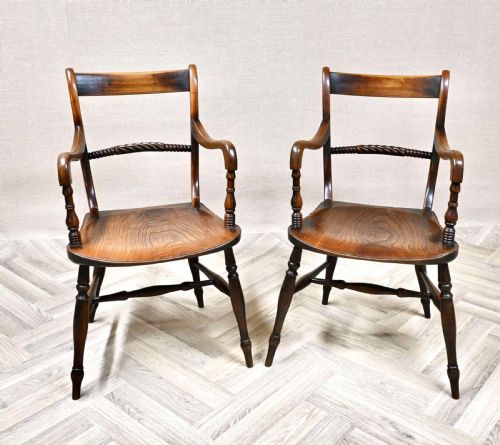
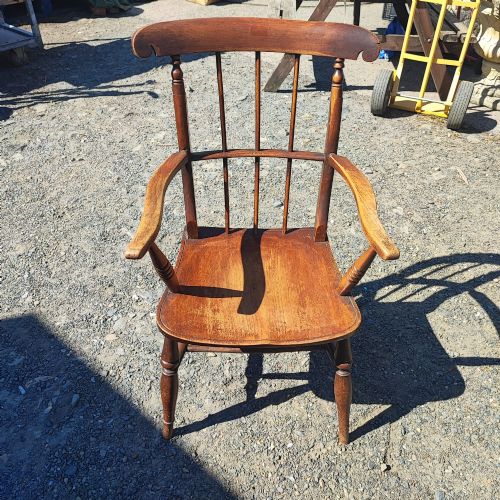
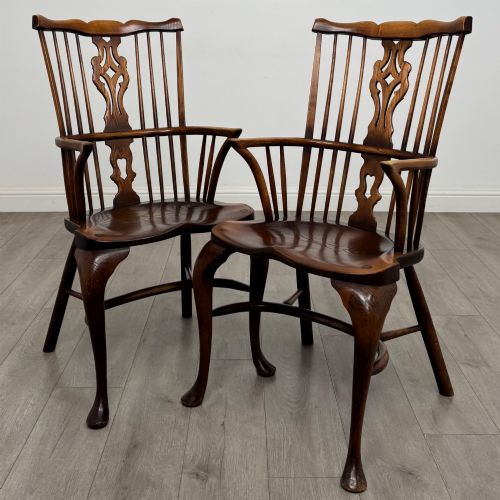
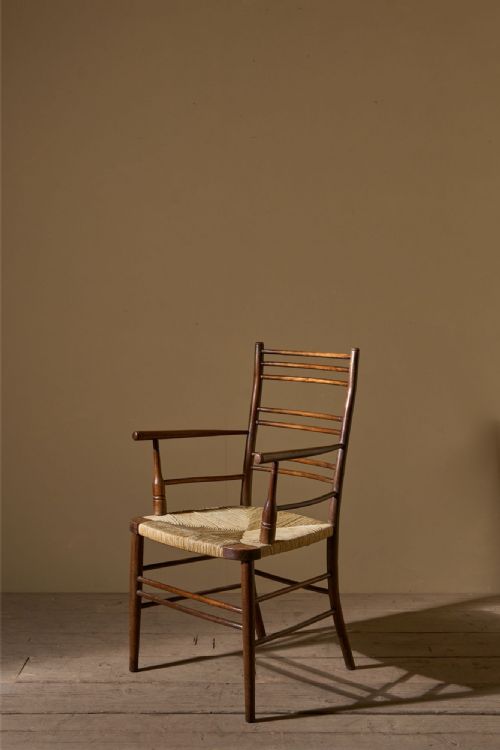
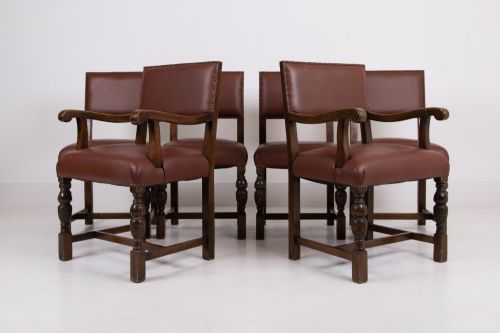
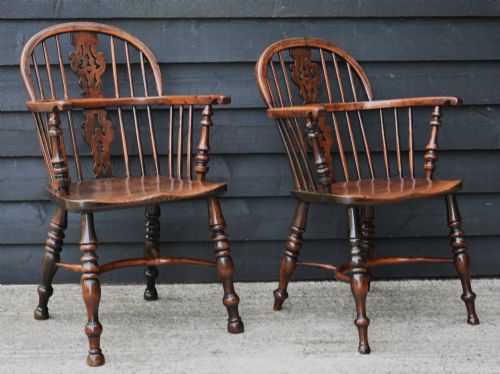
An english country carver brings a utilitarian aesthetic to the dining table or fireside, emerging from rural workshops rather than metropolitan cabinet makers. The pieces collected here span the eighteenth, nineteenth, and early twentieth centuries, encompassing vernacular farmhouse forms and regional Windsor variants.
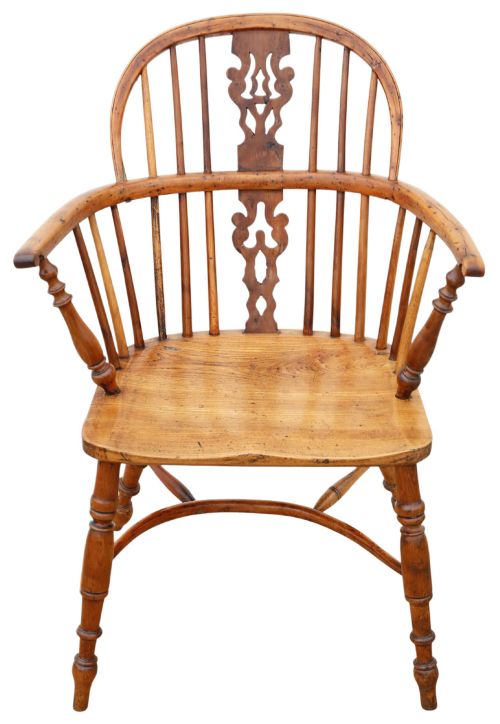
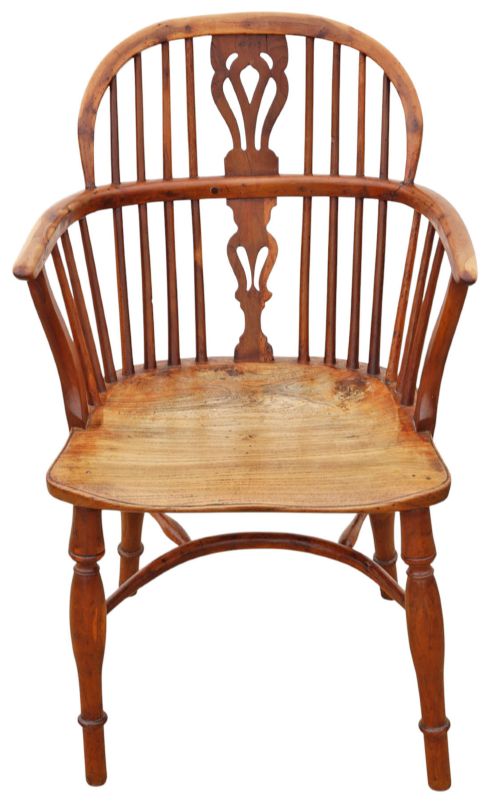
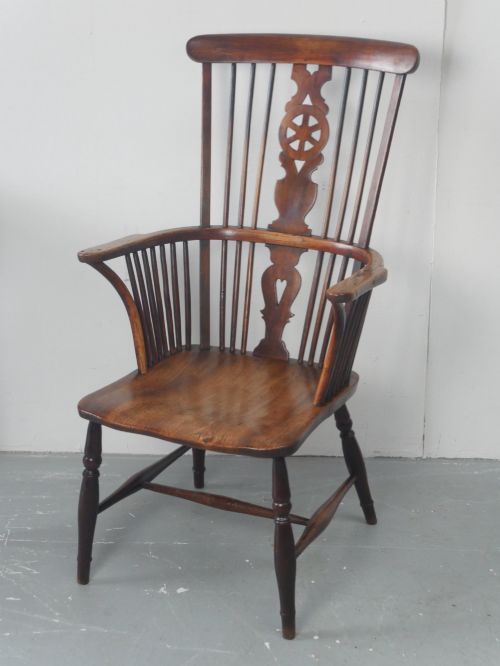
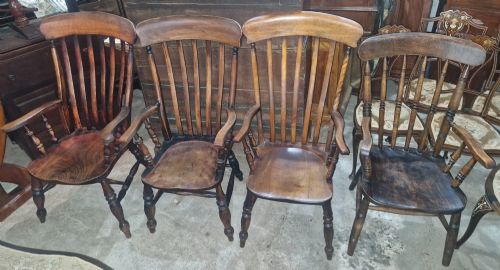
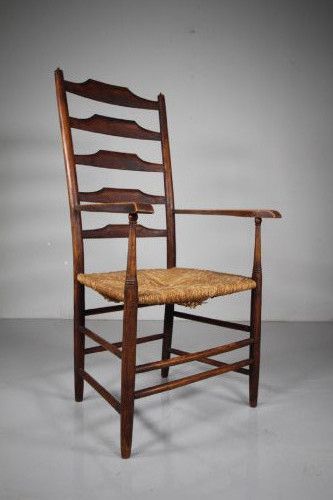
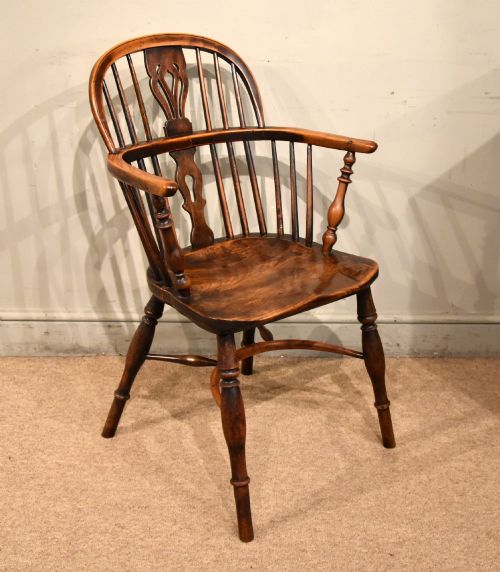
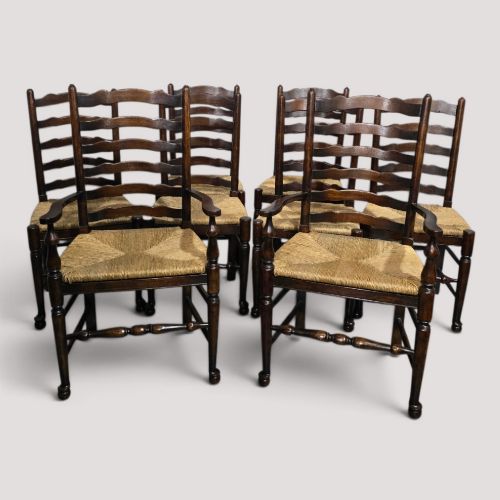
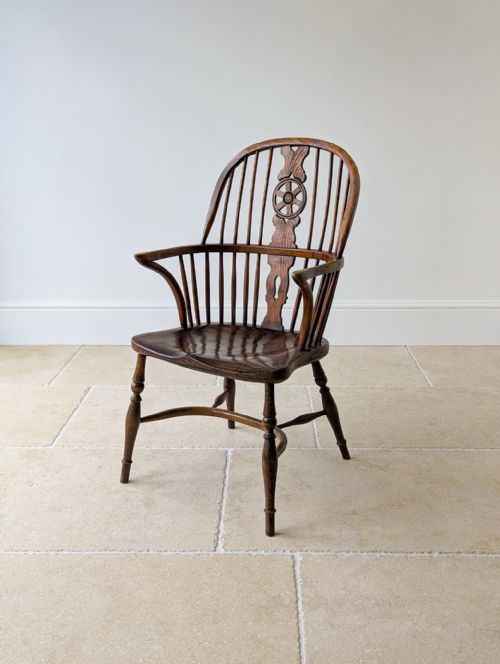
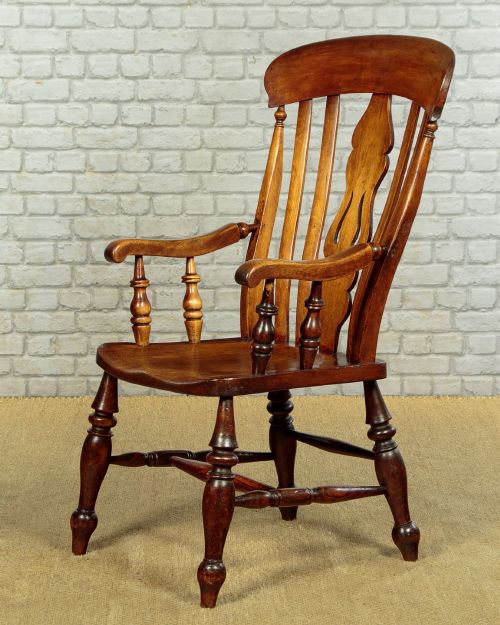
Most examples rely on a sturdy combination of turned spindles, hoop backs, and solid timber seats shaped for comfort. The selection includes highback kitchen chairs, wheelback designs, and ladderback dining chairs alongside classic bow-arm versions.
Makers drew on local timber stocks, meaning construction methods reflect regional traditions found across Lincolnshire, the Thames Valley, and various rural shires. These armchairs served practical domestic roles, resulting in honest construction without superfluous ornamentation.
Materials and construction
Construction relies on contrasting native timbers chosen for specific structural properties, combining flexible woods for bent components with dense boards for carved seats. Elm provides a split-resistant seat slab, while ash, beech, and fruitwood form the turned spindles and steam-bent bows.
Green woodworking techniques allowed craftsmen to shape unseasoned timber so that joints tightened as the wood dried around wedged tenons. Rush seating also appears, woven tightly over wooden frames to create supportive platforms.
Turned components were shaped on pole lathes using local timber stocks, yielding subtle variations in thickness and profile across each chair. Surface finishes remained minimal, relying on wax and decades of handling to develop deep patination.
Deeply scooped elm seats bear the unmistakable polish of generations leaning back after a hearty farmhouse supper.
Judging quality
Quality rests in the balance of the proportions and the integrity of the original timber rather than surface polish. A superior example maintains matching turned underpinnings and an elm seat slab with deep, pronounced saddle-carving.
The sophistication of the arm bow and the grace of the spindle arrangement dictate the visual success of the piece. Replacements to legs, stretchers, or arm posts diminish the historical integrity of rural seating.
Philip Clissett·E W Godwin
The English Country Carver Glossary
- Carver
- An armchair designed to match a set of smaller dining chairs, typically placed at the head of a table. These larger seats provide wider elbow room.
- Windsor
- A chair constructed with a solid wooden seat into which the legs, back spindles, and bow are separately bored and wedged. This technique creates a rigid framework without traditional mortise and tenon frame joints.
- Crinoline stretcher
- A curved metal or wooden brace connecting the legs of a chair to provide additional structural rigidity. The design resembles the stiffened petticoats worn in the nineteenth century.
- Wheelback
- A Windsor chair variation featuring a pierced splat carved or shaped in the silhouette of a spoked carriage wheel. This motif gained popularity during the Georgian and Victorian periods.
- Vernacular
- Objects made by regional craftsmen for local use, following traditional local patterns rather than formal architectural styles. These pieces prioritize function and available materials.
English Country Carver: Frequently Asked Questions
What is an english country carver?
An english country carver is a robust wooden armchair made in rural regions for domestic use around the farmhouse. They typically feature solid shaped seats and turned supports.
These chairs served double duty as desk seating, fireside chairs, or head-of-table dining seating. Their vernacular design reflects the practical needs of rural households.
How do I identify a Windsor chair?
A Windsor chair is defined by its distinct construction method where all components attach directly into a thick wooden seat slab rather than an independent frame.
Look for shaved spindles, steam-bent back bows, and saddle-shaped seats. Regional variations include wheelbacks, comb backs, and barbacks.
Which woods were used?
Craftsmen utilised native British hardwoods that grew abundantly near their workshops. Elm, ash, beech, yew, and fruitwood appear frequently across these listings.
Different timbers served specific structural purposes within the same chair. Elm provided tough, crack-resistant seats while ash and yew offered strength for bentwood bows.
How do I care for antique timber?
Maintain antique elm, ash, and oak by keeping them away from direct heat sources and sudden humidity changes. Apply natural beeswax sparingly to nourish the dry wood.
Avoid modern liquid polishes that build up silicone layers over the aged surface. Gentle dusting with a dry cloth preserves the original patina.