




English Coastal Landscape
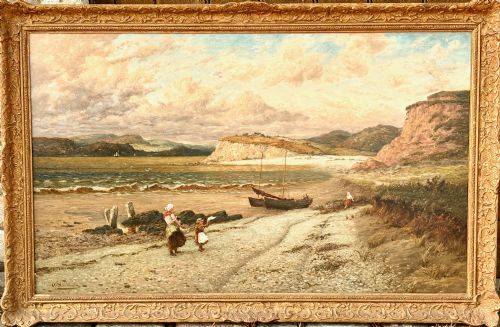
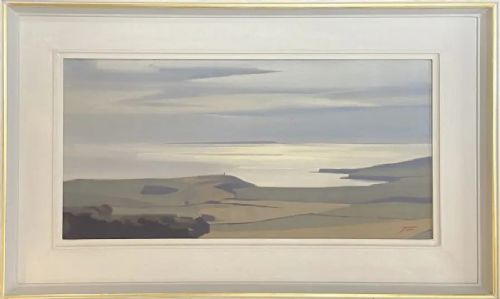
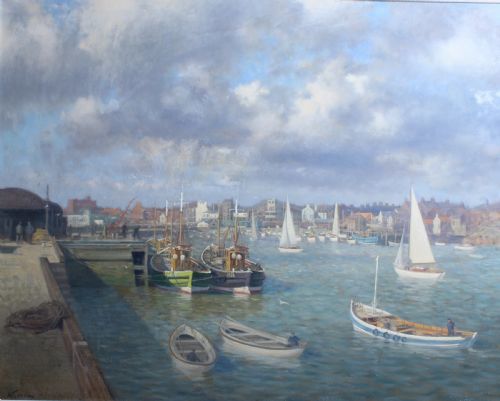
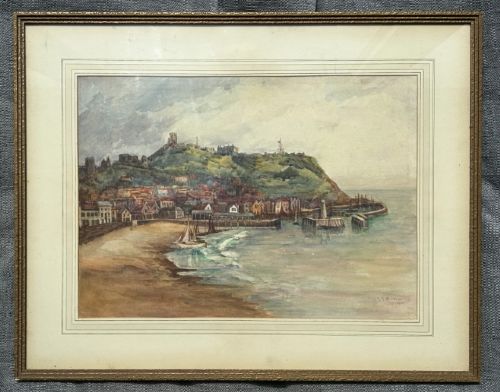
When collectors seek an english coastal landscape, they are drawn to framed watercolours and oil paintings capturing harbours, cliffs, and fishing boats.

English Coastal Landscape
An english coastal landscape captures the shifting light and tidal rhythms of shores from Cornwall to Yorkshire. These works record historic harbours, fishing boats, and coastal towns through the eyes of Victorian, Edwardian, and mid-century artists.
The material record on this page leans heavily towards works on paper and canvas, encompassing both detailed topographical watercolours and expressive impressionist oils. Buyers frequently encounter nineteenth-century depictions of northern ports alongside post-war interpretations of southern estuaries.
Materials and Technique
Artists captured these coastal scenes using watercolour pigment on paper or oil paint applied to canvas, wood panels, and occasionally board. Watercolours rely on translucent washes to render pale skies and transparent sea, whereas oil paintings often utilise heavier impasto to build texture on cliffs and crashing waves.
Framing forms an integral part of the physical object, with many pieces preserved in period giltwood frames that complement the depth and palette of the marine scene.
Assessing Quality
Quality rests upon the artist's command of atmospheric light, topographical accuracy, and the confident handling of water and sky. Stronger works convey the palpable dampness of sea air and the specific character of a harbour, avoiding stiff lines or formulaic composition.
The preservation of the pigment, the stability of the canvas or paper support, and the harmony of the original frame further separate standard archival records from exceptional pieces of fine art.
James Orrock·William Banks Fortescue·James Fry·Walter Goodin·Arthur Tucker·Herbert Royle·Thomas Bush Hardy
The English Coastal Landscape Glossary
- Impasto
- Paint applied thickly to a canvas or board, standing out in relief from the surface. This technique allows artists to render the tactile weight of crashing surf or chalk cliffs.
- Seascape
- A work of art depicting the sea, coastal views, or marine activity. These pieces focus primarily on the water, tidal flats, and harbour entrances.
- Topographical
- Representing exact real-world locations with descriptive accuracy. Many nineteenth-century works meticulously recorded specific named bays, castles, and towns.
- Giltwood
- Wood carved and covered with a thin layer of gold leaf or gold paint. Period frames finished in this manner frequently accompany traditional oil paintings.
English Coastal Landscape: Frequently Asked Questions
How do I date an english coastal landscape?
Dating relies upon stylistic markers, artist signatures, framing materials, and inscriptions on the reverse of the canvas or paper. Costume details on figures and the architectural state of depicted harbours also provide firm chronological clues.
Archival records often confirm exhibition dates or the active working spans of the painters who recorded these shores.
Where were these coastal scenes typically painted?
Artists gravitated towards active fishing ports, dramatic chalk cliffs, and tidal estuaries across Britain. Popular locations recorded in the evidence include Whitby, Scarborough, St Ives, Kimmeridge Bay, and the Solent.
Painting outdoors or making preparatory watercolours on site allowed artists to capture the distinct light and maritime traffic of each region.
How should I display an antique watercolour?
Watercolours on paper demand protection from direct sunlight to prevent the fading of delicate pigments. Framing behind conservation-grade glass safeguards the paper from moisture and atmospheric pollutants.
Positioning the artwork in a stable environment away from direct heat sources ensures the longevity of both the paper support and its period frame.
What is the difference between oil and watercolour here?
Oil paintings utilise suspended pigments in drying oils applied to canvas, board, or wood panels, yielding rich textures and deep colour saturation. Watercolours employ water-soluble pigments on paper, producing luminous, transparent washes of light.
Both mediums served artists well in capturing maritime subjects, though oils generally offer greater physical resilience over time.