





Blue Coastal Watercolour Art
Blue coastal watercolour art captures nineteenth and early twentieth-century maritime life through delicate washes and brisk brushwork.

Blue Coastal Watercolour Art
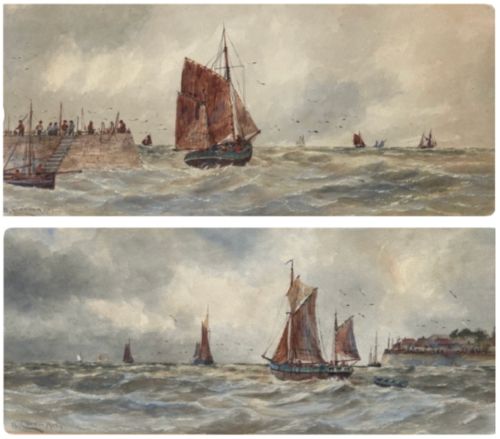
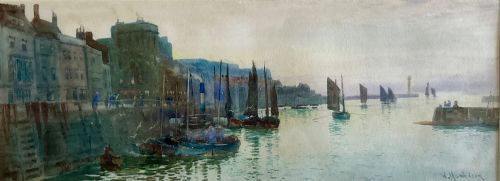
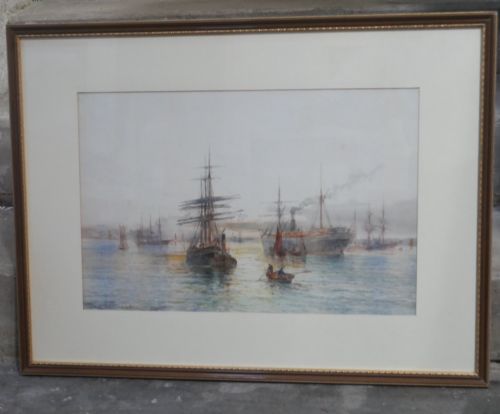
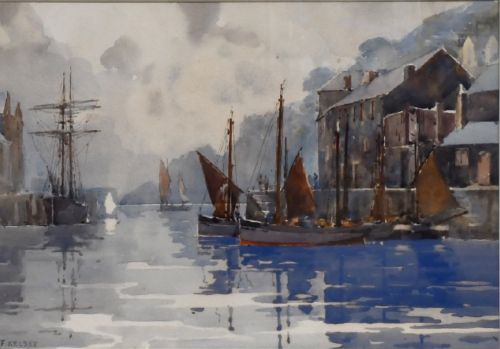
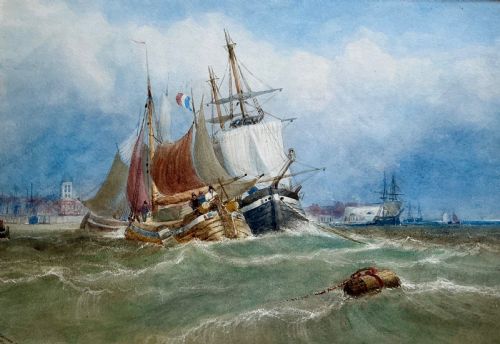
Blue coastal watercolour art comprises works on paper depicting harbours, fishing boats, and shorelines rendered in maritime tones. These paintings span the Victorian era through the mid-twentieth century, capturing domestic ports and international waters alike.
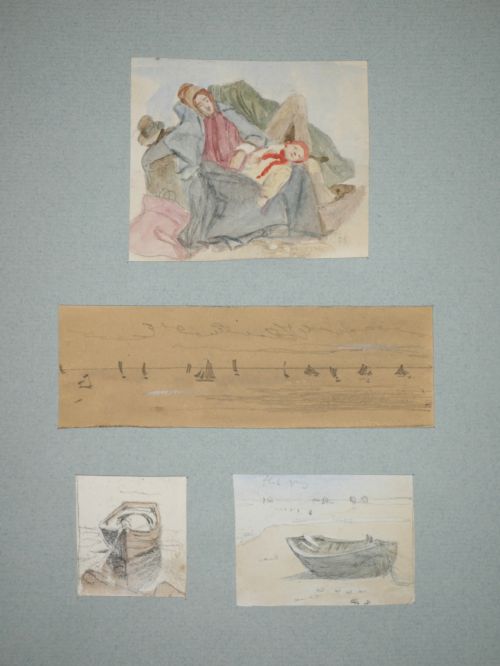
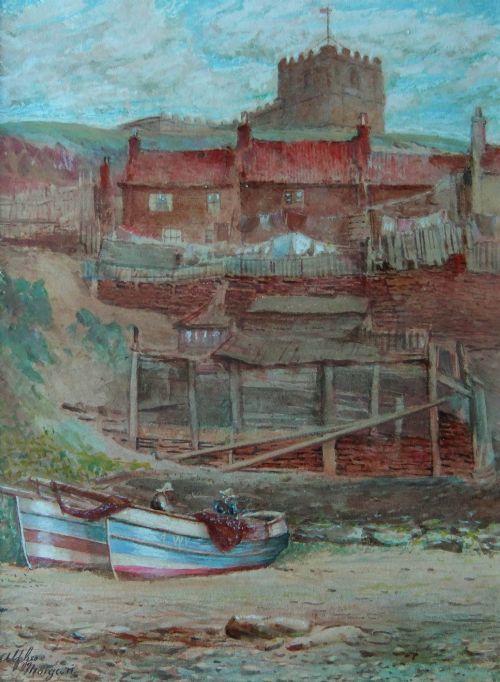
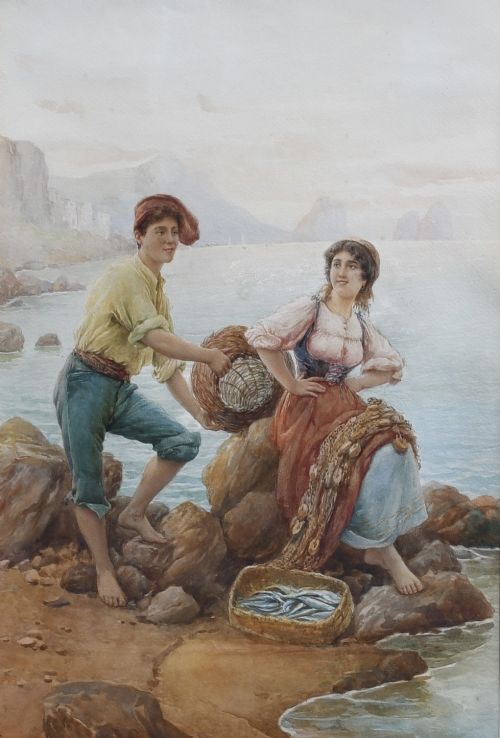
Collectors encounter framed examples ranging from small marine sketches to large exhibition pieces. Subjects focus on British fishing communities in Yorkshire and Cornwall alongside continental harbours.
The prevailing style relies on transparent pigments applied to textured paper to evoke sea spray, overcast skies, and deep water. These watercolours document historical maritime activity through direct observation.
Materials and Technique
Artists applied watercolour paint and pigment onto heavy paper surfaces, occasionally combining ink or gouache for heightened contrast and detail. The transparency of the medium allowed the white of the paper to illuminate sea foam and sails.
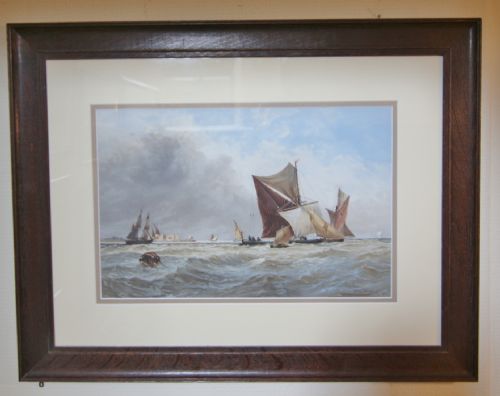
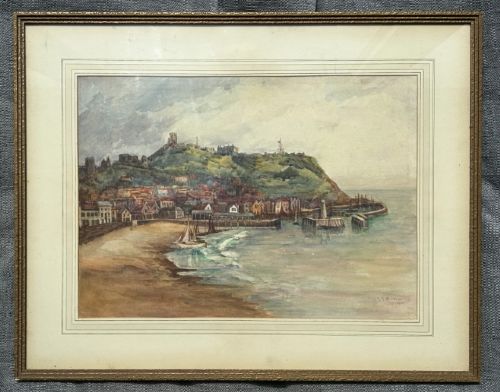
Works were traditionally protected beneath glass and housed within timber frames, frequently featuring gilt or moulded profiles characteristic of the period.
Listings feature works from the nineteenth and twentieth centuries, predominantly executed on paper using watercolour and ink.
Evaluating Quality
Superior execution shows confident brush handling and atmospheric depth, where the pigment communicates movement and light without heavy overworking. Master practitioners captured the motion of water and weather conditions with economy and precision.
Condition plays a central role in valuation, specifically the preservation of paper tone and the stability of original pigments against fading. Framing choices and the survival of early or original backing materials also distinguish finer examples.
James Orrock·William Cannon·James Smetham·John E Aitken·Thomas William Morley·Thomas Bush Hardy·Alfred G Morgan·Carlo Ferranti·William Matthison·Frank Kelsey·Henry Barlow Carter·George F Pennington·William Frederick Settle·Lionel Horsnell·Paul Delvaux·Charles William Adderton·William Lee Hankey·Sir Thomas Newenham Dean·Ernest Dade·Edward Seago·Robert Leslie Howey·Tom Clough·George Hamilton Constantine·Sir William Russell Flint·Frederick William Hattersley
The Blue Coastal Watercolour Art Glossary
- Watercolour paint
- A medium consisting of colour pigments suspended in a water-soluble vehicle, applied to paper to create translucent washes.
- Works on paper
- A broad classification encompassing drawings, watercolours, and prints executed on various paper substrates.
- Gouache
- An opaque watercolour paint containing pigment mixed with a binding agent, used to add highlights and solid colour areas.
- Marine art
- Artistic representation of the sea, ships, coastal views, and maritime activities.
- Wash
- A fluid application of diluted watercolour pigment across the paper surface to create skies or water.
Blue Coastal Watercolour Art: Frequently Asked Questions
How do I date these watercolours?
Dating relies on artist biographical dates, signature styles, and framing materials typical of the Victorian and Edwardian periods.
Paper quality and inscriptions on the reverse often provide additional chronological context for unsigned sheets.
Are these works original paintings?
The inventory consists of hand-painted original works on paper rather than reproduction prints.
Brushstrokes and pigment texture remain visible under close inspection with a glass.
How should I frame these pieces?
Conservation framing with acid-free mounts protects fragile nineteenth-century paper from chemical deterioration.
Glazing should prevent direct contact between the glass surface and the watercolour pigment.
Where were these coastal scenes painted?
Subjects record British fishing ports such as Whitby, St Ives, and Scarborough alongside European destinations.
Artists travelled extensively along coastal routes to paint harbours and shipping lanes from direct observation.