
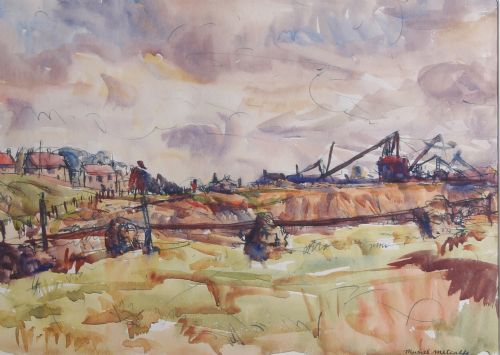


Brown Earth Tone Watercolour
Brown earth tone watercolour works capture rustic British landscapes and rural scenes through muted natural pigments on paper.
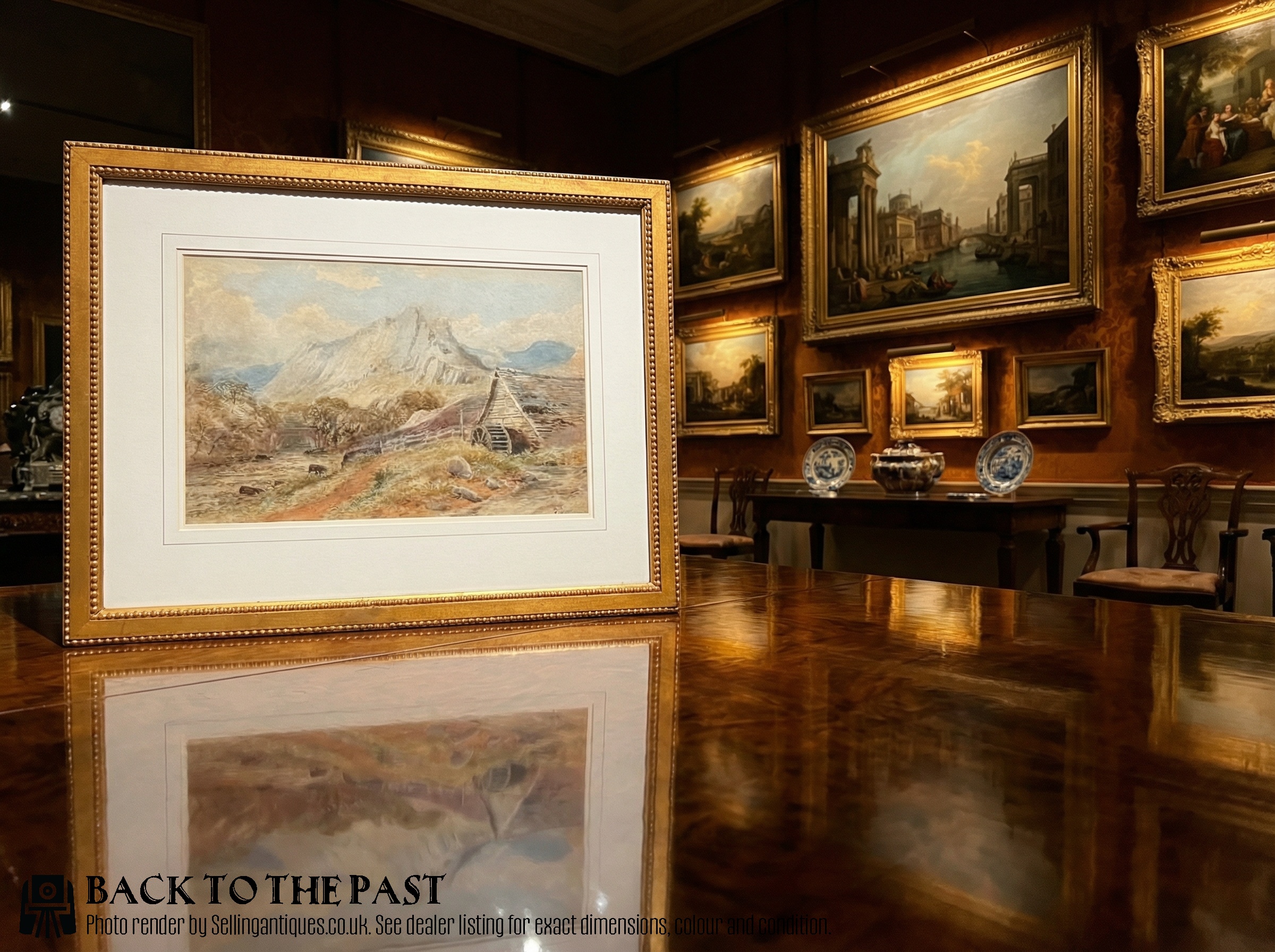
Brown Earth Tone Watercolour
A brown earth tone watercolour is a traditional painting executed on paper using water-soluble pigments dominated by warm umbers, siennas and sepia. These works span the nineteenth century, the Edwardian era and mid-century modern periods, recording rural life, coastal harbours and village streets.
The buyer meets Victorian and early twentieth-century British landscapes most frequently on this page. Subjects range from Yorkshire valleys and Welsh mountains to Suffolk high streets and Italian figurative interiors, framed closely around agricultural labour and natural topography.
Makers such as Alfred George Morgan, John Syer and William Manners anchored this tradition of topographical and rural realism. Their compositions rely heavily on restrained palettes of earth colours to describe overcast skies, muddy tracks and stone cottages.
What varies in quality
Quality rests upon the sureness of the draughtsmanship and the atmospheric depth achieved within a restricted monochrome or earth palette. Strong tonal contrast separates works that hold distance and air from those that appear flat and overworked.
The preservation of the original paper support and the vibrancy of the earth pigments dictate the visual strength of the piece. Subtle gradations of sepia and burnt sienna distinguish accomplished topographical records from routine sketches.
Several artists clearly paused their sketching to watch horses change at the inn or farmers eat breakfast on the doorstep.
Alfred George Morgan·John Syer·Thomas Pyne·William Manners·Fred Lawson
The Brown Earth Tone Watercolour Glossary
- Watercolour pigment
- Finely ground colour particles mixed with a binder for use in painting on paper. These pigments create the transparent washes characteristic of the medium.
- Graphite
- A form of carbon used for preliminary sketching beneath watercolour paint. It remains visible in many underlying preparatory lines.
- Bodycolour
- Watercolour paint mixed with a white pigment to render it opaque. This technique adds solid highlights to earth-toned landscapes.
- Genre painting
- Artwork depicting scenes from everyday life, such as figures in an interior or labourers in a village. This style appears frequently in nineteenth-century examples.
Brown Earth Tone Watercolour: Frequently Asked Questions
How should I frame these watercolours?
Protect the paper behind glass with acid-free mounts to prevent humidity damage. Keep them away from direct sunlight to preserve the earth pigments.
Traditional wood frames suit the period aesthetic of these nineteenth and twentieth-century landscapes.
Are these works signed by the artist?
Many examples bear the signature or monogram of the painter, often located in the lower corner. Attribution is frequently supported by inscribed titles on the reverse or mount.
Documentation on the paper helps historians connect the view to specific British and European locations.
What subjects appear in these paintings?
Landscapes dominate the selection, featuring Welsh valleys, Yorkshire bridges, and Suffolk street scenes. Rural labour, farming horses and coastal fishing harbours recur frequently.
Figurative interior scenes and still life compositions also emerge within the mid-century selection.
How do I identify the period?
Stylistic clues and framing methods often indicate whether a piece belongs to the Victorian era or the mid-century modern period. Subject dress and architectural details provide further historical context.
Paper quality and signature styles help narrow down the decade of creation.