



Fishing Boat Watercolour Artwork
These fishing boat watercolour artwork pieces capture coastal life and maritime scenes through delicate washes and careful draughtsmanship.

Fishing Boat Watercolour Artwork
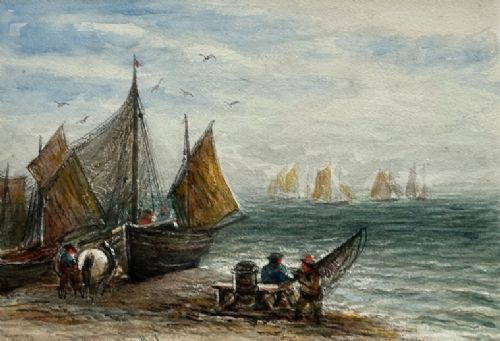
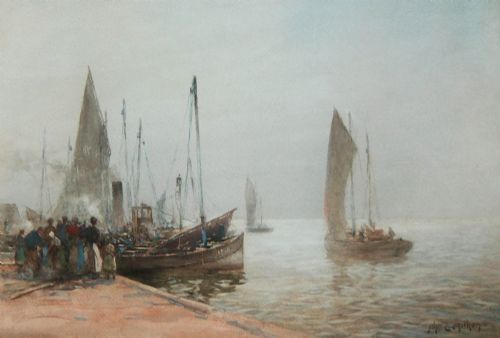
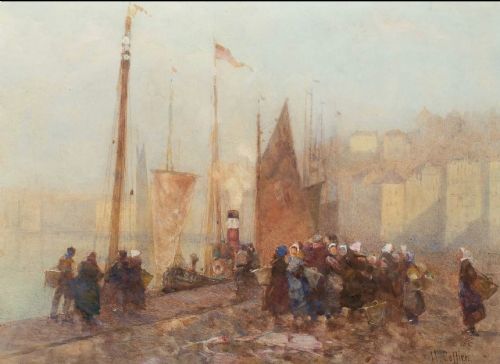
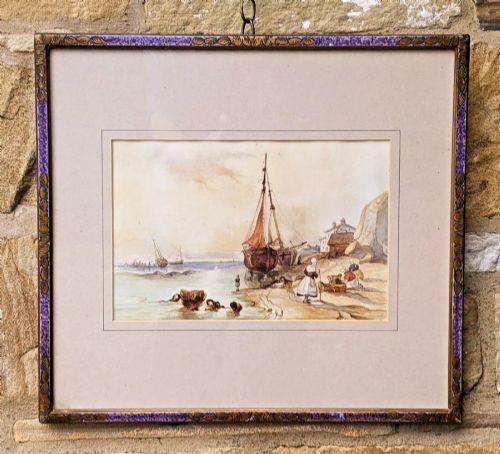
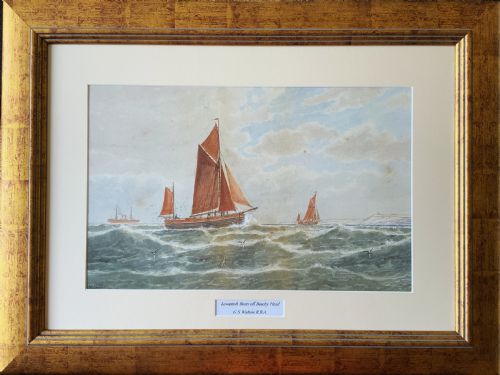
A fishing boat watercolour artwork represents maritime and coastal life, typically focusing on harbours, beaches, and working vessels across British and European shores. These works capture the changing atmosphere of the sea, from calm inlets to busy fishing ports.
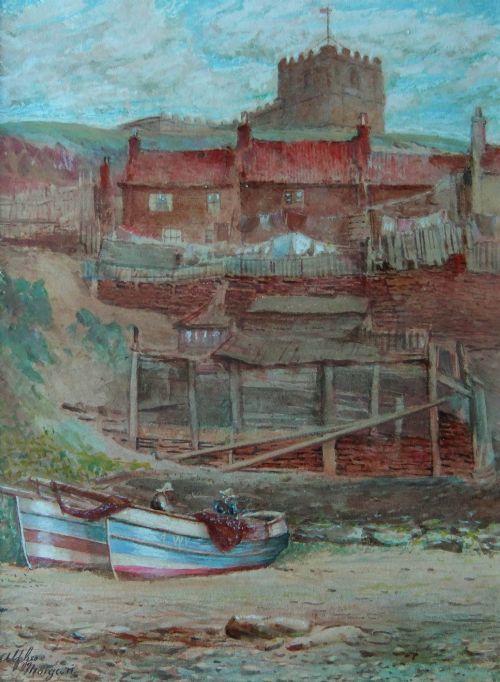
The pieces available here most frequently date from the Victorian period through to the mid-twentieth century, encompassing British Impressionist and maritime traditions. Buyers will encounter both intimate harbour studies and larger coastal scenes featuring named locations like Whitby, Mousehole, and foreign ports.
Makers and painters of this genre often recorded specific regional craft, such as cobles on the Yorkshire coast or local vessels in Cornwall and France. The primary appeal lies in this documentary quality combined with the transparent fluidity inherent in the medium.
Materials and technique
These works are executed primarily in watercolour pigment on paper, occasionally heightened with gouache for opaque highlights on sails or foam. Artists built up their compositions using transparent washes to capture light on water and the moody skies typical of coastal regions.
Framing typically incorporates wood and glass to protect the delicate paper surface from moisture and atmospheric pollutants. Gilt liners or frames are frequently employed to add warmth and contrast to the cool blues and greys of the maritime palette.
Fishing Boat Watercolour Artwork Retail Price Guide 2026
Typical asking prices for fishing boat watercolour artwork among the pieces listed under this phrase on Sellingantiques today, from the lower quarter to the upper quarter. They describe what is for sale here now, not the wider market.
Current listings feature watercolours on paper spanning the Victorian period through the nineteen-fifties, incorporating wood, glass, gilt, and gouache.
Assessing quality and merit
Quality in a fishing boat watercolour artwork rests upon the artist's command of light, atmosphere, and spatial depth within a restricted medium. The most accomplished examples demonstrate confident, economic brushwork that suggests movement in the water and rigging without overworking the paper.
The strength of the composition and the specific rendering of the vessels and coastal architecture distinguish finer works from standard topographical records. Provenance, attribution to recognised marine painters, and the preservation of vibrant pigment without excessive fading elevate individual pieces.
James Orrock·James E. Aitken·Hector Caffieri·Alfred G. Morgan·George Stanfield Walters·Henry Barlow Carter·William Lee Hankey·Tom Clough·Thomas Bush Hardy·Frederick William Hattersley·Ernest F. Hill·Fred Mayor·Walter Sweet·Frank Rousse·Robert Leslie Howey·George Marks
The Fishing Boat Watercolour Artwork Glossary
- Watercolour
- A painting method in which the paints are made of pigments suspended in a water-soluble vehicle. This medium allows for luminous washes that simulate the transparency of sea and sky.
- Gouache
- A water-based paint consisting of pigment and other inert material designed to be opaque. Artists use it alongside watercolour to create bright highlights on waves and vessel structures.
- Coble
- An open traditional fishing boat with a high bow and flat floor, commonly used along the northeast coast of England. These distinctive craft frequently appear in Yorkshire coastal scenes.
- Marine art
- Artistic works that depict or draw their main inspiration from the sea, ships, and coastal views. This genre encompasses both calm harbour depictions and dramatic stormy waters.
Fishing Boat Watercolour Artwork: Frequently Asked Questions
What subjects do these paintings feature?
These works predominantly depict coastal scenes, working fishing vessels, and bustling harbours across British and continental shores. Common subjects include beached boats, incoming catches, and local fishermen at work.
Named locations often feature prominently, ranging from Yorkshire fishing ports like Whitby and Scarborough to Cornish villages such as Mousehole and St Ives.
How should I display watercolour on paper?
Watercolour art requires careful placement away from direct sunlight to prevent the pigments and paper from fading over time. UV-filtering glass and professional conservation framing offer essential protection against environmental damage.
Keeping pieces in rooms with stable humidity levels also prevents the paper from warping or developing foxing spots.
Which periods are most common?
The selection largely spans the Victorian era through the early decades of the twentieth century. This period saw a strong rise in British marine art and impressionist coastal painting.
Works range from late nineteenth-century traditional views to mid-twentieth-century interpretations by regional British artists.
Are these works signed by the artists?
Many examples in this category bear the original signature or monogram of the artist, frequently placed in the lower corner. Some pieces also include contemporary inscriptions or titles on the mount or reverse.
Unsigned works still appear, often attributed through stylistic comparison and recorded exhibition history.