


Enamelled Ceramic Pair
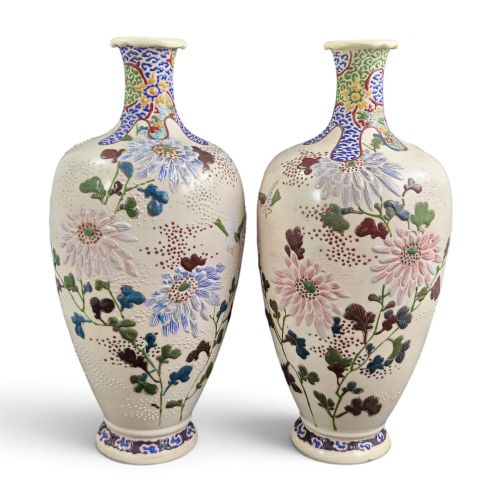
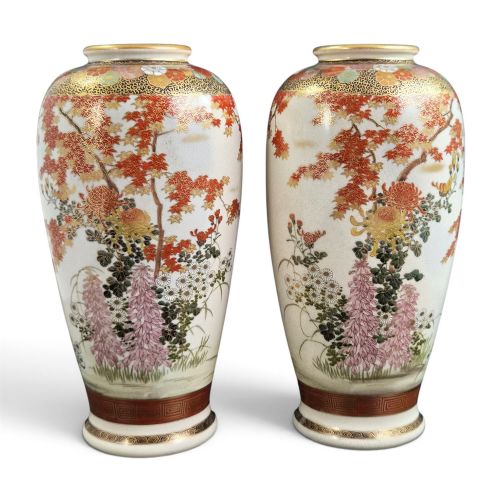
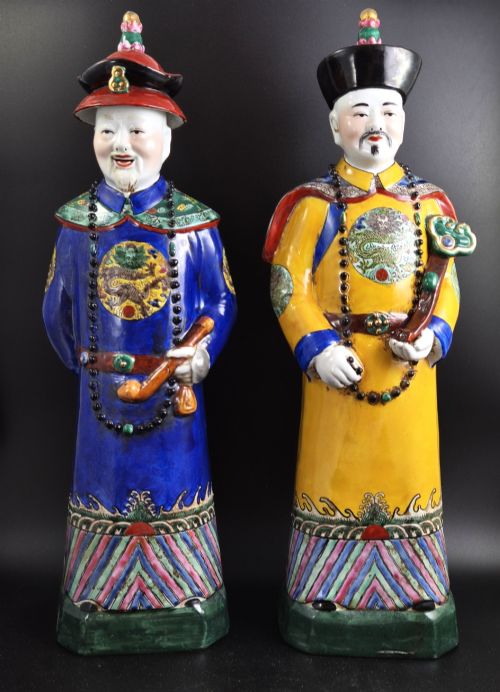
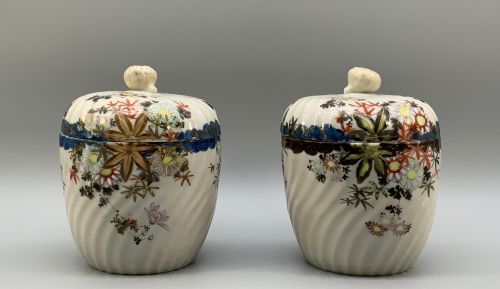
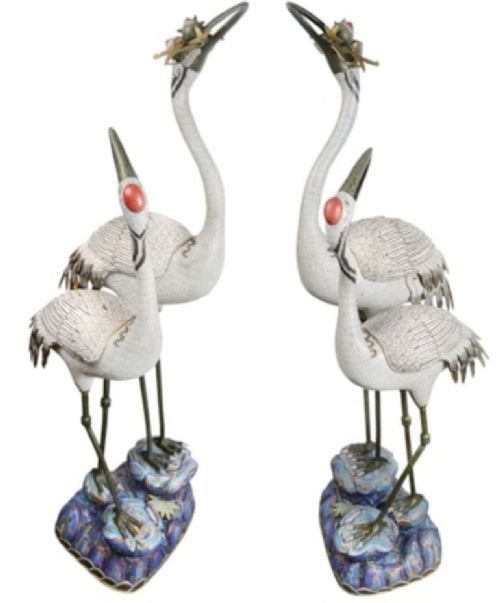
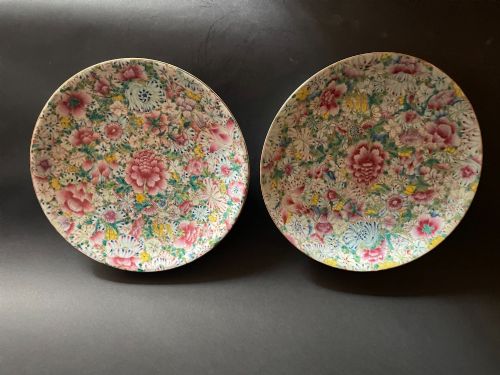
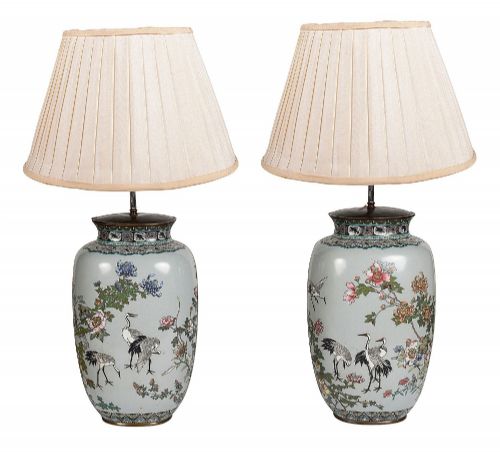
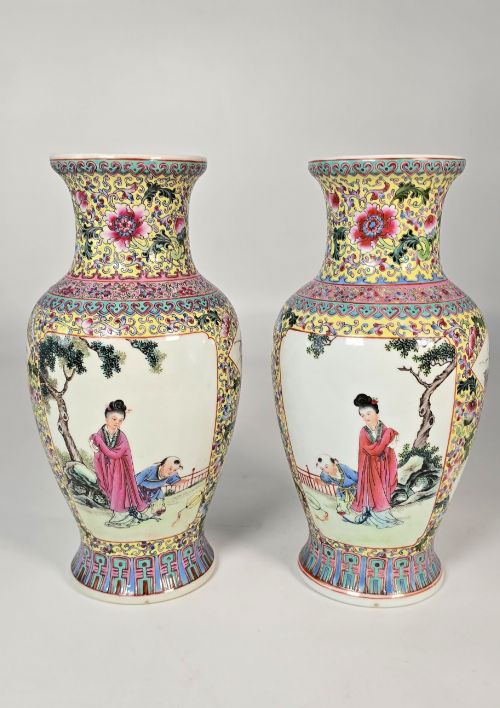
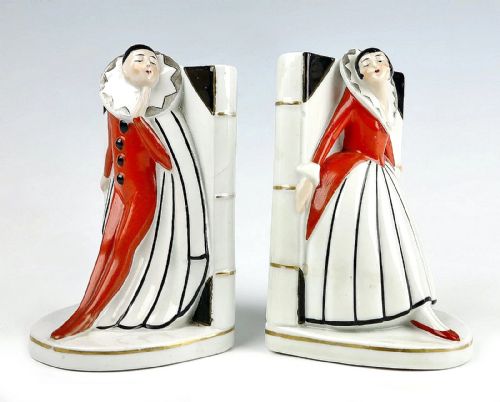
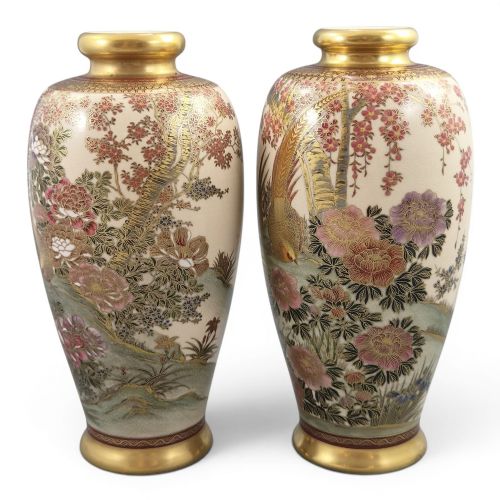
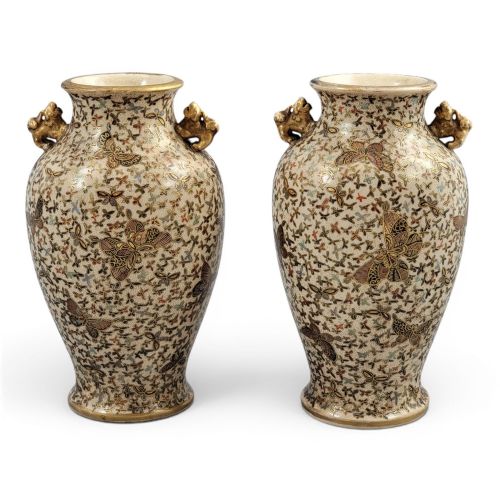
These enamelled ceramic pair selections bring together matched vessels and figures from nineteenth and early twentieth-century workshops, valued for their balanced display impact.
Enamelled Ceramic Pair
When searching for an enamelled ceramic pair, buyers encounter matched sets of decorative vessels, figures, and lidded jars spanning the eighteenth, nineteenth, and early twentieth centuries. The selection leans heavily toward Japanese Satsuma and Kutani wares alongside Chinese Canton and Qing dynasty porcelain.
Vases and table lamps dominate the available forms, often featuring intricate hand-painted floral panels or figural motifs. Collectors seek these matched items for symmetrical placement on mantelpieces or cabinets.
Originating largely from East Asian export workshops alongside European factories such as Derby and Samson, these pairs showcase coordinated designs intended to balance decorative schemes.
Materials and technique
The pieces rely on earthenware or porcelain bodies finished with coloured glazes and enamel pigments. Artisans applied surface decoration using fine brushes, frequently adding gold leaf or raised enamel details to accent specific motifs.
Many Japanese Satsuma items combine earthenware bases with crackle glazes and dense overglaze enamel work. Chinese porcelain examples incorporate iron-red, famille rose, and famille verte palettes fired onto hard-paste bodies.
Listings feature eighteenth to twentieth-century ceramics utilising enamel, porcelain, earthenware, and gold leaf across Japanese and Chinese styles.
Distinctions in quality
Quality rests upon the precision of the hand-painted brushwork and the complexity of the enamel application. Master pieces demonstrate disciplined control in detailed facial expressions or botanical scenes without crowding the composition.
The thickness and application of gold leaf and raised enamel differentiate standard export items from exhibition-grade works produced by notable studios. Preservation of the original pigments and the uniformity of the matched pair dictate overall standing.
Maruni Kobe·Manpei Kobe·Kinzan·Shuzan for Yasuda·Hakusan·Hododa
The Enamelled Ceramic Pair Glossary
- Satsuma
- A type of Japanese earthenware featuring a crackled ivory glaze decorated with polychrome enamels and gilt. It originated in Satsuma Province and gained widespread popularity during the Meiji period.
- Famille Rose
- A major palette of Chinese ceramic enamels introduced in the Qing dynasty, characterised by opaque pink or rose colours. The palette allowed for subtle tonal gradations in floral and figural subjects.
- Cloisonné
- A technique where enamel is applied within compartments created by soldered metal wires on a ceramic or metal base. It produces distinct coloured cells separated by thin metallic outlines.
- Moriage
- A decorative ceramic technique utilising piped lines of slip or enamel to create raised, three-dimensional surface patterns. It appears frequently on late nineteenth-century Japanese Satsuma wares.
- Earthenware
- Porous pottery fired at relatively low temperatures, requiring an impermeable glaze to hold liquids. It serves as the primary body material for many traditional Japanese decorative items.
Enamelled Ceramic Pair: Frequently Asked Questions
How do I display an enamelled ceramic pair?
Matched vases and figures work best placed symmetrically on mantelpieces, sideboards, or designated display pedestals to preserve their visual balance.
Ensure they sit away from direct sunlight and high-traffic areas to protect fragile enamel and gold leaf decorations from accidental damage.
How do I distinguish Satsuma from Kutani wares?
Satsuma wares typically feature an ivory-coloured crackle glaze combined with dense polychrome enamels and heavy gilding. Kutani ceramics frequently showcase bolder red, green, and gold palettes on porcelain or stone-like bodies without the characteristic Satsuma crackle.
Examining the underlying clay body and the specific style of brushwork helps clarify the regional origin.
What is famille rose?
Famille rose is a Chinese ceramic palette defined by the use of opaque pink or rose enamel derived from colloidal gold. Introduced during the Qing dynasty, it permitted artists to paint delicate gradients on porcelain.
This palette appears frequently on nineteenth-century export vases, moon flasks, and garden seats.