






Enamelled Art Glass Vase
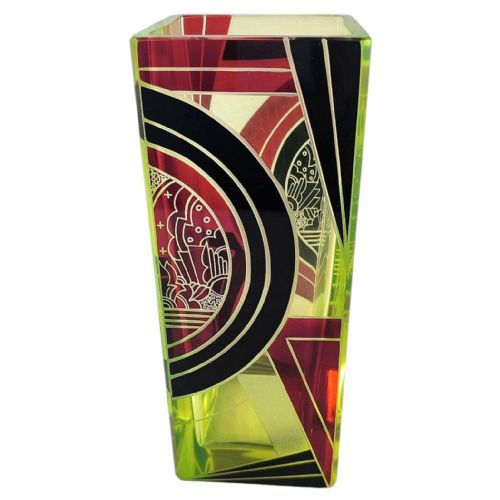
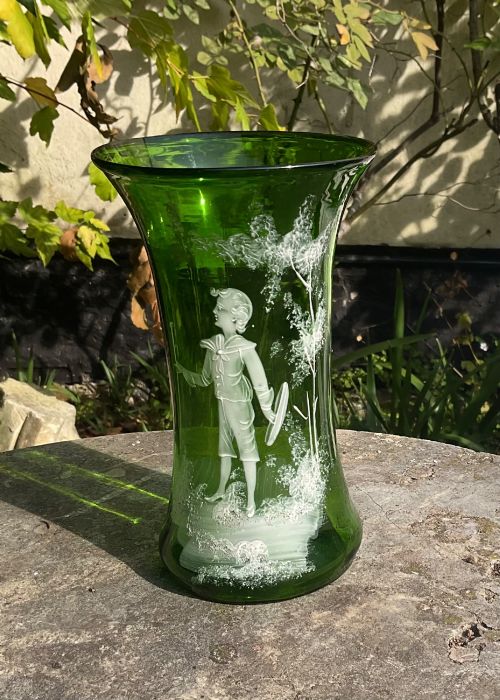
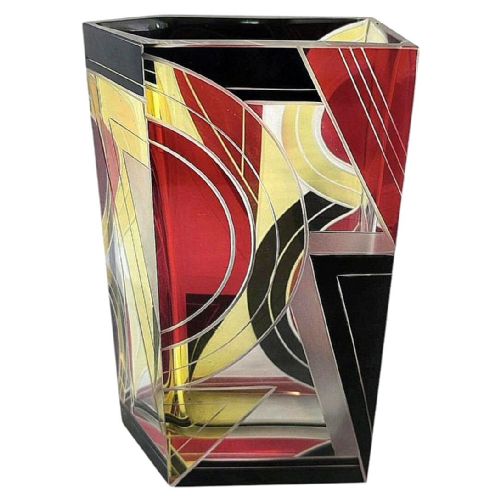
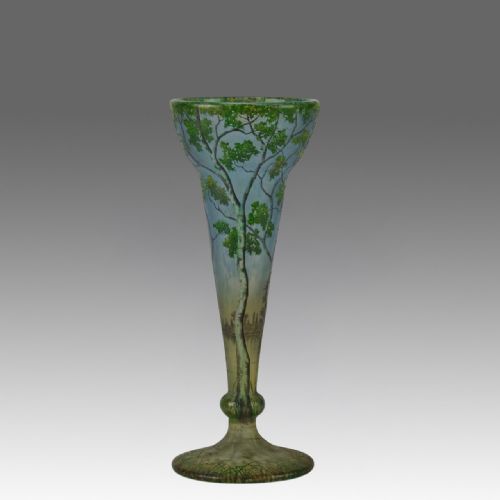
An enamelled art glass vase combines the clarity of glass with raised enamel pigment, offering rich colour and texture that catches the light from every angle.
Enamelled Art Glass Vase
An enamelled art glass vase brings together shaped glass and applied enamels to create decorative vessels spanning the Victorian era through the Art Nouveau and Art Deco periods. Buyers search for these pieces to add tactile surface detail and vibrant colour schemes to an interior space.
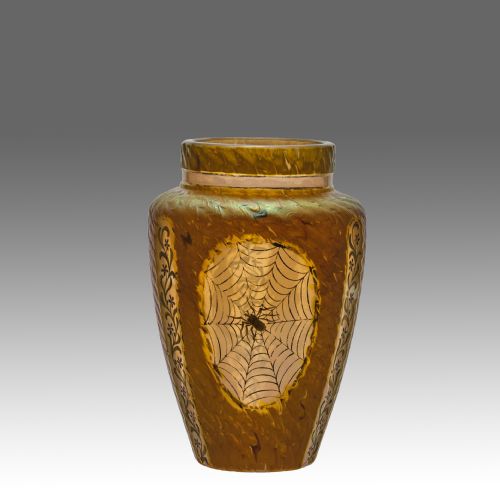
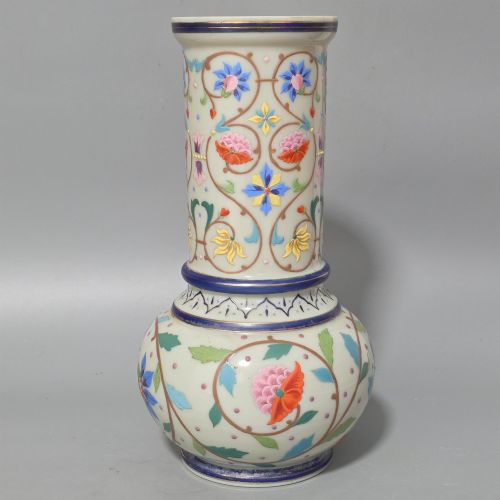
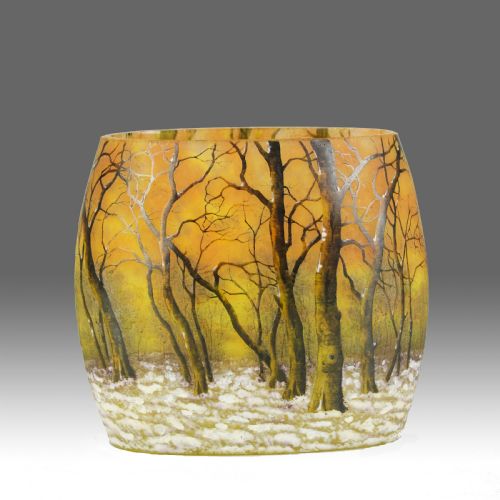
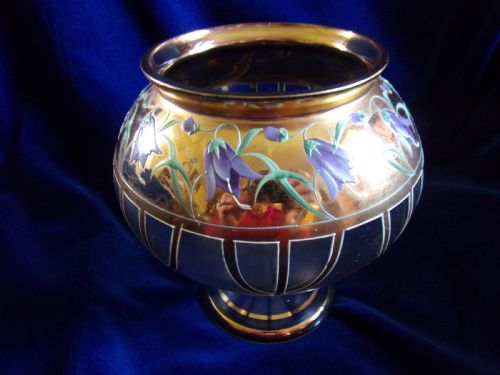
The most common versions encountered here date from the late nineteenth century and the early twentieth century, originating from French, English, and Czech workshops. These range from tall geometric forms to bulbous shapes decorated with floral motifs or winter landscapes.
How they were made
Maker utilise clear, opaque, iridescent, or cameo glass as the base body, sometimes incorporating gold leaf or crystal. Artisans then apply enamel paints by hand, often firing the vessel multiple times to fuse the coloured glass powders permanently onto the exterior surface.
Techniques frequently include acid-etching alongside enamel decoration to create contrasting matte and polished textures. Guilds and factories also combine cameo carving with surface enamelling to build up layered pictorial scenes.
Enamelled Art Glass Vase Retail Price Guide 2026
Typical asking prices for enamelled art glass vase among the pieces listed under this phrase on Sellingantiques today, from the lower quarter to the upper quarter. They describe what is for sale here now, not the wider market.
Several vases depict winter landscapes, proving that nineteenth-century glassmakers enjoyed a chilly view just as much as we do.
What varies in quality
The standard of an enamelled art glass vase rests on the precision of the hand-painting and the depth of the glass body itself. Pieces featuring intricate, multi-layered enamel work and complex etching demonstrate superior workshop skill.
Attribution also plays a role in distinction, with signed works from established glasshouses commanding greater recognition. The harmony between the glass colour and the enamel palette determines the visual balance of the finished vessel.
Daum Frères·Thomas Webb·Kralik Glass·Legras·Karl Palda·St Louis glassworks·Mary Gregory·Maurice Marinot·Fachschule Steinschönau
The Enamelled Art Glass Vase Glossary
- Cameo glass
- Glass formed with multiple layers of different coloured glass that are carved away to create a raised design. This technique allows for detailed contrast between the background and the foreground motif.
- Iridescent glass
- Glass treated with metallic oxides while hot to produce a rainbow sheen across the surface. It catches ambient light to shift colours as the viewer moves.
- Opaque glass
- Non-translucent glass that hides the interior contents while providing a solid background colour for enamel work. It serves as a flat canvas for painted floral or geometric designs.
- Enamel
- Coloured powdered glass fused to a glass body through high-temperature firing. It dries to a raised, tactile finish that sits proud of the vessel wall.
- Crystal
- Clear glass containing metal oxides that increase its brilliance and weight. This material provides a bright, transparent base for gilded and enamelled decoration.
Enamelled Art Glass Vase: Frequently Asked Questions
Where were most of these vases made?
Production centres primarily across France, Bohemia, and England during the nineteenth and early twentieth centuries. French and Czech glasshouses produced many of the Art Nouveau and Art Deco examples found here.
English makers also contributed significant output, particularly during the Victorian era. Regional techniques varied, with continental makers often favouring cameo carving and complex acid etching alongside enamel.
How do I date an enamelled art glass vase?
Examine the stylistic markers, such as organic floral motifs pointing to the Art Nouveau period or strict linear patterns indicating Art Deco design. Maker signatures and etched factory marks on the base also help establish a timeline.
Material composition provides further clues, as iridescent finishes and specific shades of opaque glass often align with distinct decades of production. Comparing the piece with documented workshop catalogues confirms the era.
What is the difference between cameo glass and enamelled glass?
Cameo glass achieves its design by carving away outer layers of coloured glass to leave a raised, monochromatic or multi-coloured relief pattern. Enamelled glass relies on applied glass pastes painted onto a smooth or etched surface and fired until fixed.
Some makers combine both techniques on a single vessel, using cameo carving for the landscape and enamel for fine floral details. Both methods create a tactile surface that differs from plain blown glass.