




Yellow Enamelled Glass Vase
These yellow enamelled glass vase pieces combine rich surface colour with striking botanical and landscape motifs, offering a bright focal point for any room.
Yellow Enamelled Glass Vase
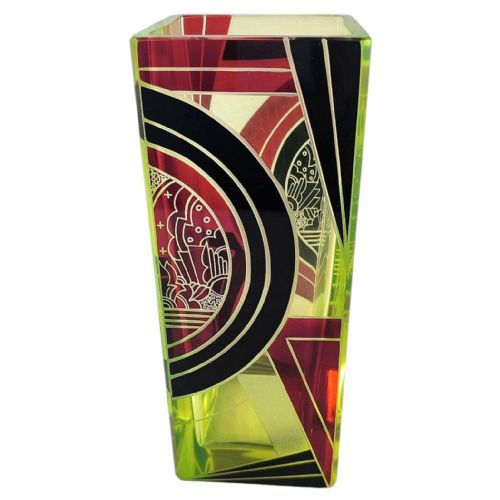
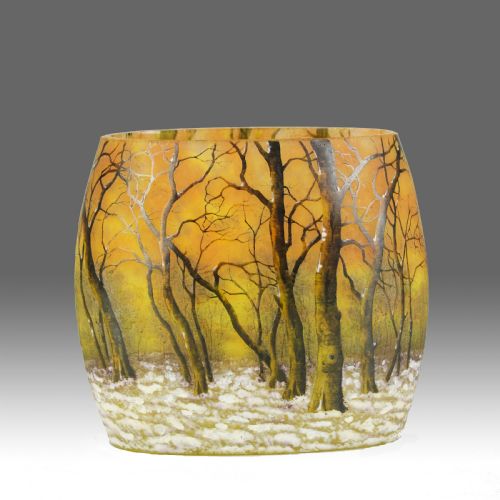
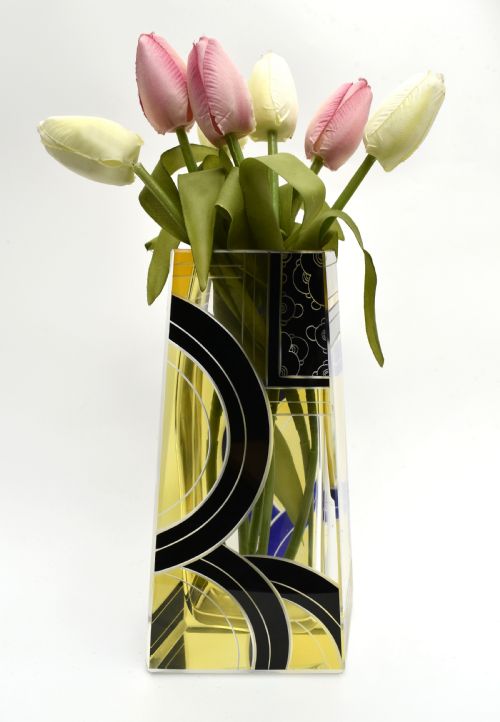
A yellow enamelled glass vase brings together vibrant hues and intricate surface decoration, drawing on the design traditions of the early twentieth century. Buyers seeking a yellow enamelled glass vase encounter distinct examples originating from the Art Nouveau and Art Deco periods, showcasing both naturalistic flora and geometric motifs.
The selections available span from the organic curves of nineteen hundred to the geometric lines of nineteen thirty. Most pieces derive from French and Czech workshops, capturing the shift from flowing floral subjects to stylised modernist patterns.
Vases take various forms, including miniature vessels and tall display pieces, often incorporating cameo work or acid-etched detailing alongside vibrant enamelling. Collectors appreciate these objects for their strong colour and the specific decorative techniques employed by prominent makers.
How they were made
Makers utilised glass as the primary medium, frequently combining cameo glass techniques with applied enamel to build rich, multi-layered surface designs. Acid-etching was often employed to cut back the glass layers, creating textured backgrounds that contrast with smooth, brightly coloured enamel details.
Certain vessels incorporate uranium glass, which reacts under ultraviolet light, demonstrating the experimental material use typical of the nineteen thirties. Artisans applied coloured enamels by hand, fusing them to the vessel body through controlled kiln firing to achieve durable, vibrant ornamentation.
Yellow Enamelled Glass Vase Retail Price Guide 2026
Typical asking prices for yellow enamelled glass vase among the pieces listed under this phrase on Sellingantiques today, from the lower quarter to the upper quarter. They describe what is for sale here now, not the wider market.
Certain vessels glow an unexpected bright green under ultraviolet light due to the presence of uranium in the glass.
What varies in quality
The standard of a piece rests upon the precision of the enamel application and the depth of the cameo or etched carving. Finer examples display crisp delineation in floral or landscape subjects, whereas lesser items show softer lines and simpler surface treatment.
The complexity of the glass body itself dictates much of the distinction across the range, with multi-layered cameo vessels requiring greater technical mastery than plain glass blanks. Signature clarity and the harmonious integration of colour with the underlying etched texture further separate standard production from superior artistry.
Daum Frères·Karl Palda·Legras
The Yellow Enamelled Glass Vase Glossary
- Cameo Glass
- Glass formed with multiple layers of different colours, where top layers are carved or etched away to reveal a contrasting design beneath. This technique demands considerable skill to maintain even thickness across the carved surface.
- Enamel
- Opaque or translucent coloured glass paste applied to the surface of a vessel and fired to fuse permanently. It provides rich colour accents and raised tactile details.
- Acid-Etched Glass
- Glass treated with hydrofluoric acid to eat away exposed areas, producing frosted textures and low-relief patterns. It was widely utilised to create matte backgrounds that contrast with polished or enamelled motifs.
- Uranium Glass
- Glass containing trace amounts of uranium oxide, which fluoresces brightly under ultraviolet light. It appears in transparent yellow or green shades.
- Art Nouveau
- A decorative style prevalent around nineteen hundred characterised by fluid, organic lines and floral motifs. The aesthetic draws heavily from natural plant and landscape forms.
Yellow Enamelled Glass Vase: Frequently Asked Questions
What periods do these vases come from?
The listings span the early twentieth century, specifically around nineteen hundred during the height of Art Nouveau, and the nineteen thirties during the Art Deco period. These distinct eras dictate the overall shape and decorative vocabulary of each piece.
Objects from the earlier period favour organic botanical subjects and flowing cameo work, while nineteen thirty pieces tend towards geometric etching and structured forms.
How do I display a yellow enamelled glass vase?
Place these vessels in areas with strong natural light to accentuate the vibrant yellow tones and the translucent qualities of the glass. Avoid placing them in direct, harsh sunlight for extended periods to protect the surface enamelling.
Allow sufficient space around the vessel so the intricate cameo carving or etched landscape details remain fully visible from multiple angles.
How are Art Nouveau and Art Deco styles different?
Art Nouveau pieces from nineteen hundred feature naturalistic themes such as irises, blackberries, and winter landscapes, rendered in flowing, asymmetrical lines. The craftsmanship emphasises organic curves and cameo glass depth.
Art Deco works from nineteen thirty display a transition towards stylised geometry, structured acidic etching, and clean, balanced silhouettes typical of Czech production from that decade.
What materials are used besides glass?
Enamel serves as the primary decorative medium, applied to the exterior surface to create coloured floral and landscape details. Some pieces incorporate uranium glass, which produces a distinctive glow under ultraviolet light.
Acid is utilised in etching processes to cut away parts of the glass body, creating frosted and textured backgrounds that contrast with smooth, glossy enamel.