
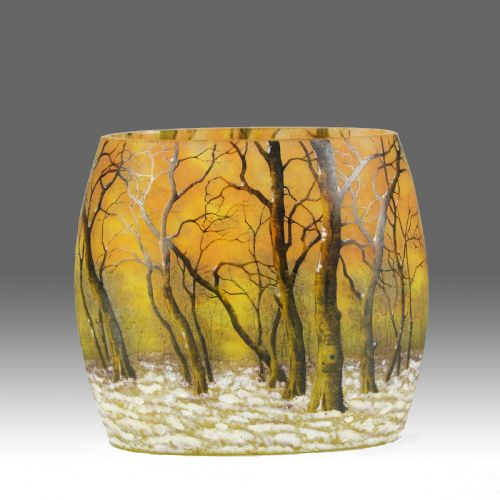

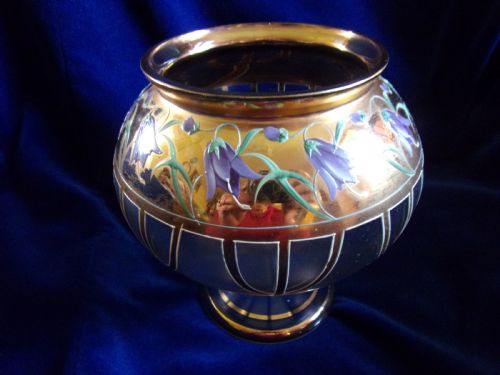


Enameled Art Glass Vase
An enameled art glass vase brings colour and texture to a room, catching the light through layered pigments and fired designs.
Enameled Art Glass Vase
An enameled art glass vase is a decorated vessel combining glass bodies with applied pigment, spanning periods from the Victorian era through the Art Nouveau and Art Deco movements. Buyers will encounter various forms, including tall geometric shapes, bulbous vases, and decorative bowls.
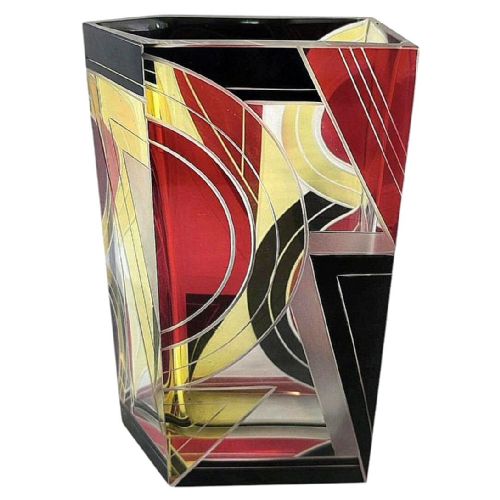
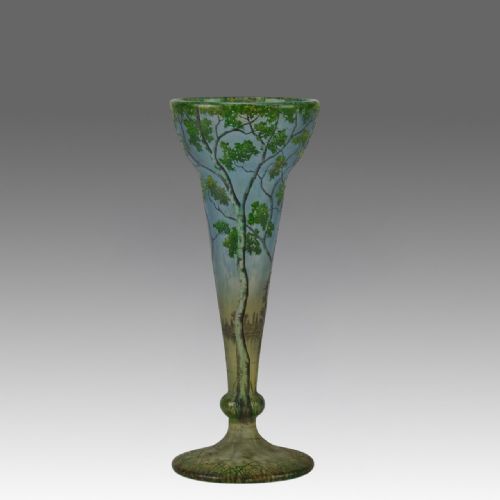
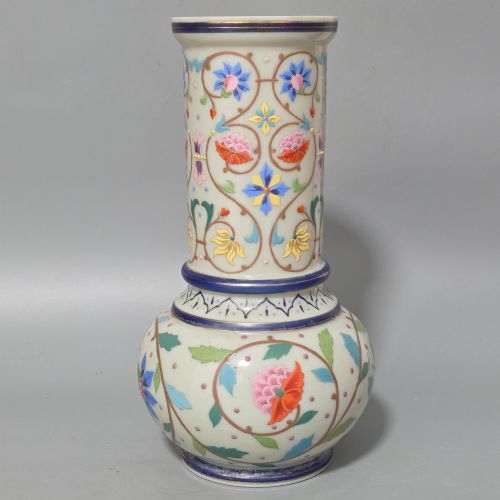
The selections on this page draw from multiple decades, with pieces originating from French, English, and Czech makers. Victorian examples often feature painted floral motifs, while later twentieth-century works lean towards stylized geometric patterns or naturalistic landscapes.
How they were made
Makers utilised glass as a canvas, applying enamel pigments directly to the surface before firing the pieces in kilns to fuse the colours permanently. Techniques frequently involved cameo glass carving, crystal moulding, and the addition of gold leaf or gold enamel highlights.
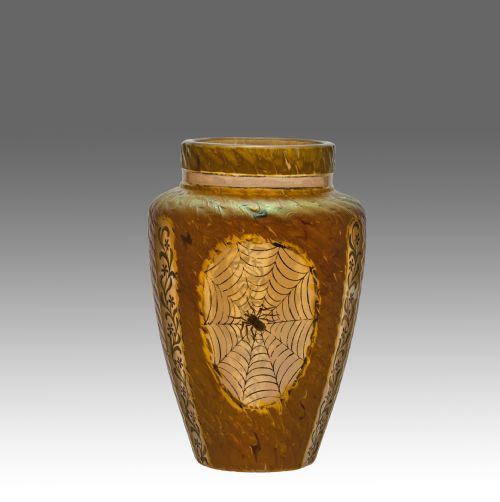
Opaque, iridescent, and transparent glass bodies provided different ground colours for the enamel work. Artisans combined acid-etching with hand-painted polychromatic enamels to build depth in botanical and landscape scenes.
Listings span periods from the Victorian era through the Art Deco movement, featuring glass treated with gold leaf and enamel.
What varies in quality
Quality rests upon the precision of the enamel application and the clarity of the underlying glass form. Finer pieces demonstrate careful brushwork and integration of gold leaf, where the decoration complements the contours of the vessel rather than sitting heavily upon it.
The execution of the design separates standard production from exceptional works, particularly in detailed landscape scenes or complex geometric etchings. Signed pieces from established glassworks generally exhibit superior control over both the glassblowing and the enamel firing processes.
Daum Frères·Thomas Webb·Kralik Glass·Legras·Karl Palda
The Enameled Art Glass Vase Glossary
- Enamel
- A glass-like substance fused to the surface of the vessel through firing. It provides vibrant colour and raised texture.
- Cameo Glass
- Glass formed with multiple layers of different colours, which are then carved or acid-etched to create a relief design.
- Iridescent Glass
- Glass treated with metallic salts to produce a shimmering, rainbow-like effect across the surface.
- Opaline Glass
- An opaque or translucent pale glass that acts as a solid ground for painted enamel decorations.
- Gold Enamel
- Enamel containing finely milled gold particles or overlaid with gold leaf to add metallic highlights to the design.
Enameled Art Glass Vase: Frequently Asked Questions
How do I identify Art Nouveau examples?
Art Nouveau enameled art glass vases typically feature flowing organic lines, floral motifs such as irises or lotus flowers, and naturalistic landscape scenes. These pieces often date from around the turn of the twentieth century and incorporate undulating forms.
Makers from this period utilised techniques like cameo carving and polychromatic enamel to mimic the asymmetries found in nature. Signatures etched directly into the glass surface frequently point to French glasshouses of the era.
What defines Art Deco designs?
Art Deco enameled art glass vases display strict geometric patterns, symmetry, and architectural silhouettes. These vessels often utilise opaque, black, or uranium glass as a stark ground for linear enamel decoration.
Permanent signatures or country attributions such as Czech Republic are common on these twentieth-century pieces. The overall aesthetic prioritises clean angles and structured repeat patterns over soft organic curves.
Were these vases used for flowers?
Many of these vessels functioned as decorative display objects rather than everyday utilitarian flower holders. Their delicate enamel work and precious materials like gold leaf meant they were often showcased on mantelpieces and cabinets.
Larger bowls and vases could hold stems, but smaller miniature versions and heavily gilded pieces served primarily as decorative art. Examining the interior for water staining helps determine whether a piece saw active service.
How should I display them at home?
Positioning enameled art glass near natural light allows the translucent glass and iridescent finishes to glow. Placing them on windowsills or shelves with backlighting enhances the layered enamel colours.
Keep these vessels away from direct heat sources and areas prone to heavy vibrations to protect the glass and fired pigments. Pairing pieces from similar periods creates a cohesive display without cluttering the surface.