




Green Cameo Glass Vase
These green cameo glass vase pieces bring layered colour and botanical motifs to a room, offering the unmistakable weight of turn-of-the-century glasswork.
Green Cameo Glass Vase
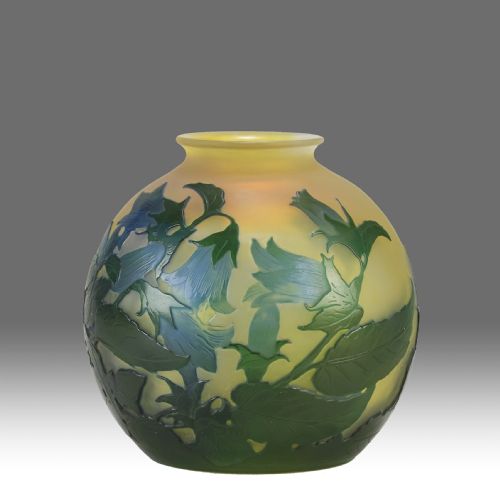
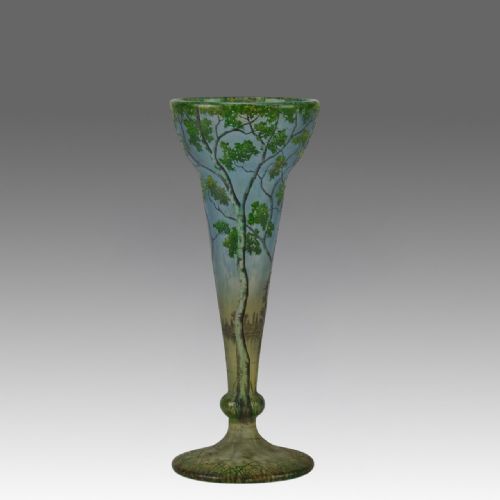
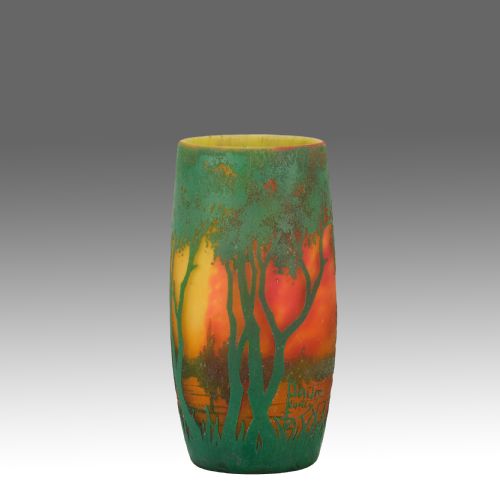
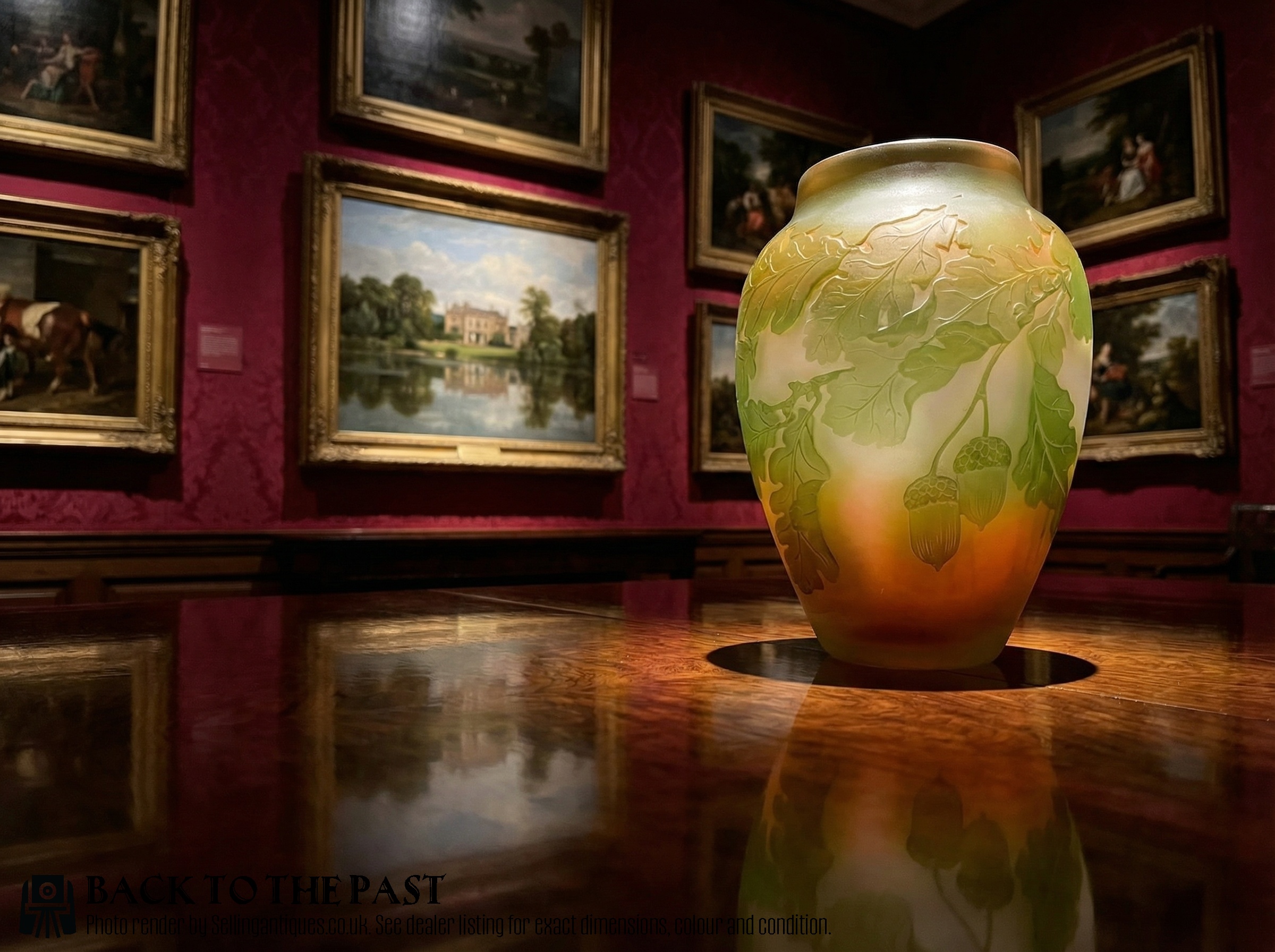
A green cameo glass vase displays layered glass forms carved or etched to reveal contrasting colours beneath, capturing the naturalistic spirit of the Art Nouveau period at the turn of the twentieth century. These vessels typically take botanical or landscape shapes, presenting flora like cornflowers, campanula, oak leaves, and blackberries across their bodies.
Most examples found here originate from the early twentieth century or around nineteen hundred, alongside pieces from eighteen ninety. Makers such as Emile Gallé, Daum Frères, and Baccarat dominate the origins, shaping the forms into distinctive floral and scenic compositions.
Buyers encounter distinct patterns such as the Campanula Vase, Paysage Vase, and Botanica Vase, alongside summer landscapes and red sunset scenes. The green coloration often serves as a background or a surface layer that frames the acid-etched details.

How they were made
Glassmakers built these pieces using multiple layers of coloured glass fused together while molten, creating the distinct strata necessary for subsequent carving. This multi-layered approach allowed craftsmen to achieve deep tonal transitions across the body of the vessel.
Makers utilised acid-etching techniques alongside traditional carving methods to cut through the outer glass layers and expose the contrasting background. Enamel and gold leaf sometimes accent the finished etched surfaces, adding fine detail to plant stems and landscape borders.
Green Cameo Glass Vase Retail Price Guide 2026
Typical asking prices for green cameo glass vase among the pieces listed under this phrase on Sellingantiques today, from the lower quarter to the upper quarter. They describe what is for sale here now, not the wider market.
Current listings feature pieces primarily from eighteen ninety, nineteen hundred, and nineteen twenty, executed in cameo and frosted glass.
What varies in quality
The depth and precision of the carving separate standard vessels from finer works, as skilled hands achieve subtle gradients in the glass layers rather than flat transitions. The complexity of the botanical subject, such as detailed oak leaves and acorns or layered summer landscapes, dictates the refinement of the piece.
The integration of supplementary techniques like enamelling and gold leaf distinguishes exceptional examples. Maker attribution also plays a role, with signed works by prominent houses demonstrating superior glass chemistry and colour saturation.
Emile Gallé·Daum Frères·Baccarat
The Green Cameo Glass Vase Glossary
- Cameo glass
- A vessel formed from multiple layers of different coloured glass fused together and carved or acid-etched to create a raised design. This technique requires steady control to avoid cutting through the underlying strata.
- Acid-etched glass
- Glass treated with hydrofluoric acid to eat away exposed surfaces and form decorative patterns. It offers a precise alternative to hand-carving when creating uniform background textures.
- Frosted glass
- Glass with a textured, translucent surface produced by acid-treatment or sandblasting. It diffuses light gently and frequently contrasts against polished or deeply coloured cameo motifs.
- Enamelled glass
- Glass decorated with melted coloured glass powders fired onto the surface to add fine pictorial details. This method enhances botanical scenes with extra strokes of colour.
- Gold leaf
- Extremely thin sheets of beaten gold applied to highlight specific elements of a design. It provides metallic accents that catch the light against darker glass layers.
Green Cameo Glass Vase: Frequently Asked Questions
What periods do these vases come from?
The listings span from eighteen ninety through the early twentieth century and the nineteen twenties. Most pieces date around nineteen hundred, aligning with the height of the Art Nouveau movement.
Craftsmen during this era produced distinctive botanical and landscape designs that define the aesthetic of these periods.
What materials make up these vases?
These vessels consist of cameo glass created through layered glass fusing and acid-etching techniques. Additional decorative elements include enamel, frosted glass surfaces, and gold leaf.
The interplay of these materials produces the characteristic contrast between the raised motifs and the background.
How should I display a green cameo glass vase?
Place the vessel near a natural light source to let daylight pass through the layered glass and illuminate the carved botanical details. Positioning it away from direct household traffic protects the raised cameo surface from accidental impact.
Allowing sufficient space around the piece ensures the landscape or floral motifs remain clearly visible from multiple angles.
How do I identify a Daum Frères piece?
Look for characteristic landscape or floral themes such as summer landscapes, blackberries, and sunset scenes executed in layered cameo glass. The execution often incorporates acid-etching combined with enamel highlights typical of the workshop.
Signatures or marks specific to the house generally appear on the body or base of the vessel.