


Enamel Miniature Painting
These intimate works of enamel miniature painting capture likenesses and scenes on copper, porcelain, and metal across the centuries.
Enamel Miniature Painting
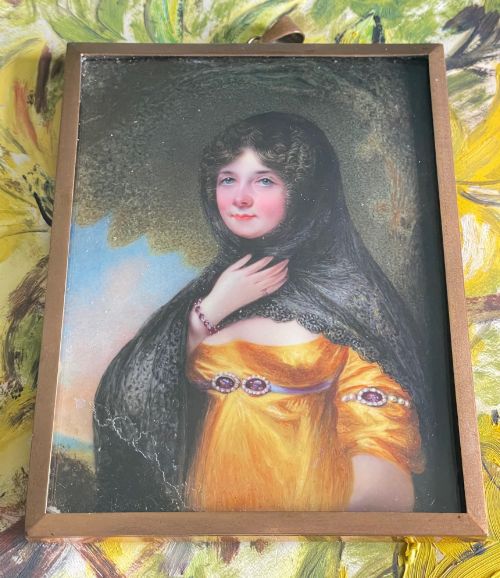
An enamel miniature painting is a small-scale portrait or decorative scene fused onto a metal or glass base using vitreous enamel. When exploring enamel miniature painting, collectors frequently encounter framed wall art, portrait miniatures, and small decorative boxes from the Georgian and Victorian eras.
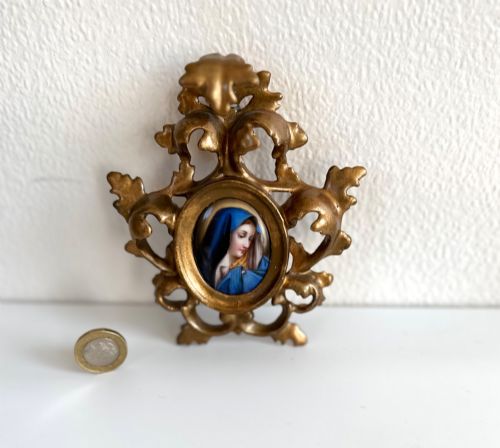
The selection ranges from 18th-century English snuff box lids and portrait plaques to 19th-century French carriage clocks and Viennese desk pieces. Many depict named individuals, religious figures, or romantic subjects rendered with meticulous brushwork.
Pieces span multiple periods including Regency, Victorian, and Edwardian, alongside later 1930s creations. Formats extend beyond standalone portraits into jewellery such as brooches, pendants, and rings.
How They Were Made
Artisans typically applied coloured vitreous enamels onto prepared copper or gold bases, firing the pieces in a kiln to fuse the glass powder to the metal. This technique created a durable, glossy surface capable of holding fine detail.
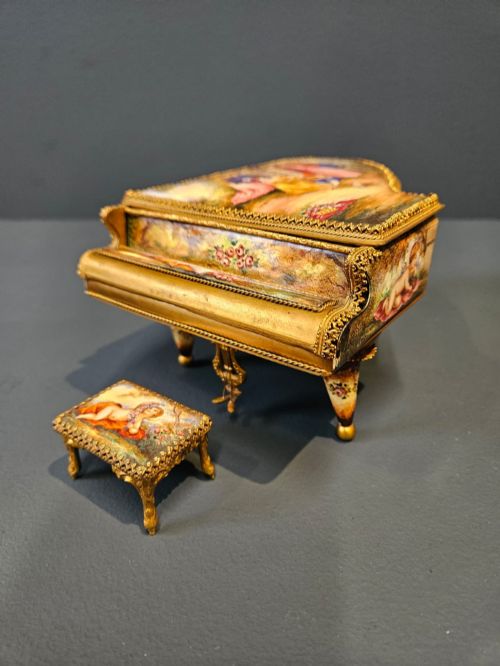
Many works incorporate gilt metal, brass, or ormolu mounts to frame the painted panels, particularly in clocks, music boxes, and table cabinets. Porcelain and white glass also served as grounds for hand-painted scenes in specific regional workshops.
Functional items featuring these paintings include musical boxes, carriage clocks, boudoir timepieces, scent bottles, and novelty trinket boxes.
What Varies in Quality
Mounts and housing elevate the overall standard, with heavy cast ormolu, solid gold settings, and intricate champlevé framing indicating superior craftsmanship compared to simpler brass surrounds.
Henry Bone ARA·Horace Hone·Christian Friedrich Zincke·Henry Pierce Bone
The Enamel Miniature Painting Glossary
- Vitreous enamel
- Glass powder fused to a metal substrate through high-temperature firing. This process produces a hard, glossy coloured coating that resists fading.
- Ormolu
- Gilded bronze or brass used for mounts and decorative frames. Makers employed this material extensively in French and Viennese pieces.
- Champlevé
- An enamelling technique where troughs are dug into a metal surface and filled with enamel powder before firing. The surrounding metal lines form a grid around the colours.
- Portrait miniature
- A small-scale painting capturing a person's likeness. These portable works served as personal tokens, jewellery inserts, or framed desk ornaments.
- Plaque
- A flat panel of enamel, porcelain, or metal designed for mounting into frames, furniture, or boxes. They frequently feature narrative scenes or portraits.
Enamel Miniature Painting: Frequently Asked Questions
How were enamel miniatures displayed?
Owners typically housed portrait miniatures in small leather cases, mounted them into frames for desk display, or wore them as jewellery. Pendants, brooches, and rings kept portraits close to the body as sentimental tokens.
Larger painted plaques found their way into decorative objects such as snuff boxes, tea caddies, table cabinets, and carriage clocks. These items integrated art into daily domestic life.
What metals support enamel paintings?
Copper served as the primary base for many 18th-century English plaques and snuff box lids. Artisans hammered or pressed the copper into shape before applying the vitreous enamel.
Finer portrait pieces and jewellery mounts utilised gold, particularly during the Victorian period. Gilt metal, brass, and ormolu appeared frequently on clocks and boxes to secure the enamel panels.
How do I identify a Georgian miniature?
Georgian pieces often feature copper grounds with characteristic counter-enamelling on the reverse to prevent warping. Subject matter frequently includes sentimental love tokens, profile portraits, and classical neoclassical motifs.
Clothing styles, hair powder, and framing techniques help narrow the date within the Georgian or Regency periods. Attributions to documented enamel artists also provide firm chronological markers.