

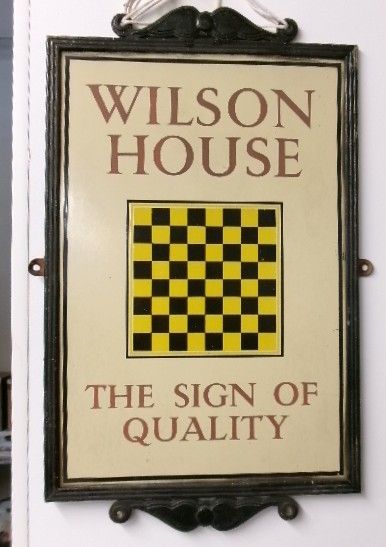


Enamel Advertising Sign
An enamel advertising sign carries the bold graphics of a bygone high street, fusing utility with robust commercial art.
Enamel Advertising Sign
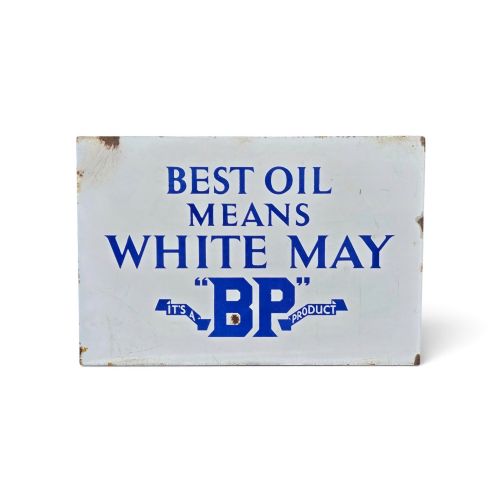
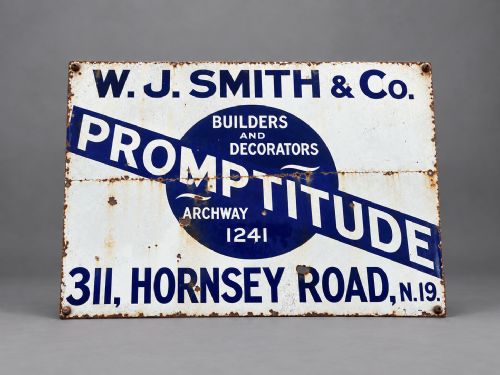
An enamel advertising sign represents the commercial graphics of the early twentieth century, spanning wall signs, trade signs, and pictorial pieces. The pieces available range from food and tobacco boards to public telephone notices, reflecting the diverse retail landscape of the period.
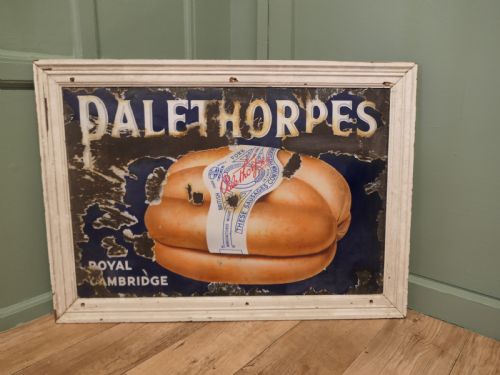
Most examples date from the 1900s to the 1930s, aligning with Edwardian commercial and industrial styles. Buyers encounter flat wall signs alongside framed specimens, some mounted on sheet iron or metal bases.
How they were made
Makers fused powdered glass onto sheet iron or metal through intense heat, creating a vitreous enamel surface that withstood outdoor weather. This glazing technique locked in vibrant colours and protected the underlying metal from rust.
Some pieces incorporate wooden frames, such as oak mounts, to support the metal plates. Lithographed tin also appears among related commercial objects, though vitreous enamel remains the dominant medium for durability.
The inventory records pieces spanning the 1900s to the 1930s, utilising iron, vitreous enamel, and oak.
What varies in quality
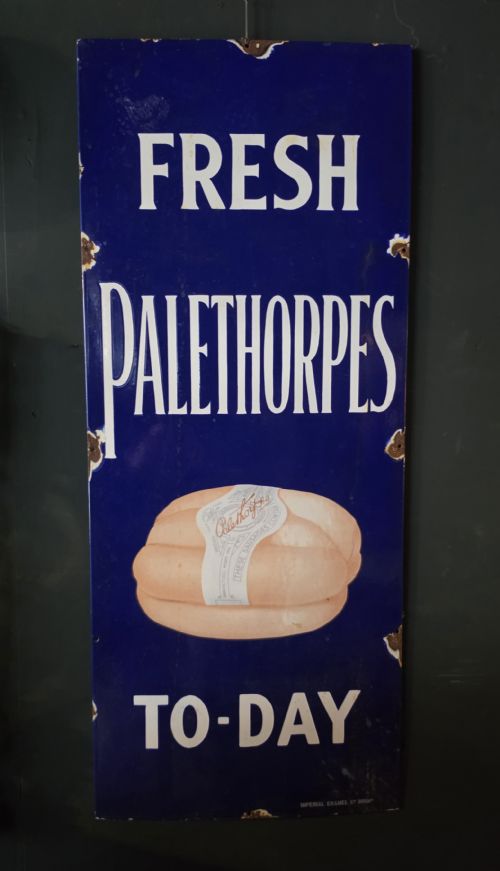
The sophistication of the pictorial design and typography dictates the distinction between standard trade notices and superior examples. Multi-coloured pictorial boards demand greater skill in layering enamel than simple text-based signs.
Size and format influence the visual impact, with exceptionally large boards or double-sided estate agent formats requiring more complex manufacturing processes. The retention of the original gloss and depth of colour separates well-preserved specimens from weathered survivors.
Palethorpes·Waterman s·Spratts·Rowntree s
The Enamel Advertising Sign Glossary
- Vitreous Enamel
- A glass-like coating fused to metal through high-temperature firing. This process provides a hard, glossy surface that resists fading.
- Pictorial
- A term for signs featuring illustrative imagery rather than text alone. These pieces often depict products or brand mascots.
- Sheet Iron
- The rolled metal substrate used as the foundation for the enamel glaze. It offers rigidity for large wall displays.
- Edwardian Commercial
- A stylistic descriptor pointing to trade objects produced during the reign of Edward VII. The period favours ornate lettering and rich palettes.
Enamel Advertising Sign: Frequently Asked Questions
Where were these signs displayed?
Shops, railway stations, and exterior walls of public buildings held these boards to attract passing trade. They hung outside grocers, tobacconists, and pharmacies.
Their robust construction allowed them to withstand decades of exposure to wind, rain, and sunlight without losing their legible lettering.
How do I date an enamel sign?
Typography, the advertised product, and the manufacturing style offer the clearest chronological markers. Pieces from the 1900s often display distinct Edwardian lettering.
Later examples from the 1920s and 1930s shift toward bolder industrial commercial graphics and specific corporate branding.
How should I hang a heavy metal sign?
Secure wall fixings that match the weight of the iron substrate are essential for safe display. Many pieces retain their original mounting holes.
Care must be taken not to stress the vitreous enamel surface when tightening screws against the metal plate.
Are all these signs made of iron?
The majority utilise sheet iron or general metal as the base for the fused glass glaze. Wooden frames also support certain wall-mounted specimens.
Alternative materials like lithographed tin appear among smaller trade items from the same era.