



Blue Enamel Sign
These blue enamel sign pieces are striking items of industrial advertising and vitreous craft that bring colour and history into a modern interior.
Blue Enamel Sign
A blue enamel sign is a durable piece of functional signage or advertising, designed to endure public exposure across railway stations, high street shops, and industrial works.
The versions most commonly found here date from the Edwardian period through to the mid-twentieth century, featuring bold lettering and branding for household names, local newspapers, and public services.
Beyond standard flat advertising panels, the broader selection includes double-sided hanging variants and pictorial boards created to catch the eye of passing trade.
Materials and Manufacture
These pieces are constructed from robust sheet iron or heavier iron plates, chosen for their ability to hold rigid under outdoor conditions without warping.
Vitreous enamel, a powdered glass fused to the metal base at high temperatures, provides the glossy coloured surface that resists fading and weather damage over decades of use.
Blue Enamel Sign Retail Price Guide 2026
Typical asking prices for blue enamel sign among the pieces listed under this phrase on Sellingantiques today, from the lower quarter to the upper quarter. They describe what is for sale here now, not the wider market.
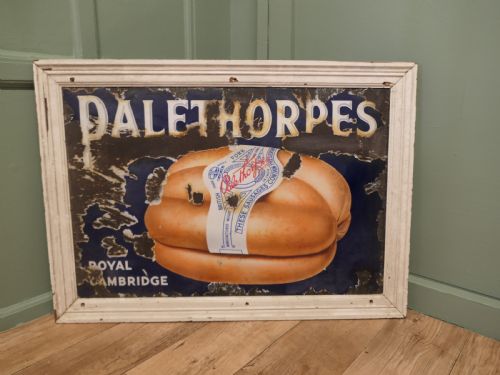
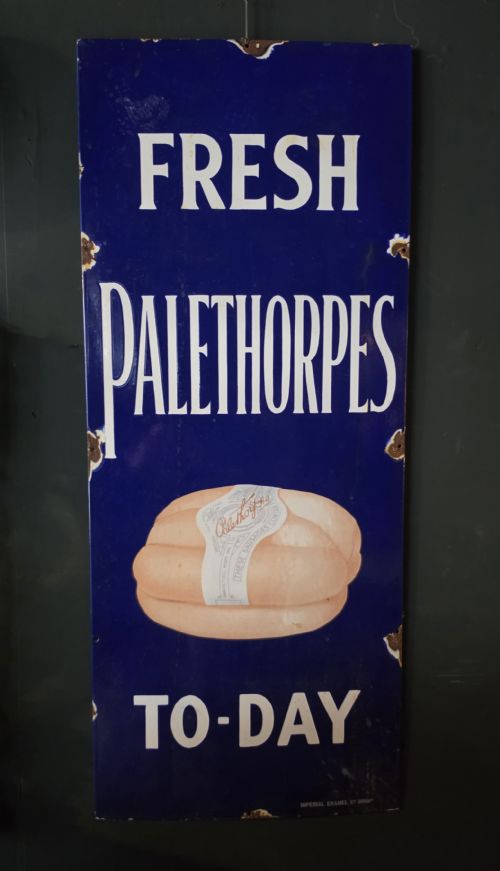
Sausage manufacturers invested heavily in bright signage, proving that even breakfast meats deserved the finest vitreous glaze.
Assessing Quality and Condition
Quality rests upon the crispness of the original screen-printed or stencilled typography and the depth of the cobalt or light blue vitreous glaze against the iron backing.
Better examples retain their original hanging brackets, strong gloss levels, and minimal chipping around the mounting holes where structural stress typically occurs.
Palethorpes·Watsons Matchless Soap·Colman·Eley
The Blue Enamel Sign Glossary
- Vitreous Enamel
- A material made by fusing powdered glass to a metallic substrate at extreme heat. This process creates a smooth, impervious, and colourfast coating.
- Sheet Iron
- A malleable metal rolled into thin flat pieces. It served as the primary structural foundation for large-scale outdoor advertising boards.
- Pictorial
- A term for signage that incorporates detailed illustrations or graphic images alongside standard lettering to advertise specific commodities.
- Double-Sided
- Signs manufactured with vitreous enamel on both faces. They were designed to project outwards from building walls perpendicular to pedestrian traffic.
Blue Enamel Sign: Frequently Asked Questions
How were these signs originally mounted?
Most pieces feature pre-drilled corner or edge holes designed to accommodate iron screws or bolts for secure attachment to brickwork and shopfront timbers.
Some double-sided variants utilised heavy iron brackets that projected out from the building facade to catch the eye of pedestrians walking along the pavement.
What periods do these signs represent?
The pieces span from the late Victorian and Edwardian eras through the interwar years and into the middle of the twentieth century.
Commercial advertising reached a peak in production quality during these decades, utilising durable vitreous finishes that outlasted the products they promoted.
How do I clean an enamel sign?
Wash the surface gently with warm water and a mild soap solution to remove accumulated dust and surface grime without disturbing the glaze.
Avoid abrasive scouring pads or harsh chemical solvents that can dull the glossy finish or lift the fragile edges of the vitreous coating.
Where should I hang a sign indoors?
These large panels suit prominent kitchen walls, garden rooms, or industrial workspaces where their vibrant blue colourways act as a strong focal point.
Ensure the wall fixings are rated to support the substantial weight of the iron backing plate safely.