

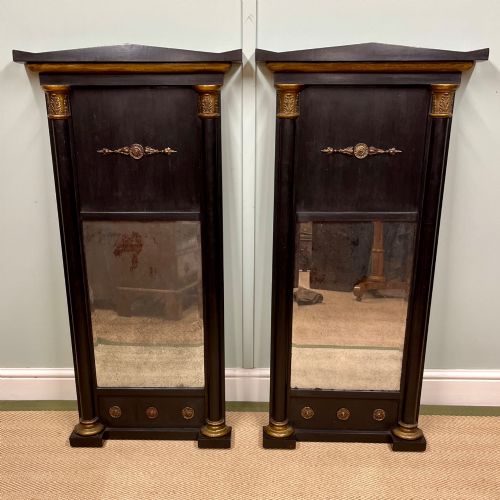


Empire Style Wall Mirror
Empire style wall mirror pieces bring commanding classical presence to an interior through architectural framing, gilded surfaces, and grand proportions.
Empire Style Wall Mirror
An empire style wall mirror draws upon classical vocabulary, taking shape as substantial overmantels, pier mirrors, and convex forms designed to dominate a room. These pieces emerge predominantly across the nineteenth century, spanning Regency, Napoleon III, and Biedermeier interpretations alongside later revivals.
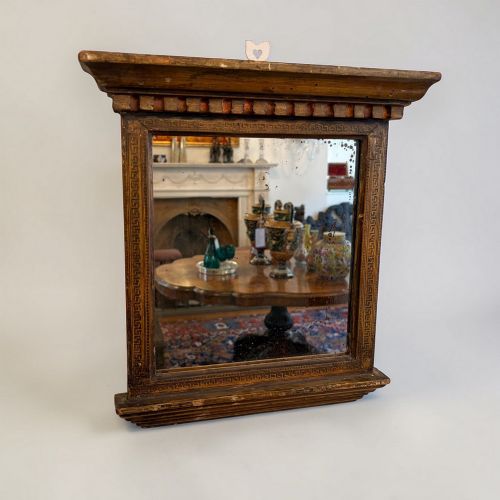
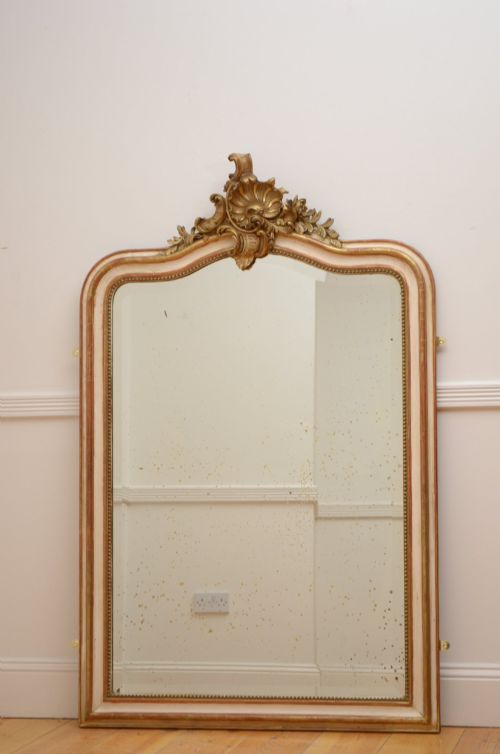
The materials record traditional craftsmanship, pairing glass with giltwood, mahogany, ebonised wood, and gesso. Continental and English workshops alike produced these works, incorporating painted panels, marble, and gilt metal details.
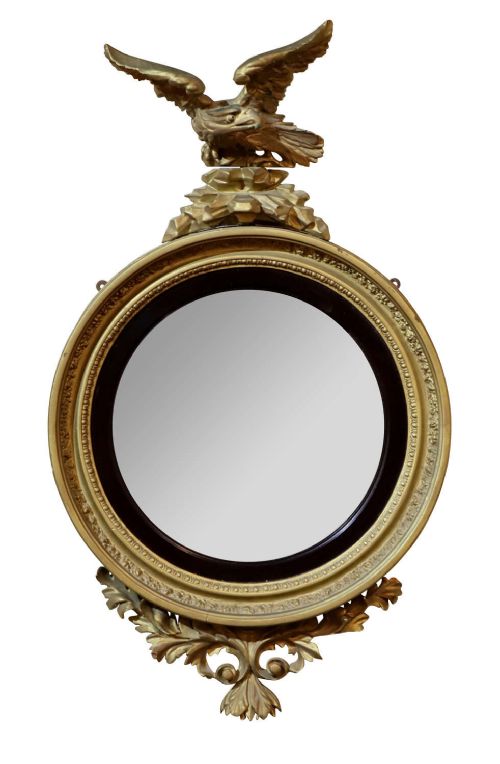
Buyers meet variations ranging from compact circular convex glasses surmounted by eagles to towering Italian and French overmantels. The selection balances architectural wall mirrors with console tables and pier glasses framed in rich hardwoods and applied gold leaf.
Materials and construction
Makers constructed the structural frames from dense timbers such as mahogany, walnut, and rosewood, frequently applying ebonised finishes or rich veneers. Giltwood and gesso elements provided the luminous classical ornament characteristic of the style.
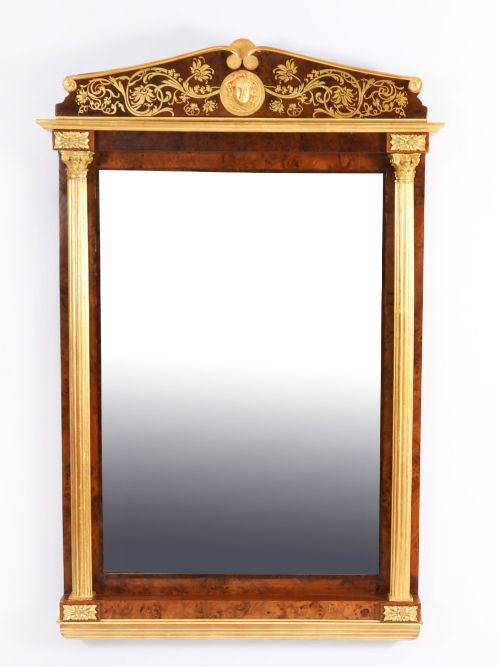
Surface decoration relied on skilled gilding over gesso grounds, alongside cast brass and gilt metal detailing. Painted panels and decorative relief scenes of figures such as Bacchus decorated the upper sections of trumeau and overmantel formats.
Several mirrors feature watchful carved eagles perched atop their circular frames, guarding the glass from every angle.
Defining quality in execution
The calibre of an empire style wall mirror rests on the crispness of its carved or moulded ornament and the depth of its gilding. Superior examples display sharply defined relief work and harmonious proportions between frame and glass plate.
Material selection dictates distinction, separating standard secondary timbers from finely figured mahogany or walnut foundations. The integrity of original glass plates and the precision of applied brass or gilt metal enrichments further elevate a piece.
The Empire Style Wall Mirror Glossary
- Giltwood
- Wood that has been coated with fine gold leaf or gold powder over a prepared ground. This technique creates the brilliant metallic finish seen on classical mirror frames.
- Gesso
- A plaster-like mixture applied to wood frames to create a smooth surface for gilding or relief moulding. It allows artisans to carve intricate classical motifs before applying gold leaf.
- Overmantel mirror
- A large horizontal mirror designed specifically to hang above a fireplace mantelpiece. These pieces often feature multiple glass plates and architectural cornices.
- Pier mirror
- A tall vertical mirror designed to fit on the narrow wall space between windows. They frequently sat above matching console tables or cabinets.
- Convex mirror
- A round mirror featuring a curved glass plate that reflects a wide, distorted field of view. These pieces often incorporate eagle surmounts and candle arms.
- Trumeau mirror
- A decorative wall mirror combined with a painted or carved panel above the glass. Originating in France, these pieces integrate wall panelling design into a single hanging frame.
Empire Style Wall Mirror: Frequently Asked Questions
What defines an empire style wall mirror?
An empire style wall mirror is characterised by heavy classical motifs, architectural framing, and rich materials like giltwood and mahogany. These pieces draw on French imperial and Regency aesthetics to create a commanding visual presence.
Craftsmen incorporated columns, pilasters, and gilt metal mounts into the design. The overall effect remains balanced and monumental, suiting formal reception rooms and grand hallways.
Where should an overmantel mirror hang?
Overmantel mirrors traditionally hang directly above a fireplace mantelpiece to reflect light and anchor the room's central hearth. Their wide horizontal proportions align naturally with the scale of a fireplace surround.
Placing the mirror at the correct height ensures it mirrors the room rather than the ceiling. It serves as the primary focal point of the interior scheme.
How do I identify a pier mirror?
A pier mirror is tall and narrow, specifically proportioned to fit the wall space between two windows. They often extend downwards to sit just above the floor or a console table.
This vertical format maximised light reflection in high-ceilinged nineteenth-century rooms. Surviving examples frequently retain their original tall wooden or gilded frames.
What is a convex mirror used for?
Convex mirrors provided functional wide-angle views of a room before the widespread use of electric lighting. Their curved glass gathered ambient daylight from windows and distributed it across the interior.
Today, they function primarily as decorative accent pieces with distinct optical properties. The circular frames often feature elaborate crests, such as carved eagles.
How do I care for antique giltwood?
Antique giltwood requires gentle dusting with a soft, dry brush to protect the delicate gold leaf surface. Moisture and chemical cleaners can strip the underlying gesso and gold.
Keeping the mirror away from direct sunlight and damp environments preserves the finish. Professional conservation ensures the structural integrity of the carved frame remains intact.