





Empire Style Chest
An empire style chest brings architectural symmetry and bold neoclassical presence to a room, offering deep drawers housed within formal, disciplined proportions.
Empire Style Chest
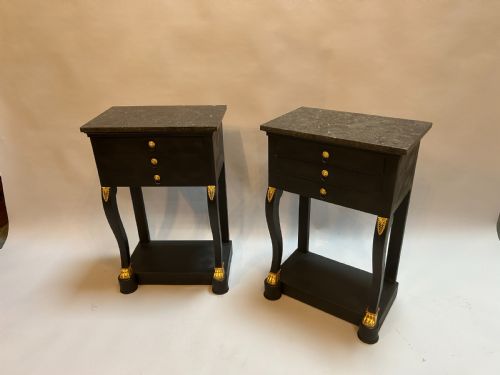
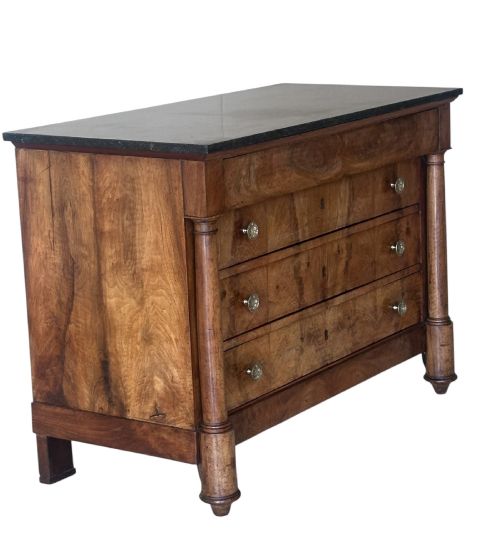
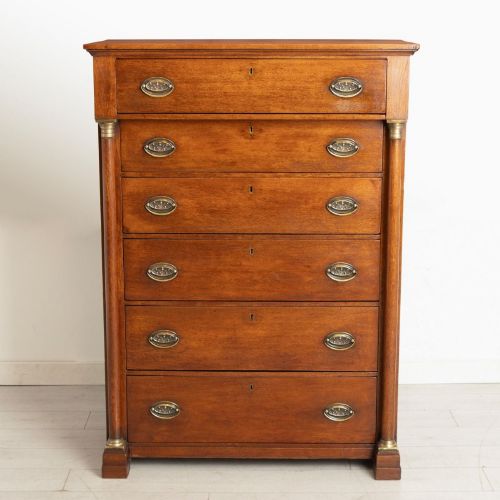
When you search for an empire style chest, you look at case furniture defined by monumental scale, restrained ornamentation, and architectural dignity. These pieces range from bedside tables and tall chests to commodes and dressing tables originating across the nineteenth century and subsequent revival periods.
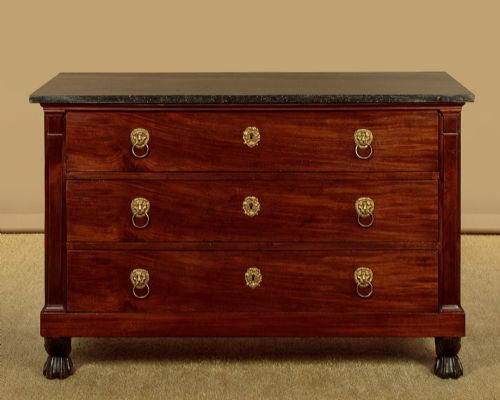
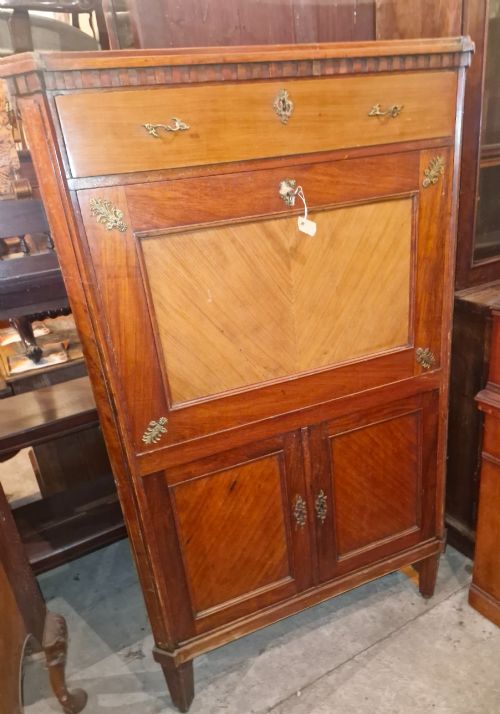
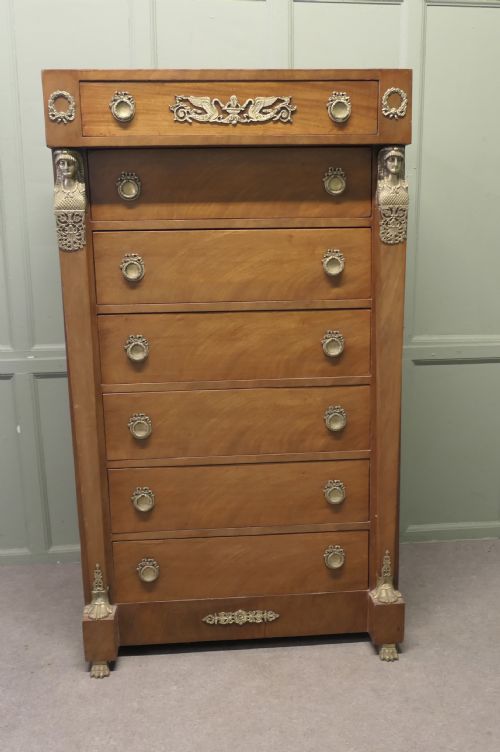
The versions most common on this page are French and Swedish commodes or tall chests of drawers, often sporting marble tops and mounted metal details. Alongside these standard commodes, buyers encounter specialised forms including secretaire chests, tall cartonnier chests, and bedside pairs reflecting continental preferences.
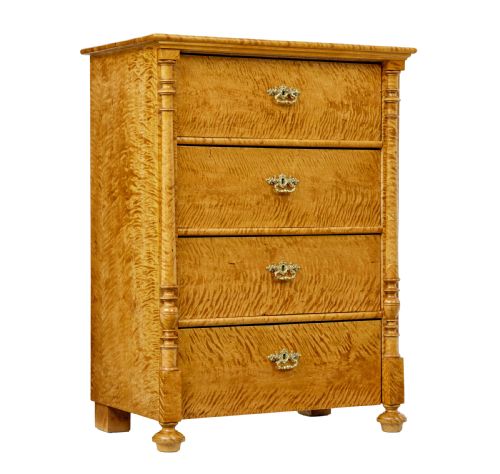
Geographic variations span French models, Dutch interpretations, Swedish birch examples, and Italian inlaid pieces, connecting distinct regional cabinetmaking traditions under a shared stylistic umbrella. The selection draws on periods from the Georgian and Regency eras through the nineteenth century and early twentieth-century revivals.
What separates the best pieces
Quality rests in the selection of timber figures, where matched veneers and thoughtful grain alignment elevate the visual impact of the carcase. The depth and clarity of classical proportions dictate whether a piece commands the room or merely occupies space.
Superior execution shows in the crispness of the gilt metal mounts and the integration of fitted elements like mirror-backed secretaire drawers. The weight and choice of marble tops, paired with precise joinery in the drawer linings, mark the distinction between standard utilitarian storage and accomplished cabinetmaking.
Listings feature mahogany, walnut, birch, and oak carcases, frequently accented with brass, gilt metal, and marble tops across multiple nineteenth-century and revival periods.
The Empire Style Chest Glossary
- Commode
- A low chest of drawers or cabinet originating from French furniture forms. These pieces often feature marble tops and prominent hardware.
- Secretaire
- A desk fitted with a pull-out writing surface and concealed small drawers. This fold-down flap transforms a standard chest into a writing station.
- Cartonnier
- A tall cabinet or chest originally designed for storing papers and documents. Such pieces provide multiple shallow drawers within a vertical tower.
- Biedermeier
- A Central European style emphasising utilitarian comfort and clean lines without excessive ornamentation. Furniture from this movement relies on the natural grain of woods like birch.
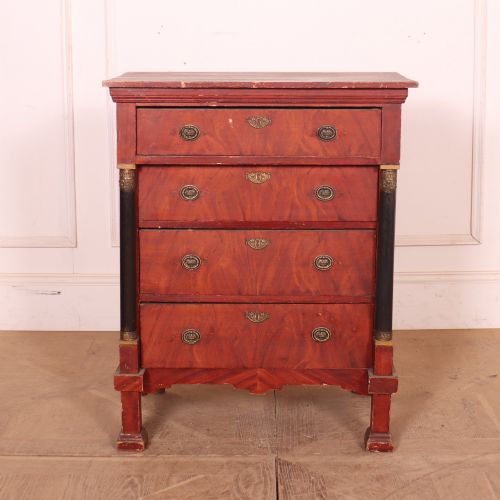
- Ebonised
- Wood treated to imitate the dark, dense appearance of ebony. Cabinetmakers utilised this finish to create stark linear contrasts on drawer fronts and columns.
Empire Style Chest: Frequently Asked Questions
Where should I place an empire style chest?
These chests suit reception rooms, grand hallways, or bedrooms where their architectural presence can anchor the surrounding space. Their strong horizontal or vertical lines work well against plain walls that allow the wood grain and metal mounts to stand out.
Pairing a marble-topped commode with simple lighting or a mirror enhances the classical symmetry inherent in the design. Smaller bedside versions fit neatly beside low-profile beds.
How do I identify a revival piece from an original nineteenth-century chest?
Original pieces from the early nineteenth century typically show period construction methods inside the drawer linings and carcase backs. Examining the timber shrinkage, hand-cut dovetails, and the patina of the brass mounts helps clarify the date of manufacture.
Revival pieces, such as those from the early twentieth century or 1920, often employ machine-cut elements while faithfully copying the earlier French forms and proportions.
What woods were commonly used for these chests?
Mahogany and walnut form the backbone of these listings, chosen for their stability and rich dark tones. Cabinetmakers also utilised exotic burrs like burr elm and burr walnut to create dramatic patterned fronts.
Swedish makers favoured pale birch and tiger birch, lending a lighter aesthetic to the same classical proportions found in French workshops.
How do I care for a marble top on a commode?
Marble requires gentle cleaning with a damp cloth and mild soap to protect the stone surface from staining and etching. Avoid acidic liquids like vinegar or wine near the stone, as they damage the polish.
Applying a specialist stone wax periodically helps maintain the sheen and guards against everyday wear on antique tops.