

Antique Column Chest
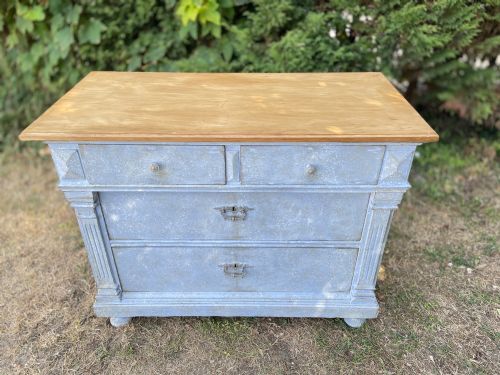
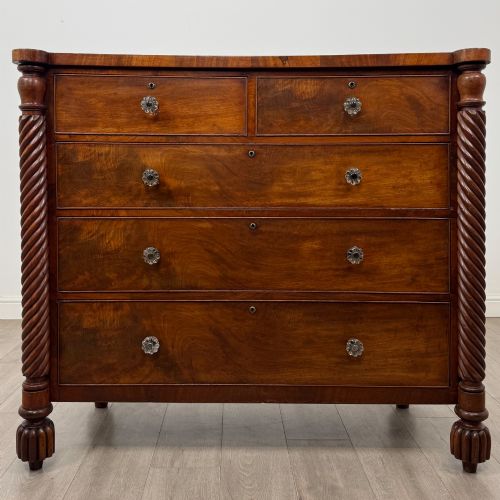
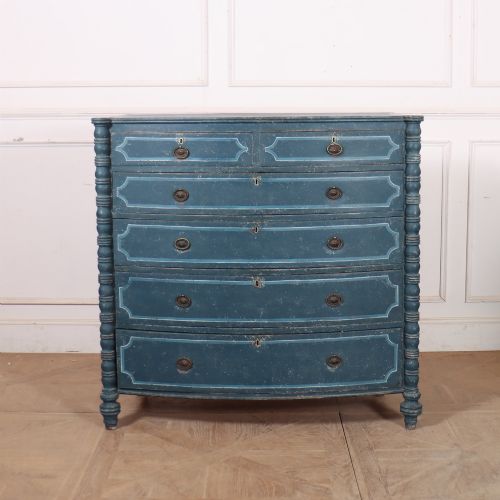
An antique column chest brings monumental architectural presence to a room through flanking pillars and rich timber grain.
Antique Column Chest
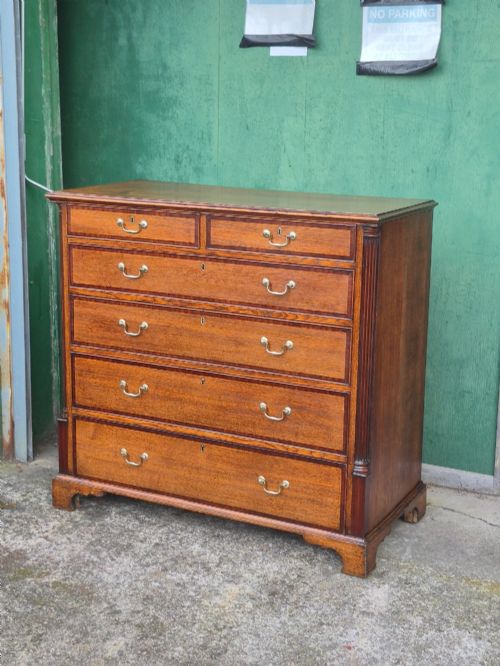
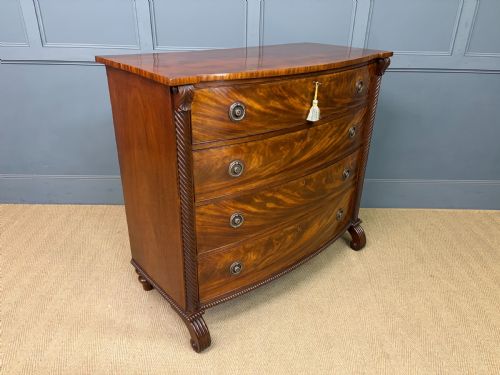
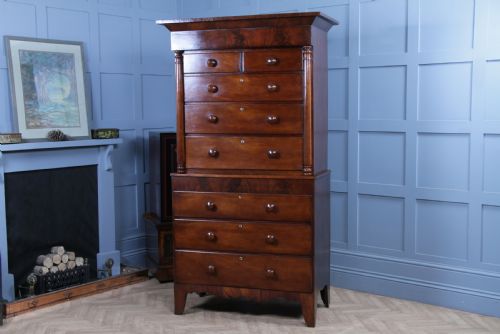
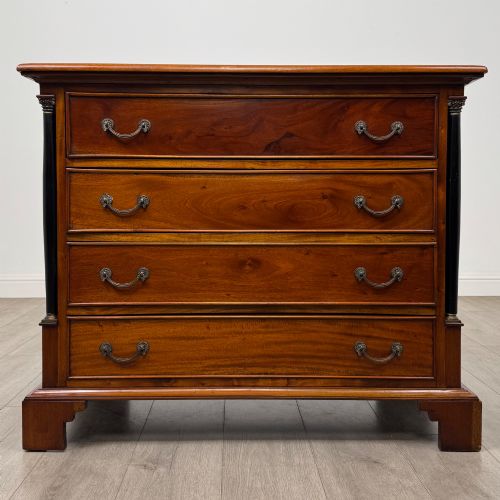
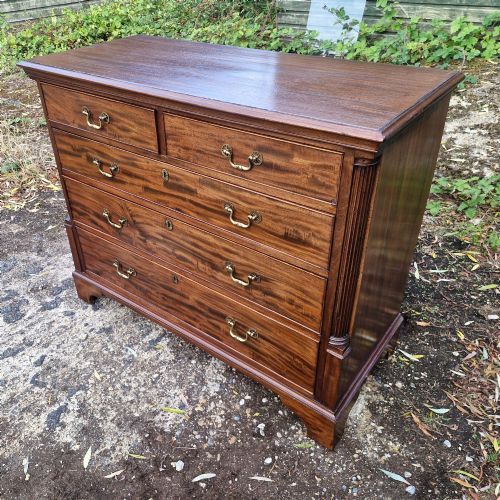
An antique column chest is a substantial storage piece defined by vertical architectural pillars framing the drawer banks. These items emerge primarily from the Georgian, Regency, and Victorian periods, with pine and mahogany dominating the surviving forms.
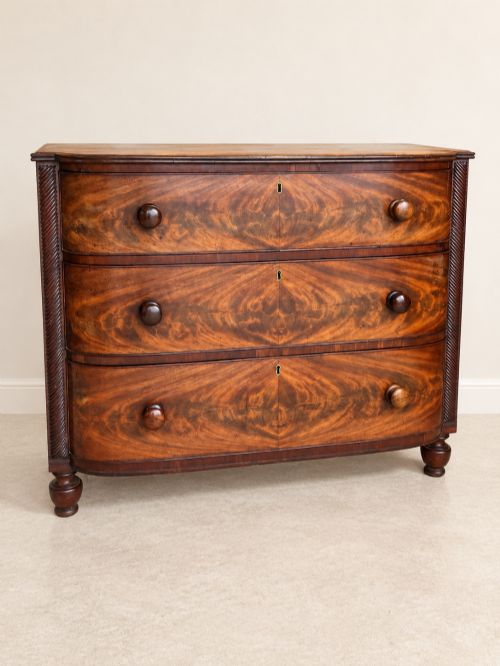
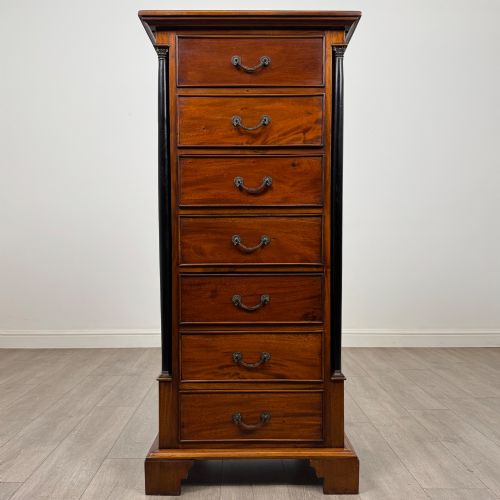
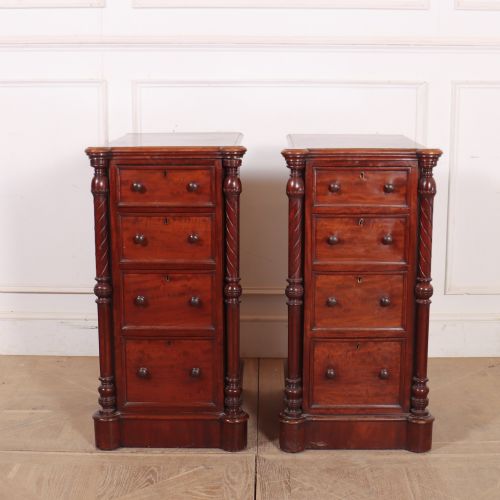
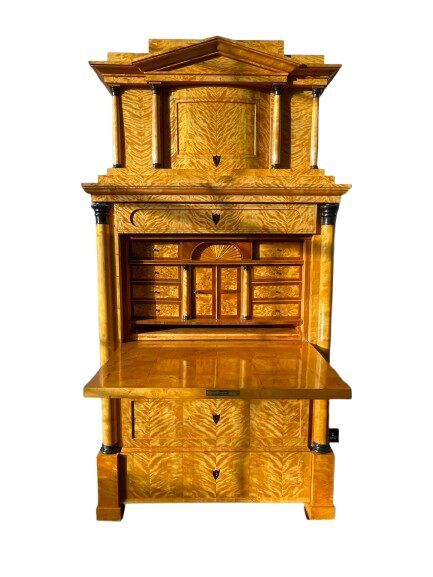
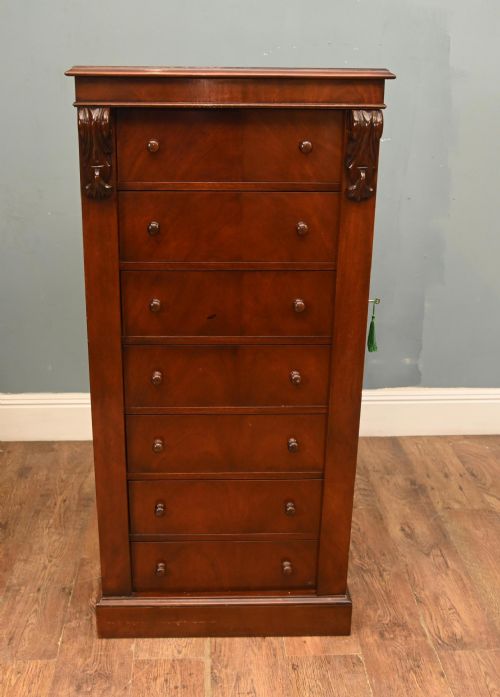
The version most commonly met on this page is the sturdy pine or mahogany chest featuring flanking half-columns, often configured with multiple graduated drawers. Alongside standard bedroom pieces, the selection includes bedside variants, tall Scotch formats, and specialised collectors cabinets.
Originating across British and European workshops, these chests range from simple waxed pine country furniture to polished flame mahogany and walnut statement pieces. The structural columns impart a distinct classical weight that separates them from standard flat-fronted drawer units.
How they were made
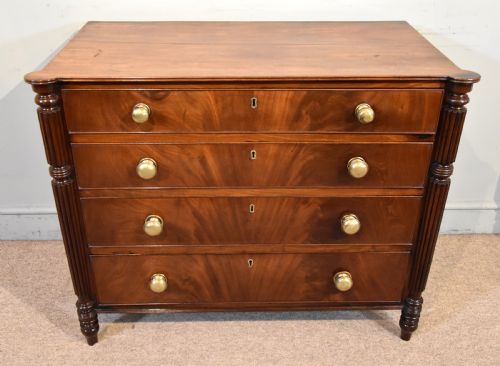
Cabinet makers constructed these pieces using solid timbers like mahogany, walnut, and pine, frequently applying flame mahogany veneer to primary drawer fronts for visual depth. Structural integrity relied on robust secondary woods such as oak for drawer linings and internal framing.
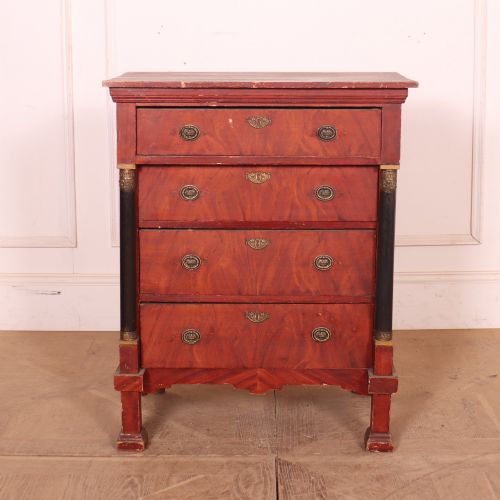
Architectural columns were turned on lathes or carved by hand before being fixed to the front corners as structural and decorative pilasters. Brass handles, escutcheons, and occasional marble tops completed the construction, utilising traditional dovetail joinery for the drawer construction.
What varies in quality
The distinction between tiers rests upon the choice of timber selection and the precision of the column turning. Pieces utilising finely figured flame mahogany or burr elm exhibit a superior visual richness compared to plain utility pine.
Execution of detail defines the upper end of the scale, observable in crisp capital carvings on the columns and tight, hand-cut dovetails on the drawer carcasses. Original brass hardware and well-matched wood grain across the drawer tiers further separate standard regional pieces from finer cabinet work.
The Antique Column Chest Glossary
- Column chest
- A chest of drawers featuring structural or decorative vertical pillars attached to the front corners. These architectural elements draw inspiration from classical building design.
- Wellington chest
- A tall, slender chest of drawers secured by a single vertical locking bar on one side. This locking flap fastens over the drawer edges to secure the entire stack.
- Scotch chest
- A substantial chest of drawers originating from Scotland, often featuring a deep concealed top drawer above central smaller drawers. They are typically constructed from dense mahogany with bold proportions.
- Flame mahogany
- A wood veneer cut from the fork of the mahogany tree where the branch meets the trunk. This cutting method produces a distinctive flickering flame pattern across the drawer fronts.
- Biedermeier
- A Central European style spanning the 19th century characterised by utilitarian comfort and clean lines. These pieces highlight warm domestic woods without excessive ornamentation.
Antique Column Chest: Frequently Asked Questions
Where should I place a column chest?
These chests suit bedrooms, hallways, or living spaces where their architectural pilasters can anchor a wall visually. Their vertical presence makes them effective focal points without requiring excessive floor area.
Ensure adequate clearance for drawers to open fully, particularly with wider Scotch or bowfront formats that project further into the room.
How do I care for wax-finished pine?
Waxed pine surfaces require occasional nourishment with traditional beeswax to maintain the finish and prevent the timber from drying out. Apply sparingly with a soft cloth and buff gently to restore the sheen.
Keep these pieces away from direct heat sources and radiators to prevent the pine from splitting or the historical wax from softening unevenly.
What is the difference between Georgian and Victorian proportions?
Georgian pieces generally emphasise restrained classical balance, subtle bracket feet, and refined cockbeading around drawer edges. The timber selection often leans towards carefully matched mahogany veneers.
Victorian examples tend toward heavier proportions, bolder column turnings, and wider formats such as the Scotch chest. Pine versions from this later era also embrace simpler country utility.
How do I identify a concealed drawer?
Concealed drawers often sit immediately beneath the top surface moulding, presenting a plain wooden fascia without visible handles. Opening them requires releasing an internal wooden catch or operating a secret lock mechanism.
These hidden compartments were designed for securing small valuables and documents away from casual view.