
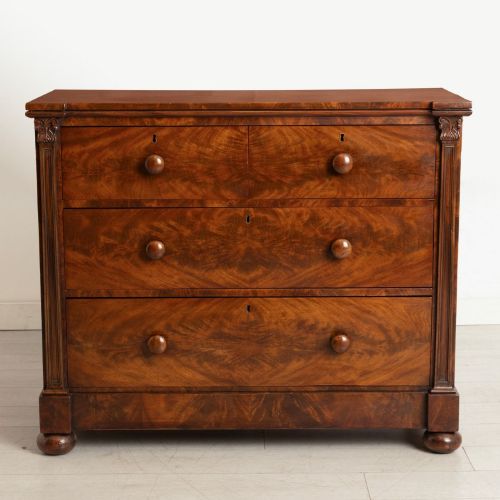
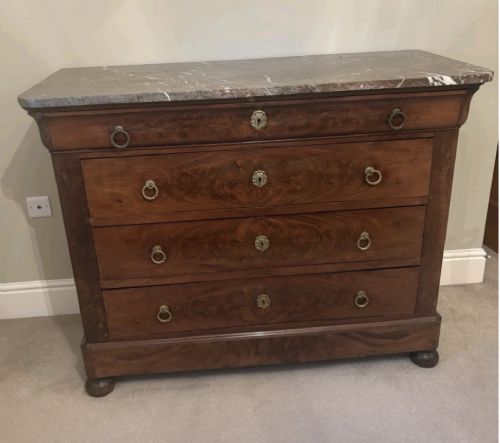
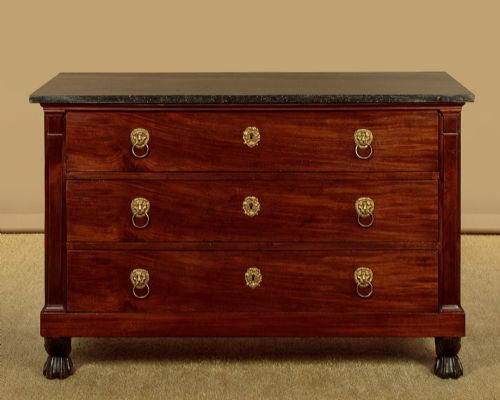
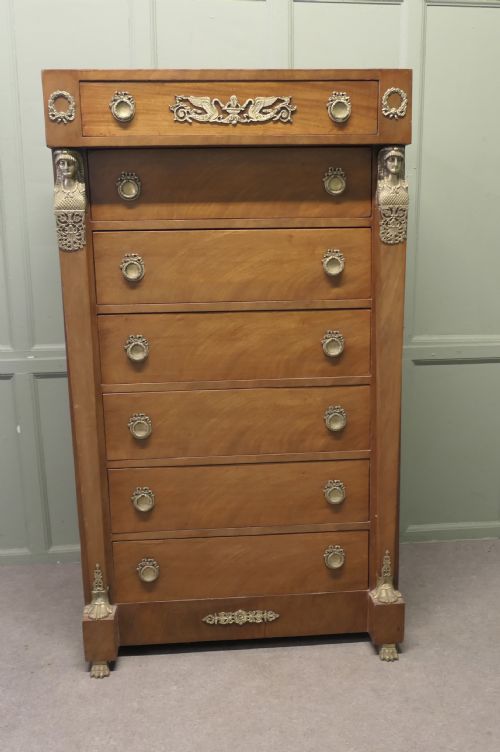






Empire Style Chest Drawers
Empire style chest drawers deliver architectural gravity and rich mahogany or birch surfaces to an interior.
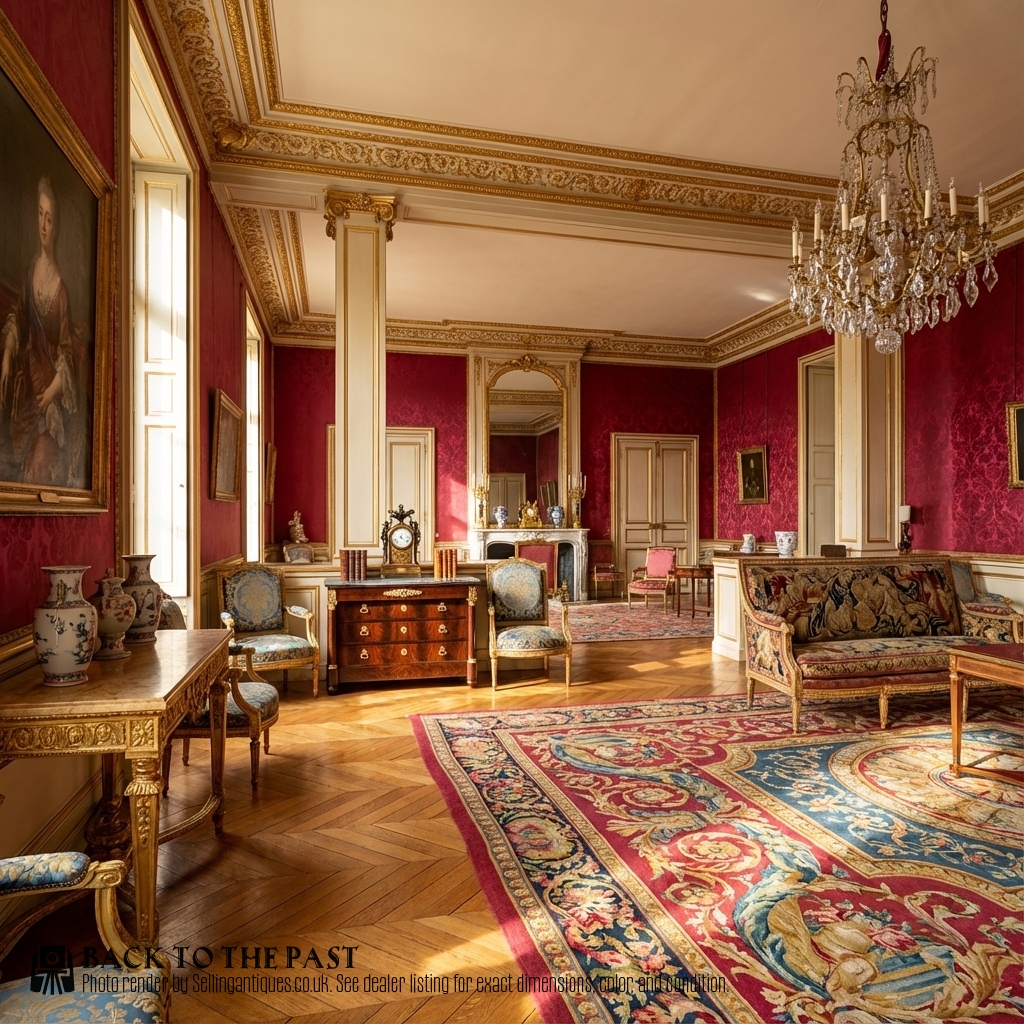
Empire Style Chest Drawers
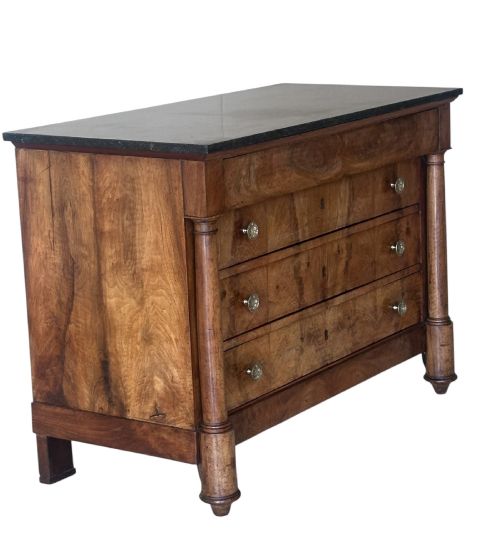
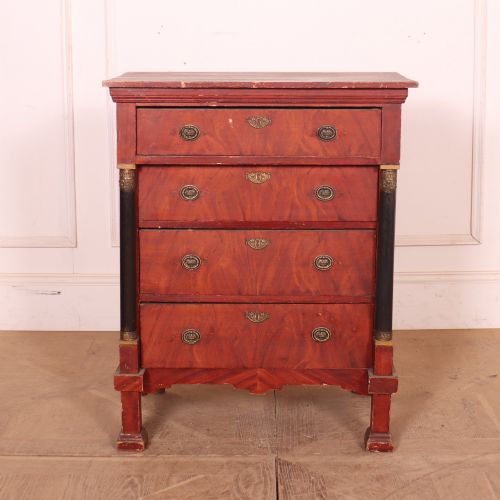
Empire style chest drawers bring formal neoclassical presence to a room, predominantly appearing as French commodes, tall chests, and Swedish revival pieces from the nineteenth century. Buyers searching this phrase meet substantial case furniture defined by rectangular proportions, dark timber surfaces, and occasionally marble tops. These pieces originate across France, Sweden, Italy, and the Netherlands, reflecting regional interpretations of a grand continental aesthetic.
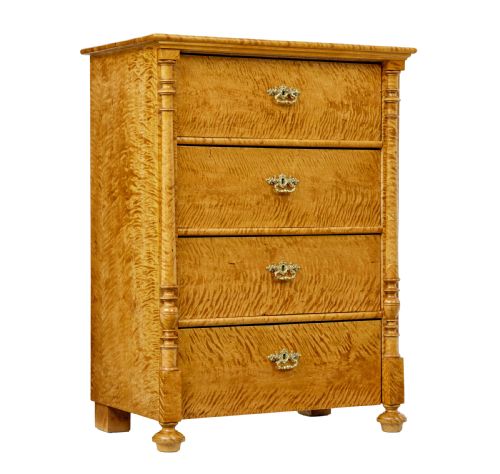
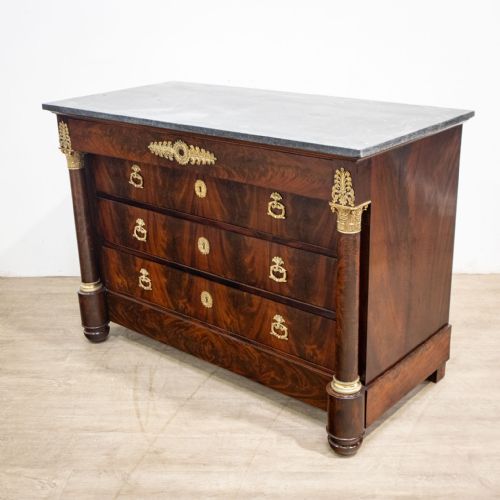
The selection ranges from early nineteenth-century French mahogany and walnut commodes to later revival pieces in birch and tiger birch. Forms include standard four-drawer commodes, tall chests, and specialised variants like dressing chests and secretaire commodes. French examples often display precise gilt metal mounts, whilst Scandinavian pieces rely on the striking grain of native timbers.
Construction and Materials
Cabinet makers constructed these carcases using solid and veneered timbers, predominantly mahogany, walnut, oak, and birch. Richly figured veneers such as burr elm and burr walnut frequently face the primary surfaces to create dramatic grain patterns. Ebonised wood provides sharp contrast on mouldings and architectural details.
Mounts and hardware in gilt bronze, brass, and gilt metal anchor the corners and frame the drawer fronts. Heavy marble and fossil marble tops sit directly upon the upper carcase of select pieces, adding substantial weight and a cool tactile surface.
Materials documented across the inventory include fossil marble, tiger birch, burr walnut, ebonised wood, and gilt bronze mounts.
Judging Quality
The distinction between tiers rests upon the selection of timber veneers and the crispness of the applied metal mounts. Finer pieces demonstrate seamless matching of grain across drawer fronts and integration of fire-gilded or finely chased bronze details. Carcase construction methods, such as the weight of the oak or mahogany used internally, separate standard production from masterwork output.
Regional execution also dictates distinction, with Swedish birch pieces relying on pristine polished timber planes rather than metal ornamentation. The inclusion of original marble slabs, particularly fossil varieties, elevates the stature of a commode compared to timber-topped equivalents.
The Empire Style Chest Drawers Glossary
- Commode
- A low chest of drawers, frequently French in origin, designed with multiple deep drawers for domestic storage. These pieces often feature prominent hardware and marble tops.
- Secretaire commode
- A hybrid form combining chest of drawers storage with a fitted writing drawer that drops down to reveal internal compartments. This dual-purpose furniture was popular in early nineteenth-century workshops.
- Gilt bronze
- Copper alloy cast elements treated with gold to provide a lasting metallic finish on mounts and keyhole escutcheons. Also known asormolu, this material catches the light against dark timbers.
- Tiger birch
- A distinctively figured Scandinavian hardwood exhibiting dense, undulating grain patterns. Cabinet makers utilised this timber to create high-contrast surfaces without relying on applied mounts.
- Fossil marble
- Natural limestone containing prehistoric marine fossils, polished flat to form heavy decorative tops. This dense stone appears on select commodes.
Empire Style Chest Drawers: Frequently Asked Questions
What defines an Empire style chest drawers?
These pieces originate from the neoclassical design movements spanning the early nineteenth century and later revivals. They are characterised by heavy rectangular forms, symmetrical drawer arrangements, and austere classical lines.
Cabinet makers often applied architectural pilasters and dark timber veneers such as mahogany, walnut, and birch. Metal mounts in brass or gilt bronze frequently accent the corners and drawer pulls.
How do French and Swedish pieces differ?
French commodes from this tradition tend to utilise dark woods like mahogany and walnut, paired with polished marble tops and cast metal mounts. They project a formal and imposing presence within a room.
Swedish revival pieces frequently showcase pale birch and tiger birch timbers with minimal hardware. Their aesthetic relies on the natural warmth and dramatic patterning of the wood grain.
Where should I place a commode?
These substantial chests function effectively as anchor furniture in bedrooms, living rooms, and large hallways. Their flat tops provide a solid surface for lamps, mirrors, or decorative objects.
Because many examples feature finished backs or sides designed to stand clear of walls, placement depends on the specific room layout and the prominence of the timber grain.
How do I care for marble and wood?
Timber surfaces require occasional treatment with appropriate wax to maintain the polish and prevent the wood from drying out. Avoid placing moisture directly on untreated veneer or antique finishes.
Marble and fossil marble tops benefit from gentle cleaning with mild, non-acidic soap and water. Acidic liquids like citrus juice can etch polished stone surfaces.