

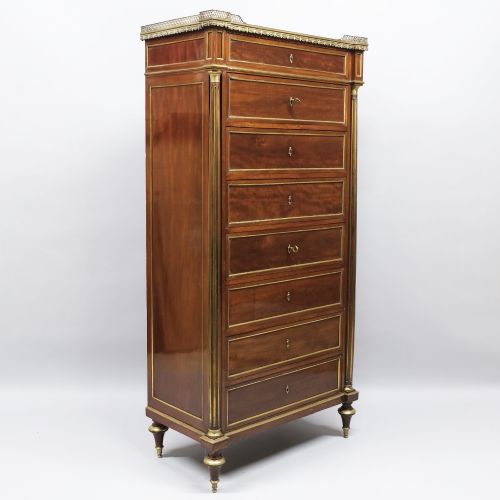


Empire Period Drawers
These empire period drawers offer the grand proportions and architectural presence that define classic neoclassical design.
Empire Period Drawers
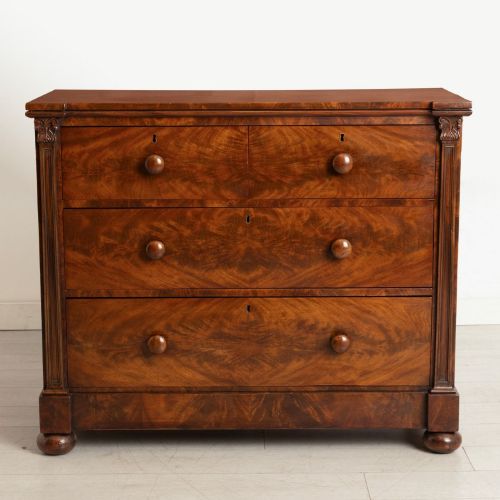
When you search for empire period drawers, you encounter substantial furniture pieces designed primarily as commodes, tall chests, and compactums. These items originate predominantly from the nineteenth century, including specific pieces from the Regency and Georgian eras alongside later adaptations.
The form typically manifests as a chest of drawers or commode, often featuring prominent hardware and rectilinear carcases. French Empire examples appear frequently alongside pieces executed in the Italian neoclassical style and later Edwardian interpretations.
How they were made
Cabinetmakers constructed the primary carcases of these pieces using solid and veneered timbers such as mahogany, walnut, oak, and birch. Surfaces were frequently embellished with contrasting veneers and geometric inlay work to accentuate the wood grain.
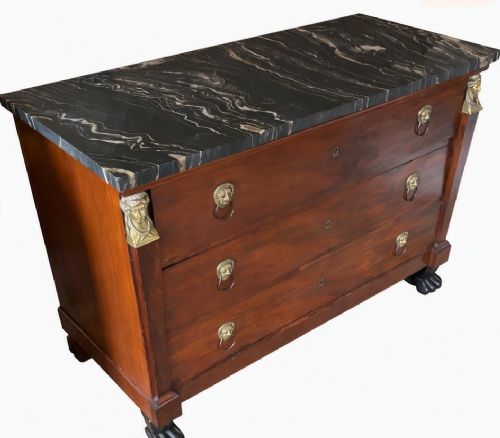
Mounts cast in brass, ormolu, and gilt bronze provide the characteristic metallic ornamentation along keylines and drawer pulls. Tops are frequently finished with slabs of heavy marble or fossil marble to complete the weighty aesthetic.
Empire Period Drawers Retail Price Guide 2026
Typical asking prices for empire period drawers among the pieces listed under this phrase on Sellingantiques today, from the lower quarter to the upper quarter. They describe what is for sale here now, not the wider market.
Listings span the nineteenth century through to the early twentieth century, featuring mahogany, walnut, oak, marble, and gilt bronze.
What varies in quality
The distinction between tiers of quality rests heavily on the crispness of the cast brass and ormolu mounts affixed to the carcase. Finer examples display meticulously chased detailing in the metalwork, whereas lesser pieces rely on simpler, flatter castings.
Selection of timber veneers also dictates standing, with master makers choosing figured mahogany or walnut arranged symmetrically across the drawer fronts. Construction methods visible within the drawer linings and carcase joinery further separate standard production from superior cabinet work.
HARRIS LEBUS
The Empire Period Drawers Glossary
- Commode
- A low chest of drawers, frequently associated with French cabinetmaking of the eighteenth and nineteenth centuries. This term often replaces the standard chest of drawers for more decorative continental forms.
- Ormolu
- Gilded bronze applied as decorative mounts and hardware on furniture. The technique involves creating an amalgam of mercury and gold applied to a bronze base.
- Semainier
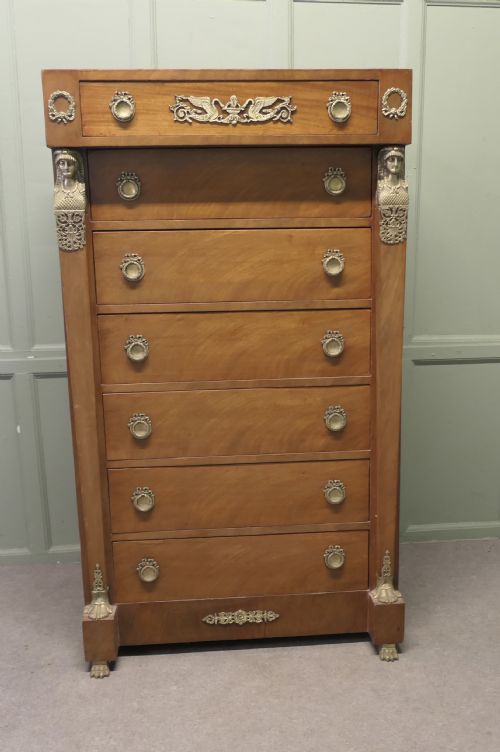
- A tall, narrow chest of drawers traditionally designed with seven drawers, one for each day of the week. This vertical form is typical of French Empire bedroom furniture.
- Compactum
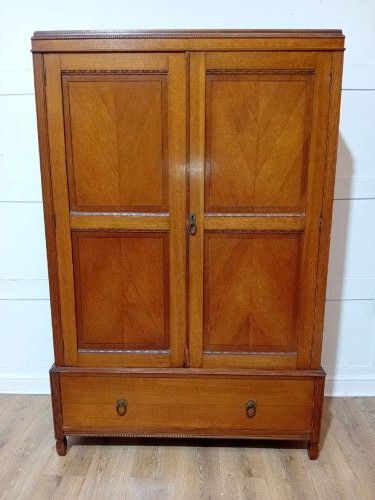
- A large wardrobe combining hanging space with internal drawers and shelving. This multifunctional storage piece appears in later iterations of the style.
- Fossil marble
- Limestone containing distinct organic fossils, utilised frequently as a heavy decorative top for commodes and console tables. It provides a cool, patterned surface contrasting with dark timbers.
Empire Period Drawers: Frequently Asked Questions
What defines an empire style chest of drawers?
Empire style chests of drawers are characterised by their monumental architectural lines, symmetrical proportions, and classical ornamentation. They often incorporate dark timbers contrasted with bright metallic mounts.
These pieces draw heavily on ancient Roman and Greek design vocabulary, favouring columns, pilasters, and friezes integrated directly into the cabinetry.
How do you identify a French Empire commode?
French Empire commodes typically display restrained rectangular carcases fronted by deep mahogany or walnut veneers. They frequently incorporate substantial marble tops and prominent key escutcheons.
The metal mounts on these pieces tend to depict classical motifs such as swans, wreaths, and Napoleonic insignia, rendered in gilt bronze or ormolu.
Where were these pieces originally placed in a home?
These large storage items were designed principally for principal bedrooms and formal reception rooms. Commodes served to hold linens and garments while displaying decorative objects upon their stone tops.
Tall semainiers and wardrobes provided vertical storage solutions that maximised floor space in grand chambers without sacrificing aesthetic presence.
How do you care for marble and mahogany surfaces?
Mahogany surfaces require gentle dusting and occasional waxing with traditional formulations to maintain the natural lustre of the timber. Avoid placing moisture directly on the wood to prevent staining.
Marble tops benefit from regular cleaning with neutral pH solutions, as acidic liquids can etch the polished stone surface over time.