


Empire Style Bronze Candlesticks
Empire style bronze candlesticks combine heavy neoclassical authority with refined metalwork, offering striking vertical presence and period elegance to a room.
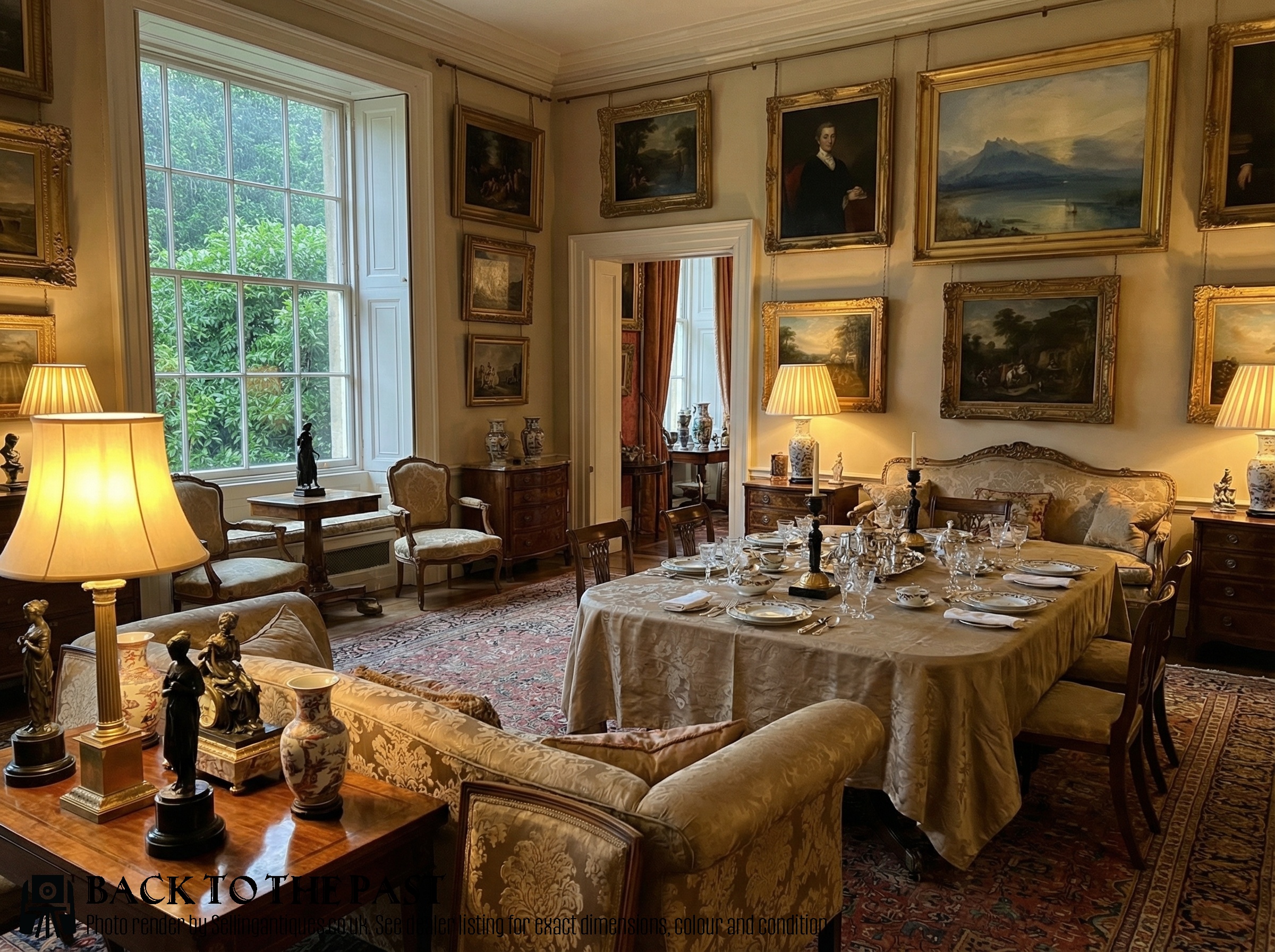
Empire Style Bronze Candlesticks
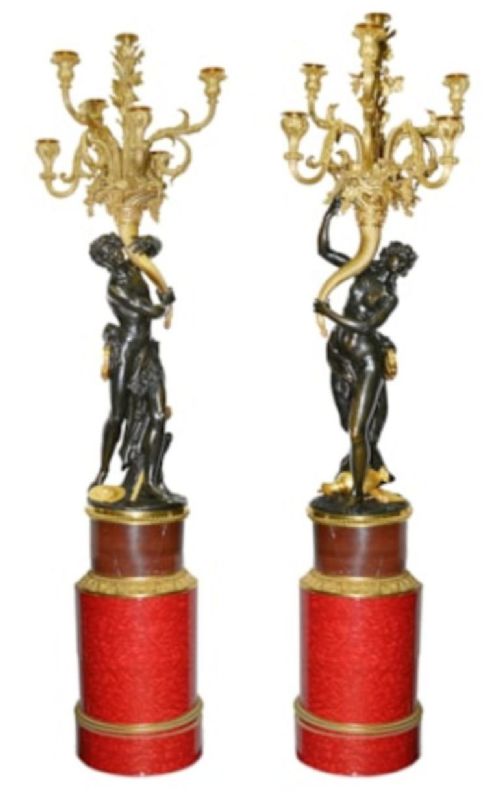
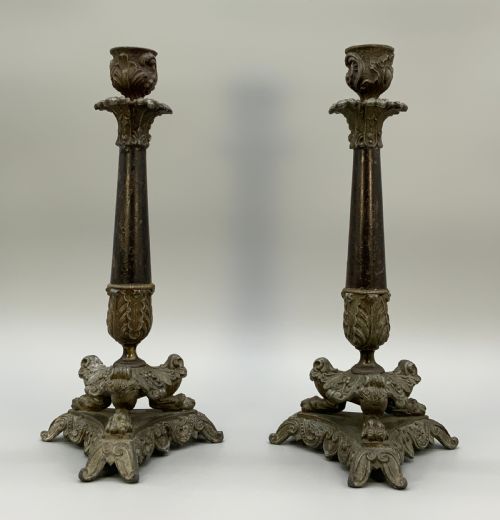
Empire style bronze candlesticks are formal lighting pieces rooted in neoclassical design, frequently appearing as pairs designed for mantelpieces, side tables, or desks. These heavy metal supports draw upon French, Regency, and classical vocabulary, including column shafts, figural supports, and architectural bases.
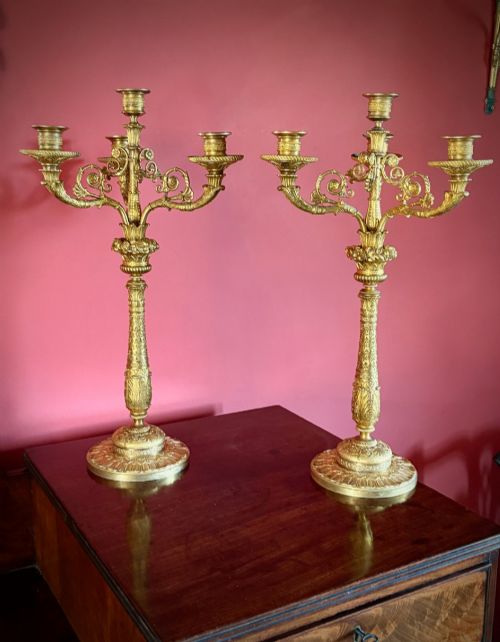
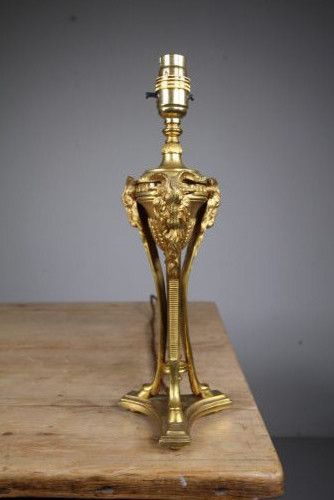
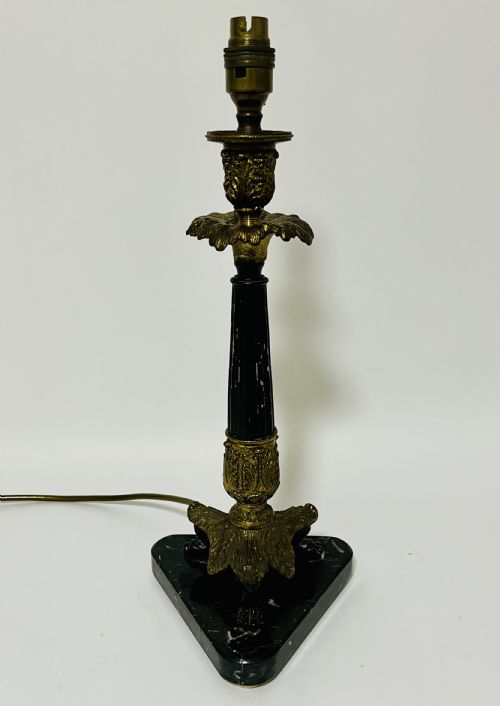
The versions most commonly met on this page date from the nineteenth century, including Regency and later Victorian interpretations. Alongside standard single candlesticks, the selection includes multi-branch candelabra, wall sconces, and examples converted to table lamps.
How they were made
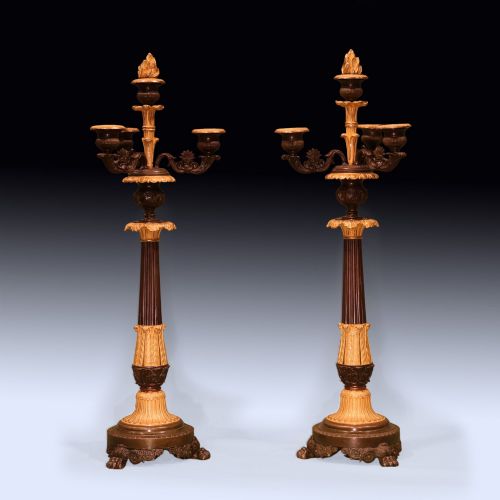
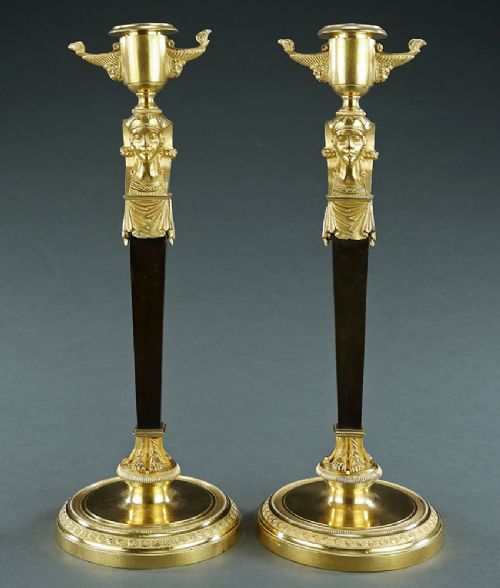
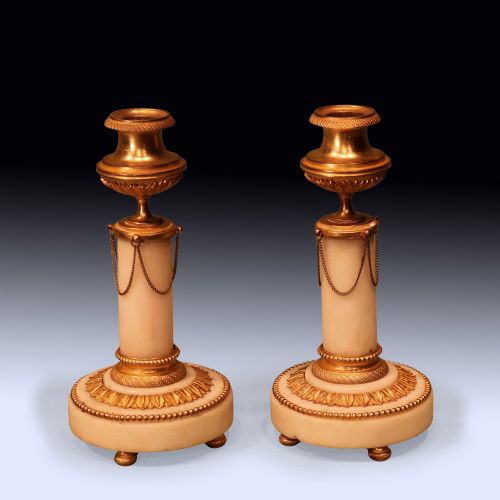
Maker workshops utilised cast bronze as the primary structural body, often pairing dark patinated surfaces with bright fire-gilt ormolu highlights to create tonal contrast. Many pieces incorporate white marble bases or columns, combining stone and metal through threaded metal rods or pinned construction.
Fine casting and hand chasing defined the production process, allowing makers to render crisp acanthus leaves, classical figures, and military trophies in high relief. Fire gilding deposited a layer of gold amalgam onto the bronze, whilst patination chemical treatments darkened the metal to resemble antique bronze.
Watch out for winged putti and mermen lurking among the classical columns.
What varies in quality
The depth and preservation of the original gilding and patination alter the visual impact significantly. Pieces retaining intact mercury gilding or deep, unrubbed patinated surfaces sit firmly at the top of the range.
Jean-Démosthène Dugourc
The Empire Style Bronze Candlesticks Glossary
- Ormolu
- Gilded bronze produced by applying a mercury and gold amalgam to a bronze base and heating it. This technique creates a durable, luminous golden surface characteristic of fine nineteenth-century metalwork.
- Patinated bronze
- Bronze treated with chemical solutions to produce a dark brown, black, or greenish surface colour. It provides visual contrast against bright ormolu mountings.
- Candelabra
- A branched lighting fixture designed to hold multiple candles simultaneously. They often feature removable branches allowing conversion back to single candlesticks.
- Grand Tour
- Souvenirs and classical antiquities purchased by wealthy travellers in Europe during the eighteenth and nineteenth centuries. These pieces frequently incorporate classical architectural motifs or bronze figures.
- Caryatid
- A sculpted female figure serving as an architectural support instead of a column. They appear frequently on the shafts of classical candlesticks and candelabra.
Empire Style Bronze Candlesticks: Frequently Asked Questions
What are empire style bronze candlesticks?
Empire style bronze candlesticks are heavy metal lighting pieces influenced by neoclassical and French design traditions. They feature formal classical motifs such as columns, palmettes, and mythological figures.
Most examples date from the nineteenth century, reflecting periods like the Regency, French Empire, and Charles X eras. They were originally manufactured to hold tallow candles or wax tapers in formal reception rooms.
How were they used historically?
Historically, these candlesticks provided essential artificial illumination in grand homes and drawing rooms before the widespread adoption of gas and electric lighting. Placed on mantelpieces, sideboards, or dining tables, pairs of candlesticks or larger multi-branch candelabra reflected candlelight to brighten dark interiors.
Servants moved them from room to room or extinguished them using specialised snuffers. Many surviving pieces have since been adapted to electricity for modern household use.
How do I clean bronze and ormolu?
Bronze and ormolu require gentle maintenance to preserve their historic surfaces. Dusting with a soft, dry brush or cloth prevents the accumulation of grime without harming the patination or gold layer.
Water, abrasive cleaners, and metal polishes must be avoided entirely because they strip away fire gilding and ruin patinated bronze surfaces. Professional conservation is recommended for heavily soiled or damaged pieces.
How can I tell the period?
Dating empire style bronze candlesticks involves examining the casting techniques, materials, and stylistic vocabulary. Earlier nineteenth-century pieces often display heavier cast bronze bodies, mercury gilding, and precise hand chasing that differs from later mass-produced Victorian castings.
Auxiliary materials like white marble bases and construction methods, such as hand-cut screws or pegged joints, also help establish the age of the piece. Comparing the proportions to documented classical models confirms the period style.