



Regency Period Bronze Candlesticks
Regency period bronze candlesticks bring crisp classical refinement to a room, cast in heavy metal and often paired with rich stone bases.
Regency Period Bronze Candlesticks
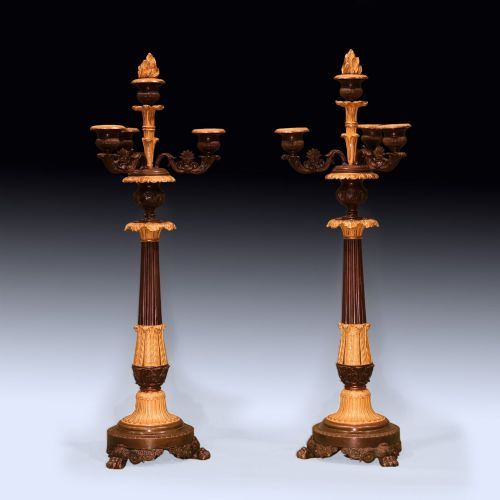
When you search for regency period bronze candlesticks, you encounter formal lighting pieces dating from the early nineteenth century and the Regency era. Most examples on this page are paired items, taking the form of standard candlesticks, multi-light candelabra, or chamber sticks.
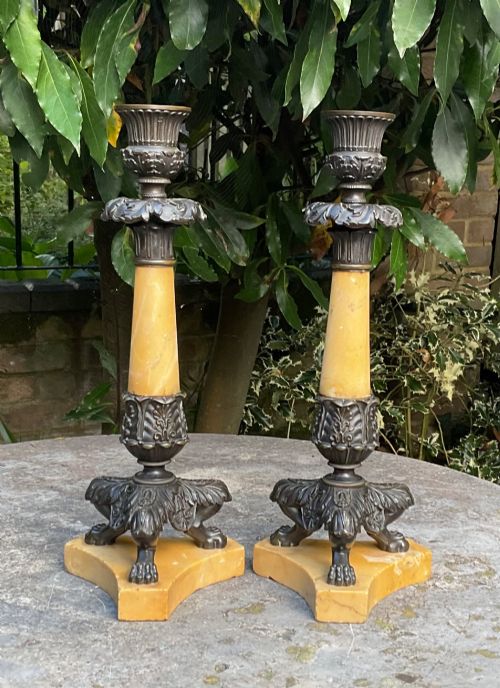
The aesthetic leans heavily on classical motifs, incorporating French Empire styles and architectural forms such as the Athenienne. Makers frequently combined patinated dark metal with polished gilt accents to create strong visual contrast on a dining table or mantelpiece.
How they were made
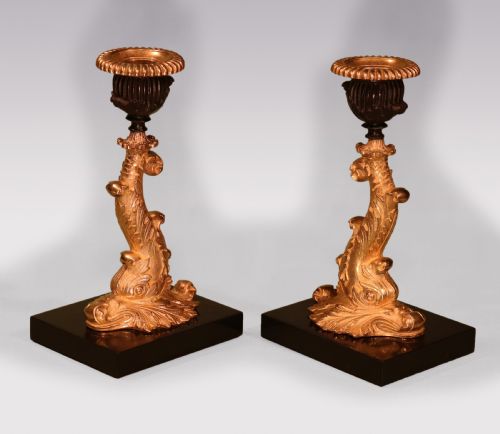
These items rely on metal casting techniques to achieve sharp detail in the figures and foliage. Foundry workers combined dark patinated bronze with ormolu, applying a fine gold wash over brass to create bright highlights.
Many examples incorporate mineral plinths, mounting the metalwork upon blocks of white or Sienna marble. Cut glass prisms and lustres occasionally hang from the arms, catching the candlelight.
Regency Period Bronze Candlesticks Retail Price Guide 2026
Typical asking prices for regency period bronze candlesticks among the pieces listed under this phrase on Sellingantiques today, from the lower quarter to the upper quarter. They describe what is for sale here now, not the wider market.
Several pairs here feature sculpted brass dolphins, proving that nineteenth-century designers occasionally liked their lighting to swim.
What varies in quality
Quality rests primarily in the crispness of the metal chasing and the depth of the casting. Superior examples show sharp relief in classical drapery, animal paws, and acanthus leaves rather than softened edges.
The choice of supplementary materials also defines the tier of the piece. Solid Sienna marble bases and heavy fire-gilt ormolu separate high-status commissions from more commercial domestic lighting.
The Regency Period Bronze Candlesticks Glossary
- Ormolu
- Gilt bronze produced by applying an amalgam of gold and mercury to a bronze base, then heating it to drive off the mercury. This technique creates a rich, durable golden surface.
- Patinated bronze
- Metal treated with chemical solutions to produce a dark, uniform surface colour. It provides a moody contrast against bright gilt mounts.
- Lustre
- A glass pendant or drop hung from a candelabra to refract candlelight. These additions multiply the sparkle in a dim room.
- Chamber stick
- A low candlestick fitted with a saucer base and a small handle. It was designed for carrying through a darkened house at night.
Regency Period Bronze Candlesticks: Frequently Asked Questions
How do I clean bronze candlesticks?
Dust the metal gently with a soft, dry brush to prevent dirt buildup in the crevices. Avoid chemical polishes, as abrasive compounds can strip away the original patination and the delicate gold wash on ormolu sections.
Marble bases respond well to a wipe with a damp cloth followed immediately by a dry one. Keep moisture away from any exposed joins or glued areas.
Were these originally for candles?
Every piece here was made to burn wax or tallow candles before the invention of domestic electric lighting. Many surviving examples retain their original sconces and drip pans for catching molten wax.
Some later owners adapted these items for electricity. Reversible wiring methods allow modern collectors to display them with bulbs without damaging the historic metalwork.
How can I tell Regency from later copies?
Genuine Regency lighting displays the weight, tool marks, and casting quirks characteristic of early nineteenth-century foundry work. The composition of the bronze and the hand-chased details offer clues to an early date.
Later reproduction pieces often feel lighter and exhibit uniform machine-tooled surfaces lacking human variation. Examine the joinery of the components to understand how the parts fit together.