

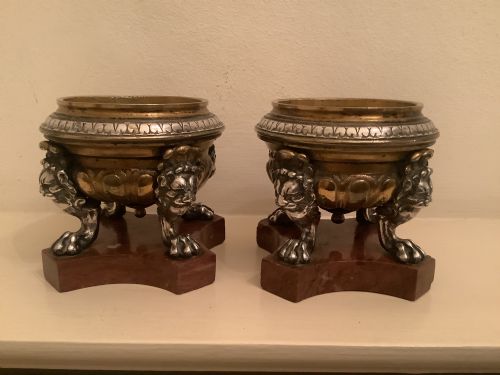
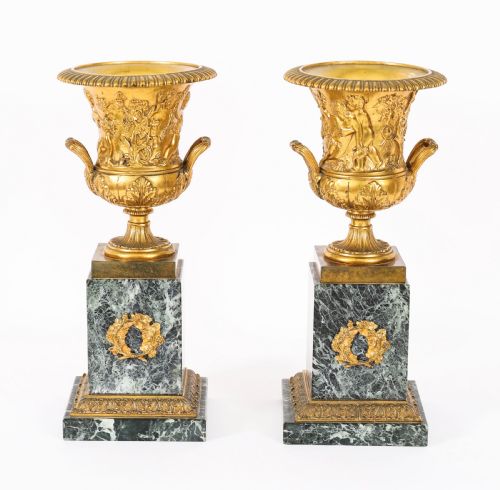

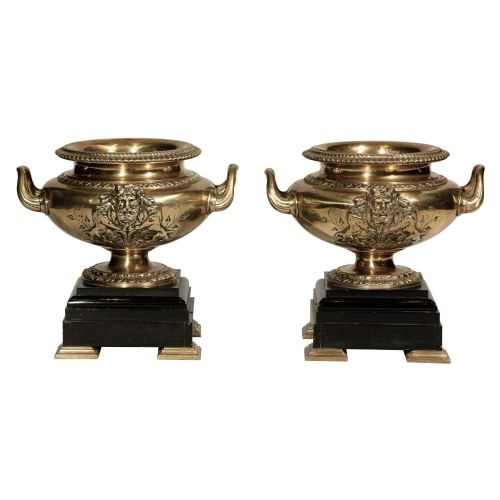
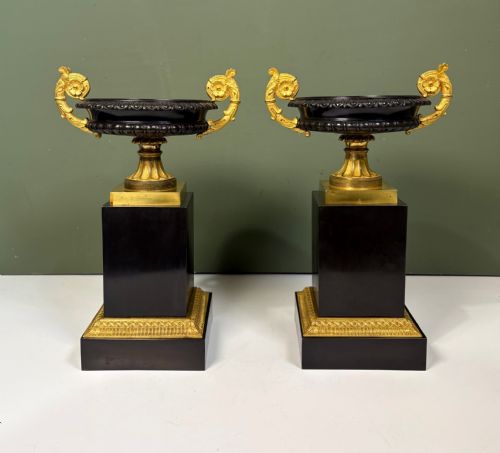


Empire Gilt Bronze Urn
These heavy, classical creations bring an architectural presence into a room, uniting patinated metal and bright gilding in a single vessel.
Empire Gilt Bronze Urn
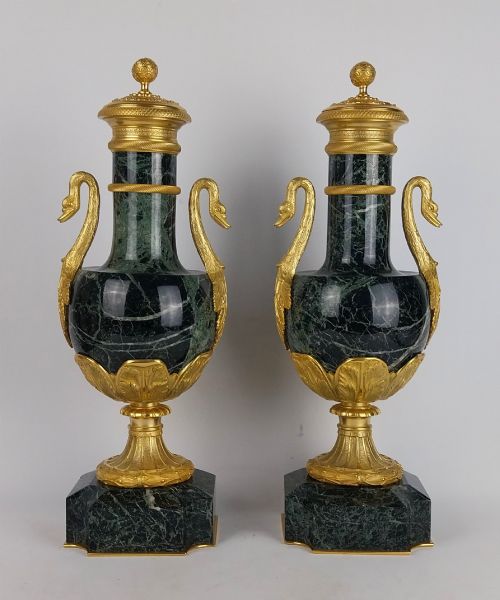
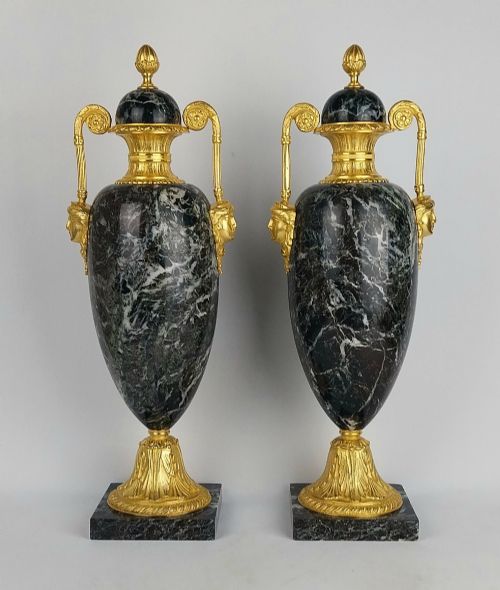
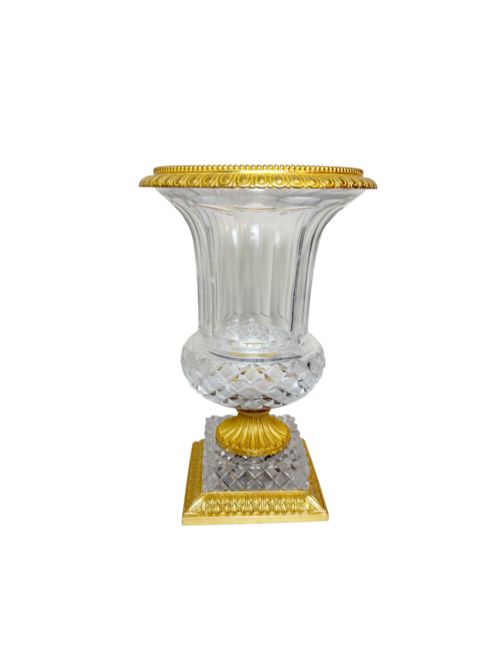
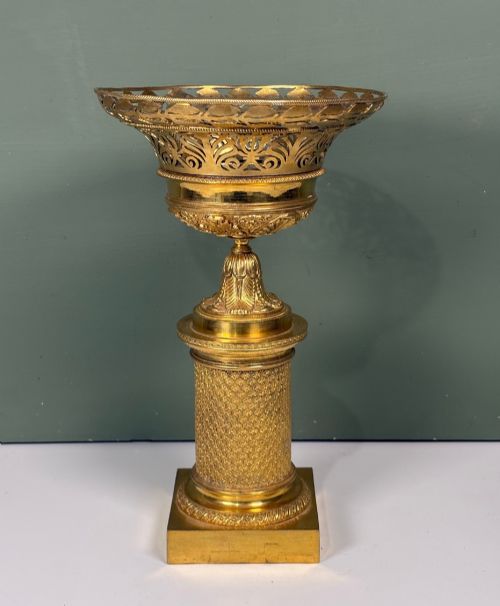
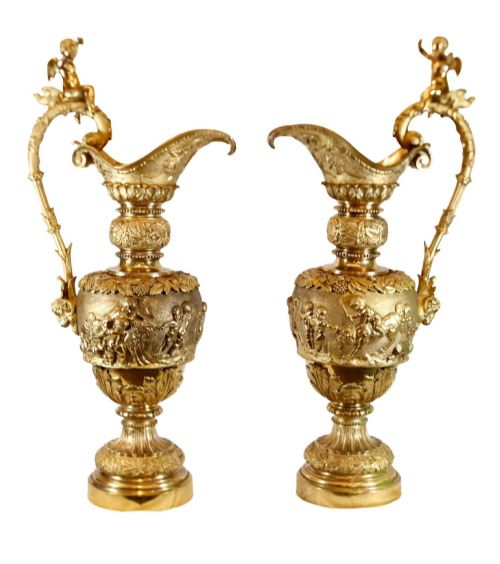
An empire gilt bronze urn sits squarely in the Neoclassical and French Empire traditions, drawing upon ancient Greek and Roman forms translated through nineteenth-century design. You will encounter these objects most frequently as decorative vases, table lamps, and cassolettes mounted upon marble bases.
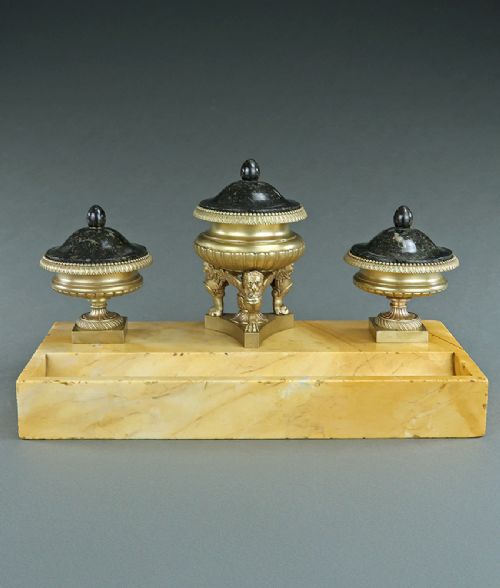
The materials span the nineteenth century, including the Regency and Victorian periods, often pairing cast bronze and ormolu with contrasting white, Sienna, or rouge marble plinths. Many pieces double as functional items, such as inkwells or mantel clock garnitures, while others serve purely as sculptural focal points in a room.
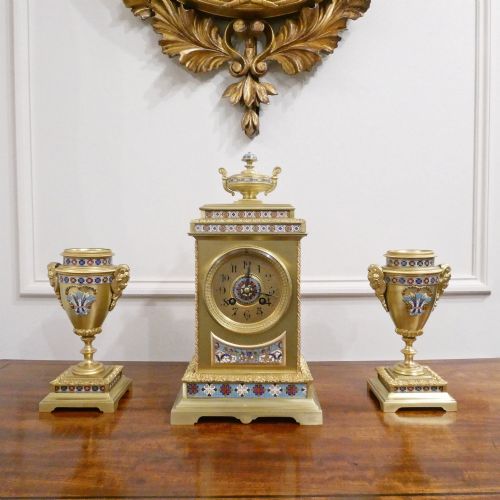
Makers and clockmakers of the era, such as Samuel Marti, Pons de Paul, and Vincenti of Paris, utilised these classical urn shapes for striking mantel clocks and garniture sets. The aesthetic leans heavily on symmetry, classical drapery, and mythological motifs derived from Grand Tour travels and revivalist movements.
Quality and craftsmanship
The crispness of the chasing separates superior castings from softer, mass-produced pieces, as skilled artisans spent hours refining details in the metal after it left the sand or lost-wax mould. Deeper, richer mercury gilding retains its warm lustre over centuries, whereas thinner electroplating wears down to reveal the base brass or bronze underneath.
The integration of materials dictates the overall harmony of the object, where tightly fitted marble plinths, solid bronze mountings, and original porcelain bodies indicate a workshop that spared no expense in construction.
Empire Gilt Bronze Urn Retail Price Guide 2026
Typical asking prices for empire gilt bronze urn among the pieces listed under this phrase on Sellingantiques today, from the lower quarter to the upper quarter. They describe what is for sale here now, not the wider market.
Listings feature marble, ormolu, and patinated bronze across the nineteenth century, spanning Regency, Victorian, and French Empire styles.
Samuel Marti·Pons de Paul·Vincenti of Paris·James Ritchie and Son
The Empire Gilt Bronze Urn Glossary
- Ormolu
- Gilded bronze produced by applying a mercury and gold amalgam to a bronze object and heating it to vaporise the mercury. This technique yields a deep, enduring golden finish.
- Cassolette
- A dual-purpose decorative vessel featuring a reversible lid that transforms from an urn into a incense burner or vase. They are frequently mounted in pairs on marble bases.
- Tazza
- A shallow bowl or cup raised on a stem and foot, often fashioned from bronze and marble in classical designs. They serve as decorative centrepieces.
- Garniture
- A set of three or more matching decorative objects, typically comprising a mantel clock flanked by matching urns or candelabras. These sets anchor a fireplace mantel.
- Athenienne
- A decorative tripod stand supporting a basin or urn, styled after ancient Greek furniture found during archaeological excavations. They function as small display pedestals.
Empire Gilt Bronze Urn: Frequently Asked Questions
How do I clean gilt bronze?
Dust gently with a soft, dry brush to prevent accumulation in the intricate recesses of the chasing. Avoid chemical polishes, which strip away the historic ormolu surface.
Keep the metal away from moisture and direct sunlight to preserve the patination and the integrity of the underlying bronze.
Were these urns used for ashes?
Nineteenth-century decorative urns served purely as classical ornaments, architectural statements, or table lamps rather than funerary vessels. Their design drew inspiration from antique archaeological finds brought home by travellers on the Grand Tour.
Makers adapted these ancient shapes into cassolettes, inkwells, and garniture sets to suit elite domestic interiors of the period.
How do I date an empire urn?
Examine the construction methods, the type of marble used, and the style of the cast mounts to establish a timeline. Pieces from the early nineteenth-century French Empire period exhibit sharper Neoclassical austerity compared to later Victorian and Belle Epoque revivals.
Maker signatures stamped on clock movements or internal bronze plates provide a precise date of manufacture when present.