

Embossed Sterling Silver
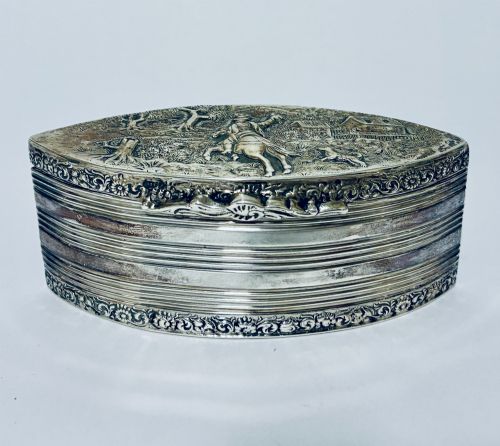
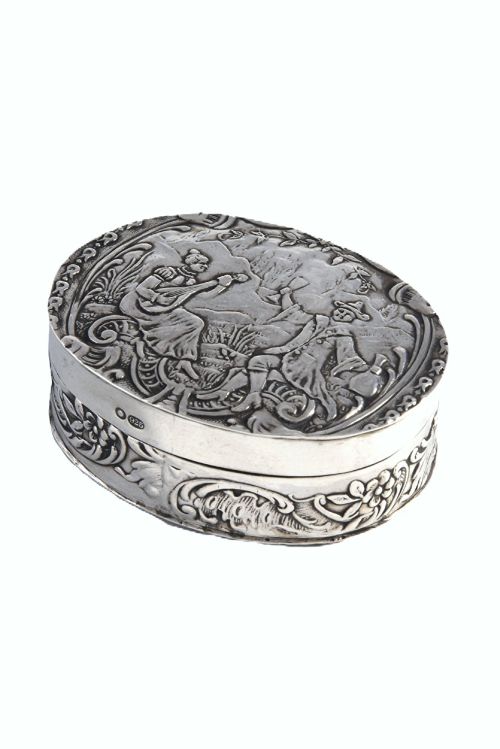
Embossed sterling silver brings raised floral motifs, pastoral scenes and scrolling borders to domestic objects made primarily during the Victorian and Edwardian eras.
Embossed Sterling Silver
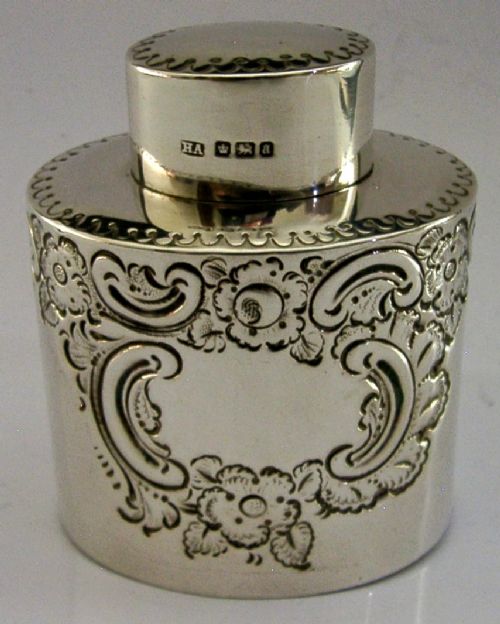
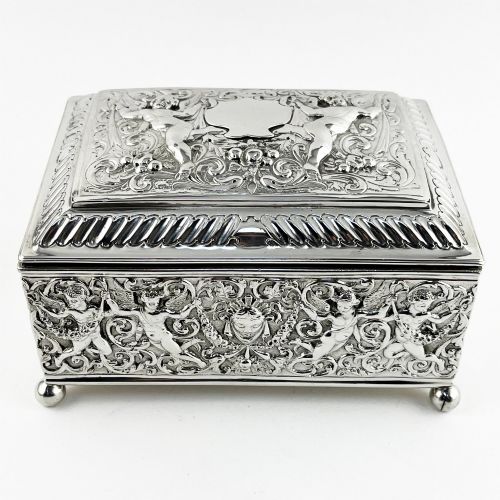
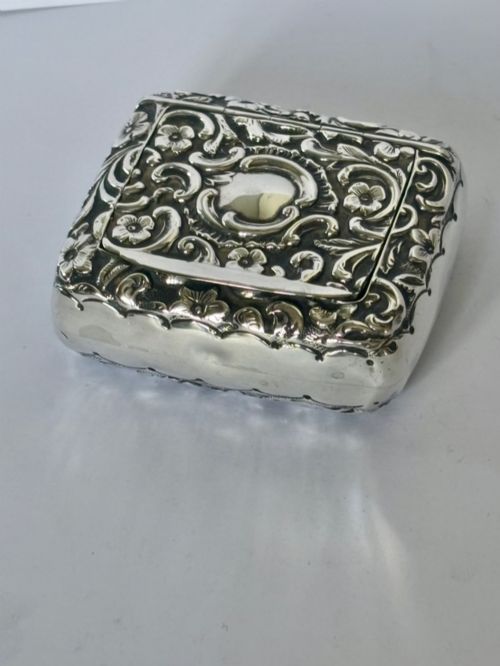
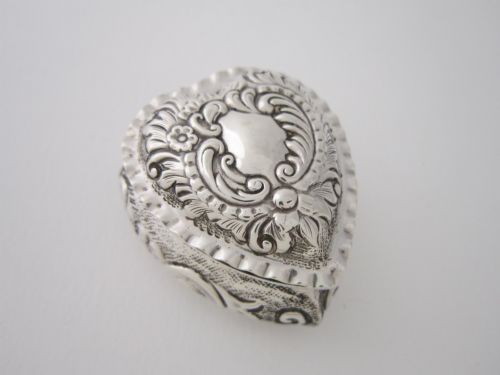
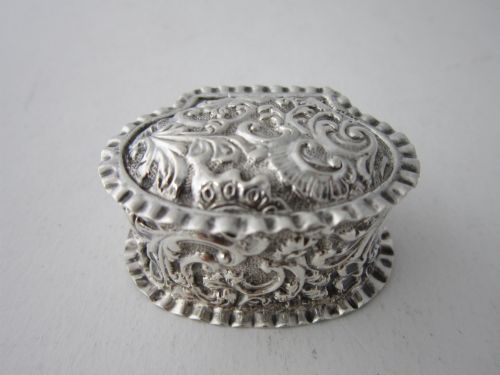
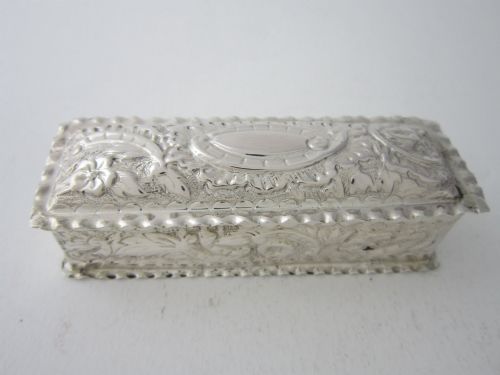
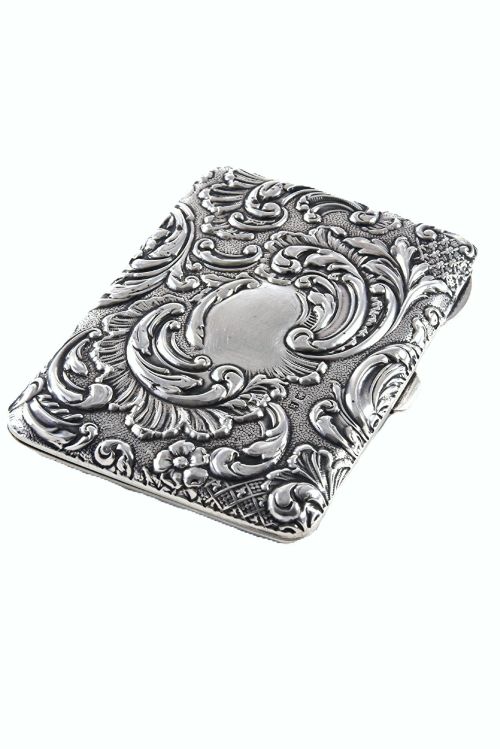
Embossed sterling silver encompasses a diverse array of functional and decorative items designed to elevate everyday domestic rituals through tactile surface ornamentation. Buyers searching for embossed sterling silver most frequently encounter small personal accessories and tabletop items, including trinket boxes, pill boxes, card cases, photo frames and vanity gear.
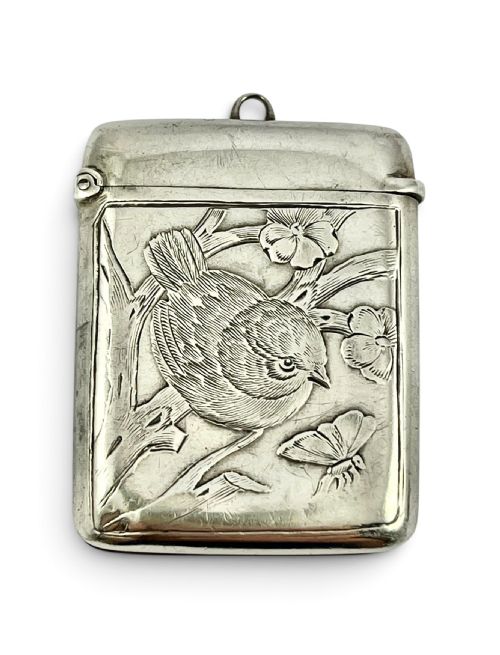
The surviving selection spans multiple decades of British manufacturing, with strong representation from the late nineteenth century into the Edwardian period. Production ranges from small pocket items like vesta cases and aides-mémoire to larger display pieces such as bowls, chalices, tea caddies and trophy cups.
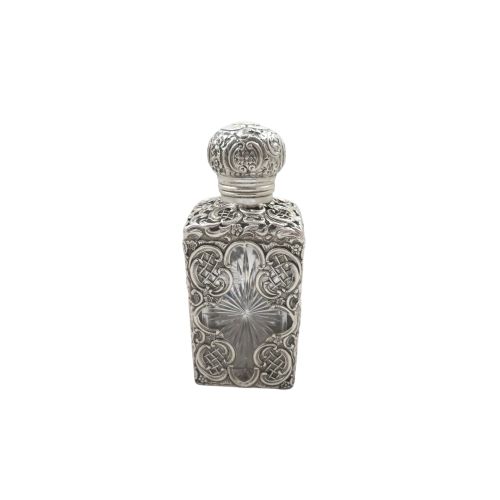
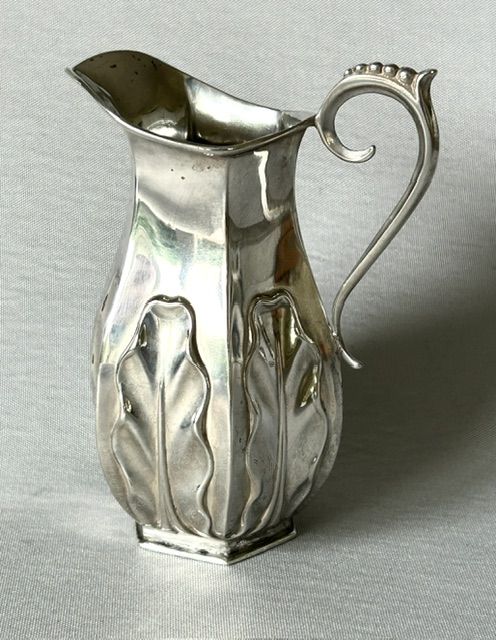
Beyond standard British manufacture, the historical record includes specialised regional interpretations, including Anglo-Indian and American examples employing characteristic relief work. These pieces demonstrate how silversmiths applied raised decoration to everything from cream jugs and serving spoons to substantial table boxes and scent bottles.
How the pieces were made
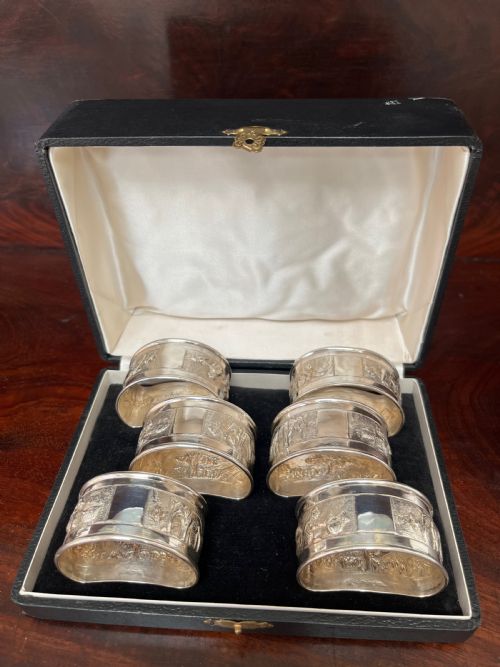
Silversmiths created raised designs by hammering or pressing sheet metal from the reverse side to push the motif outward, a technique known as repoussé, often refined from the front by chasing. This process allowed makers to build up dimensional floral borders, figures and architectural scenes on sterling silver bases.
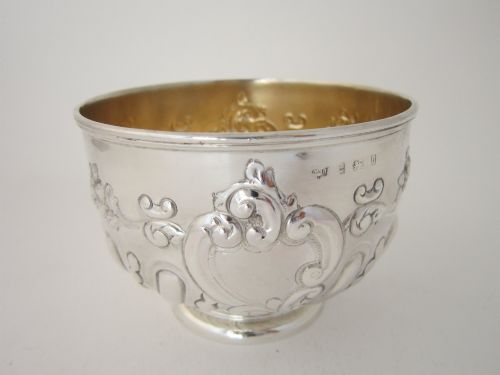
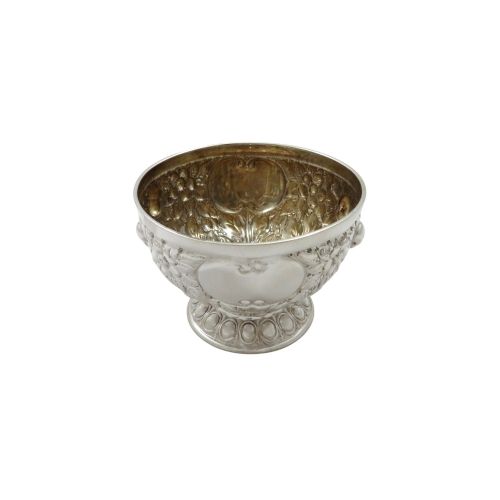
Many hollowware pieces and containers incorporate internal elements of wood, velvet, silk or cut glass to provide structural rigidity and protective linings. Gilding was frequently applied to the interior surfaces of bowls, cups and boxes to prevent tarnishing and contrast with the exterior silver.
Listings feature sterling silver items across Victorian, Edwardian and Georgian periods, incorporating wood, velvet and cut glass elements.
What varies in quality
The distinction between standard items and superior pieces rests upon the depth, clarity and crispness of the raised ornament. Master silversmiths achieved sharp definition in facial expressions, foliage and architectural elements, whereas lower grades display flattened or shallow contours resulting from hurried stamping.
Weight and structural integrity also separate tiers of production, with heavier gauges of silver resisting dents and maintaining structural alignment over generations of use. The incorporation of secondary materials, such as heavy cut glass inserts or fine velvet linings, signals higher manufacturing ambition.
Henry Matthews·Thomas Hayes·A. Bromet And Co·Gorham·Samuel Kirk
The Embossed Sterling Silver Glossary
- Repoussé
- A metalworking technique where the silversmith hammers metal from the reverse side to form a raised design in relief on the front. This method creates the three-dimensional floral and figurative panels seen on many boxes and bowls.
- Chasing
- Working the metal from the front side using punches and hammers to refine and detail the design pushed up by repoussé. It provides the fine lines and textures within leaves, hair and clothing.
- Silver gilt
- Sterling silver that has been coated with a thin layer of gold, commonly found on the interiors of sugar basins, mugs and goblets. This treatment protects the silver from acidic food and drink while adding a warm inner glow.
- Vesta case
- A small pocket container designed for holding matches, fitted with a striking strip on the base. Victorian and Edwardian examples often feature heavily embossed floral or pictorial covers.
- Aide-mémoire
- A small pocket notebook equipped with metal covers and an internal writing tablet for recording notes. These items frequently display detailed repoussé decoration on their silver panels.
Embossed Sterling Silver: Frequently Asked Questions
How do I clean embossed sterling silver?
Cleaning requires a soft brush and a gentle silver polish to clear tarnish from the recesses of the raised design without stripping the patina. Care must be taken around delicate hinges, velvet linings and cut glass inserts.
Harsh chemical dips should be avoided on hollowware and boxes containing organic internal materials, as liquid seepage can ruin silk or wood components.
What is a castle top piece?
Castle top items feature a detailed topographical relief of a famous building or landmark pressed into the silver lid or cover. Windsor Castle and York Minster appear frequently on these specialised Victorian and Edwardian boxes and card cases.
These pieces were often acquired as souvenirs by travellers and represent a distinct sub-category of embossed silver manufacturing.
Can I use these boxes for daily storage?
Trinket boxes, pill boxes and card cases remain entirely functional for holding small modern items like jewellery, business cards or keepsakes. Their sturdy sterling silver construction handles regular opening and closing when treated with reasonable care.
Owners should inspect the interior velvet or satin linings, as historical fabrics can weaken or collect dust over long periods of use.
How do I identify the date of manufacture?
British pieces typically bear hallmarks stamped into the metal, indicating the assay office, standard of silver and a specific date letter corresponding to the year of assay. Additional maker marks help trace the specific workshop responsible for the piece.
Items lacking full British hallmarks, such as American or continental imports, often rely on maker stamps, patent numbers or stylistic indicators to establish their period.