


Embossed Metal Charger
An embossed metal charger brings rich surface texture and historical narrative to a wall or table.
Embossed Metal Charger
When you search for an embossed metal charger, you encounter large decorative plates, wall plaques and display dishes designed primarily for visual impact rather than dining. The pieces available here span several centuries, with nineteenth-century revivals and earlier examples appearing regularly.
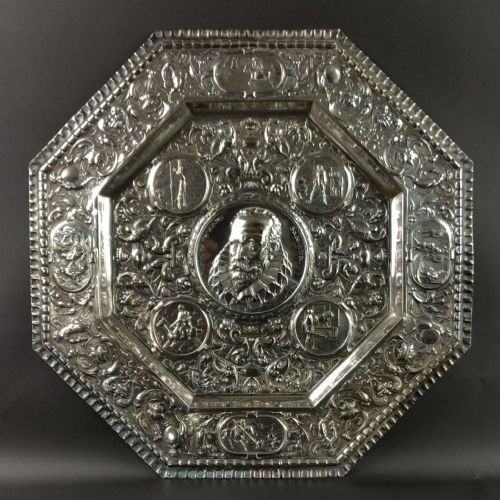
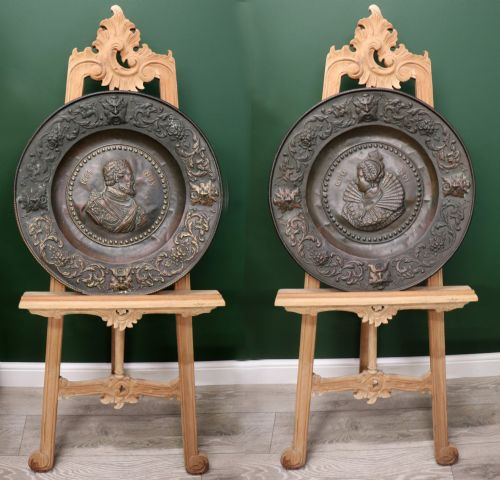
The forms range from circular trays and wall chargers to oval plaques and centrepieces. Many feature detailed figural portraits, historical scenes or heraldic motifs executed in deep relief.
Materials and construction methods
The construction relies heavily on copper, brass and bronze, often worked by hand using repoussé and hammering techniques to push the metal from the reverse. Silver plating and silvered metal finishes also appear among the selections.
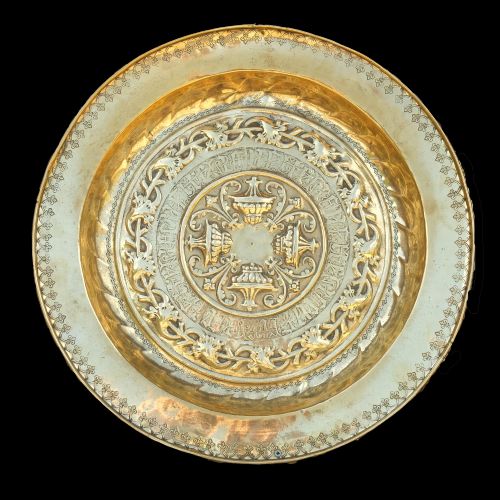
Makers utilised techniques such as hand-hammering and repoussé work to achieve the pronounced relief seen on nineteenth-century revivals and earlier alms dishes. These methods allowed artisans to depict complex portraits and animal motifs with sharp definition.
The listings here feature brass, copper, bronze and silvered metal, spanning periods from the sixteenth century through the Edwardian era.
Assessing quality in metal chargers
Quality rests in the crispness of the relief work and the depth of the metal manipulation. Skilled hand-hammering yields a sharper, more expressive portrait or scene than mechanical pressing.
The choice of material and the complexity of the chased or embossed details dictate the character of the piece. Heavier metals and well-preserved finishes distinguish the finer examples in this category.
The Embossed Metal Charger Glossary
- Repoussé
- A metalworking technique where the metal is hammered from the reverse side to create a raised design on the front. This method allows artisans to model intricate portraits and decorative scenes.
- Alms dish
- A shallow metal bowl or basin historically used for collecting charitable donations in churches. Many surviving examples feature embossed biblical or historical motifs.
- Latten
- A durable yellow metal alloy resembling brass, commonly used for historical domestic utensils and ecclesiastical vessels. It provides a warm tone for deeply embossed surfaces.
- Electrotype
- A replica produced through an electrolytic deposition of metal over a mould, enabling precise copies of historical metalwork. This technique gained popularity during the nineteenth century for decorative plaques.
Embossed Metal Charger: Frequently Asked Questions
How were embossed metal chargers used historically?
These large plates and dishes served primarily as decorative wall plaques, display pieces or alms dishes in ecclesiastical settings. Their intricate designs were meant to be admired rather than used for serving food.
In domestic interiors, they added warmth and historical interest to reception rooms, often hung on walls or displayed on sideboards to catch the light.
How do I clean antique brass and copper?
Antique metalwork benefits from gentle dusting with a soft, dry cloth to remove surface particles. Avoid harsh chemical polishes that strip away the desirable historical patina accumulated over decades.
If cleaning is necessary, use a mild, non-abrasive metal cleaner specifically formulated for copper or brass, testing a small hidden area first.
How can I tell a nineteenth-century revival piece from an earlier one?
Nineteenth-century revival pieces often display the distinct enthusiasm of the Renaissance or Gothic revivals, with machine-assisted uniformity or heavy hand-hammering characteristic of Victorian workshops. Earlier pieces, such as sixteenth- or eighteenth-century examples, show tool marks and wear consistent with period manufacture and ecclesiastical use.
Examining the back of the metal, the mounting points and the edge finish helps determine the actual period of production.