


Elm Writing Table
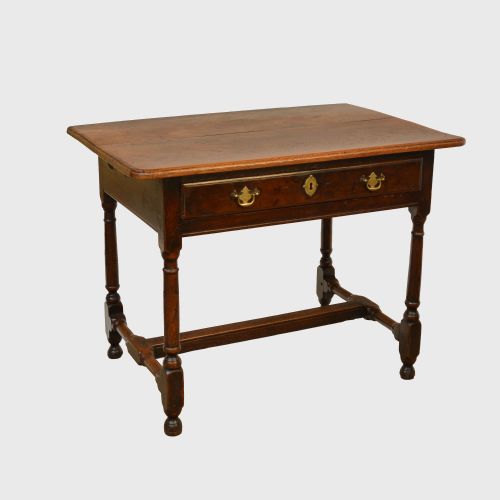
An elm writing table offers a rich grain and honest utility, bringing warmth to a study through centuries of skilled provincial and formal design.
Elm Writing Table
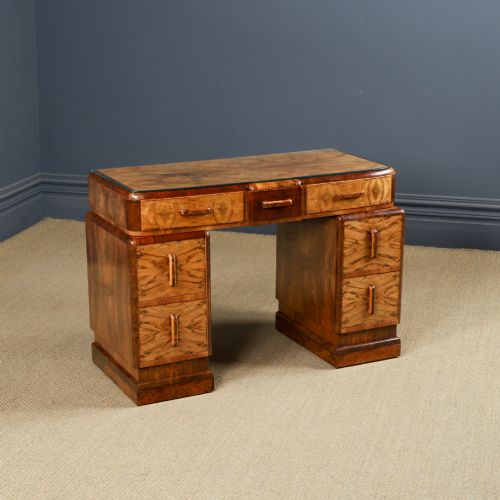
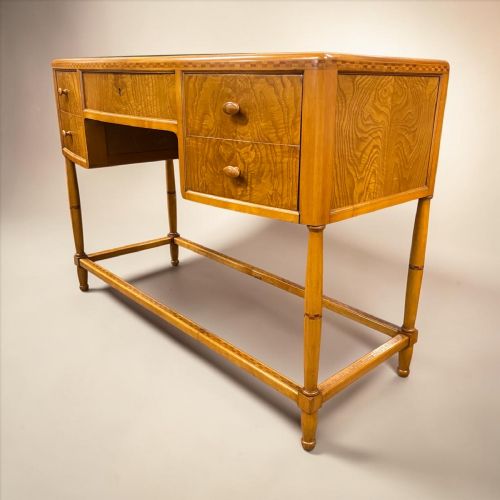
An elm writing table brings together the robust character of native timber and the practical demands of correspondence, appearing in forms from compact clerks' desks to generous library pieces. When you search for an elm writing table, you encounter diverse expressions spanning Georgian country workshops up to Art Deco interpretations.
The pieces listed here showcase a strong lineage of English provincial making alongside occasional international counterparts, including Chinese scholarship tables and Scandinavian consoles. Eighteenth and nineteenth-century examples dominate the selection, often combining elm with oak, yew, or walnut to form functional surfaces for daily use.
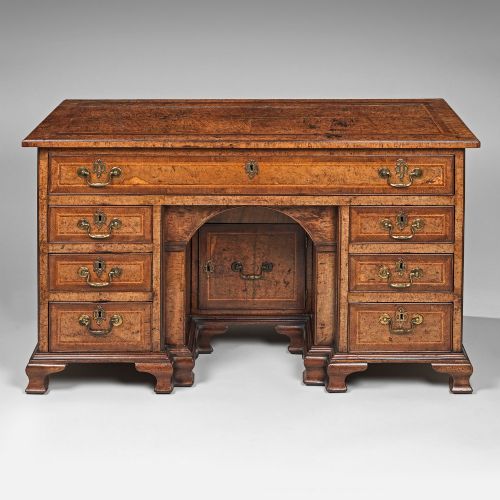
Forms vary significantly, encompassing kneehole desks, lowboys, console tables, and table-top bureaux designed for intimate writing tasks. Each surviving piece demonstrates how makers adapted the tough, figured timber to domestic interiors across successive periods.
Materials and construction
Makers utilised solid elm and burr elm for primary surfaces, frequently pairing the figured timber with secondary woods such as oak and pine for structural carcases and drawer linings. Brass hardware, including drop handles and escutcheons, provides functional contrast to the warm brown tones of the wood.
Cabinetmakers exploited the distinctive interlocking grain of elm, which resists splitting but requires careful seasoning to prevent distortion over time. Surface treatments range from polished French finishes that accentuate the swirling patterns of burr elm to simpler waxed treatments on vernacular country furniture.
Elm wood is notoriously stubborn to split, which historically made it the preferred choice for chopping blocks and horse-drawn cart hubs before finding its way into fine writing furniture.
Quality and execution
The distinction between standard utility pieces and finer examples rests upon the selection of timber, particularly the presence of richly figured burr elm versus plain straight-grained stock. Superior items display meticulous attention to drawer construction, such as hand-cut dovetails and harmonious proportions.
Makers of high-status tables integrated sophisticated design idioms like Regency or George II styling, whereas vernacular items prioritized straightforward joinery and robust daily service. Original brasses and unaltered secondary timbers elevate the integrity of a piece within its historical context.
The Elm Writing Table Glossary
- Burr elm
- A growth deformity in the tree that produces highly figured, swirling wood grain prized for decorative veneer and solid tabletops.
- Lowboy
- A small seventeenth or eighteenth-century dressing or writing table featuring one or more rows of drawers beneath the working surface.
- Kneehole desk
- A formal desk design featuring a central recessed space for the legs, flanked by pedestals of small drawers.
- Escutcheon
- A protective brass plate surrounding a keyhole, serving both functional and decorative purposes on desk drawers.
- Dovetail
- A traditional interlocking joint used to connect drawer sides to drawer fronts with high tensile strength.
Elm Writing Table: Frequently Asked Questions
How do I care for an antique elm surface?
Maintain the timber by applying a quality beeswax periodically, avoiding direct sunlight and excessive heat sources that dry out the grain.
Clean surfaces with a dry or barely damp soft cloth, steering clear of modern chemical sprays that can degrade the historic finish.
Are these tables suitable for daily laptop use?
Many historical desks offer sufficient surface area and sturdy construction to accommodate modern writing and computing equipment comfortably.
Check the internal drawer clearance and kneehole height to ensure adequate ergonomics for your daily workspace requirements.
What distinguishes burr elm from regular elm?
Burr elm comes from excrescences on the tree where grain growth becomes turbulent, resulting in intricate, circular patterns unlike straight-grained timber.
This highly decorative figure was typically reserved for the primary surfaces of high-status furniture during the Georgian and Regency eras.
How can I tell a Georgian piece from a Victorian one?
Georgian furniture often exhibits lighter framing, simpler lines, and specific secondary woods like oak, reflecting hand-tool joinery methods.
Victorian pieces frequently introduce stained pine, heavier proportions, or machine-sawn elements alongside varied stylistic revivals.