


Elm Drawer Table
When you handle an elm drawer table, you meet a robust utility piece built from characterful timber that has aged gracefully over centuries.
Elm Drawer Table
An elm drawer table is a practical piece of furniture designed for storage and surface use, featuring one or more drawers integrated into its frame. These tables appear in domestic settings ranging from rustic farmhouses to formal parlours, constructed across multiple centuries.
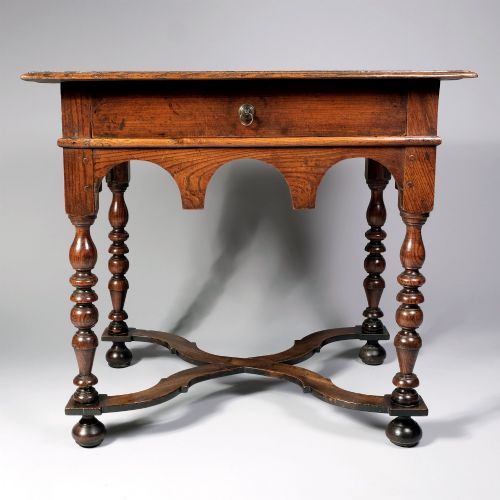
On this page, you are most likely to encounter side tables, console tables, and dining tables originating from English, Georgian, and Chinese provincial traditions. The selection spans the late 17th century through to the early 20th century, encompassing styles such as William and Mary, rustic farmhouse, and Chinese traditional.
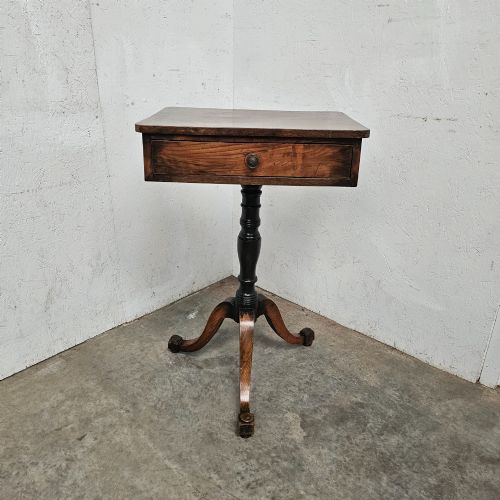
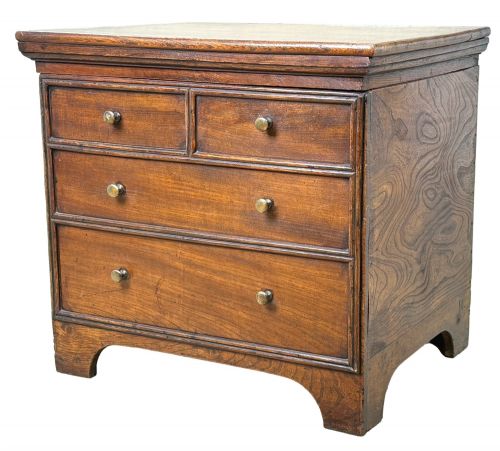
The form adapts to various rooms, appearing as small bedside chests, pedestal work tables, drop-leaf surfaces, and large dining tables. Each variant retains the distinctive grain and resilience associated with elm wood construction.
What varies in quality
The quality of an elm drawer table rests upon the selection of the timber and the integrity of its joinery. Figured grain, burr patterns, and well-matched secondary woods elevate the visual standard of a piece beyond simple utility.
Proportion and execution distinguish regional workshops, from the refined lines of Georgian pieces to the robust construction of country farmhouse and Chinese altar styles. The integration of drawers into the apron or frieze demands precise carpentry to ensure smooth operation over time.
Materials combined with elm across the inventory include brass, oak, fruitwood, burr birch, yew, and lacquer.
The Elm Drawer Table Glossary
- Elm
- A durable hardwood characterised by an intertwined, fibrous grain that resists splitting. It provides a dense surface with varied figuring.
- Frieze drawer
- A drawer fitted into the horizontal band beneath the tabletop. This feature appears commonly on side tables and work tables.
- Pad-foot
- A rounded, simple foot shape resting directly on the floor. This foot type frequently appears on late 17th and early 18th-century country pieces.
- Drop-leaf table
- A table featuring hinged flaps that fold down to save space. These flaps are supported by swing legs when raised.
- Altar table
- A traditional Chinese furniture form with an elongated rectangular top and often upturned ends. These tables serve as substantial console or display surfaces.
- Close stool
- A piece of enclosed furniture designed to house a chamber pot. It typically takes the form of a small bedside chest or cabinet.
Elm Drawer Table: Frequently Asked Questions
How do I clean an antique elm table?
Dust the surface regularly with a soft, dry cloth to prevent dirt accumulation.
Avoid harsh chemical polishes and keep the timber away from direct heat sources to preserve the finish.
Can I use an elm drawer table for dining?
Certain larger forms, such as farmhouse and dining tables, are built specifically for daily meals and gatherings.
Smaller side tables and console tables lack the knee clearance and surface area required for comfortable dining.
What is the difference between English and Chinese elm tables?
English examples often reflect Georgian or rustic farmhouse aesthetics with turned legs and oak secondary woods.
Chinese examples display traditional provincial joinery, altar-style proportions, and occasionally lacquer or carved details.
How do I identify a Georgian elm table?
Georgian tables typically exhibit period-specific proportions, refined leg turnings, and traditional joinery methods.
They often coordinate with other formal or country pieces from the 18th century.