




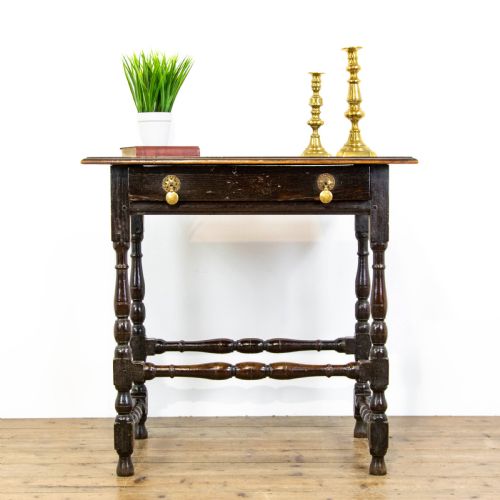

Elm Rustic Console Table
An elm rustic console table brings tactile warmth and enduring grain to an interior, built for utility and aged with character.
Elm Rustic Console Table
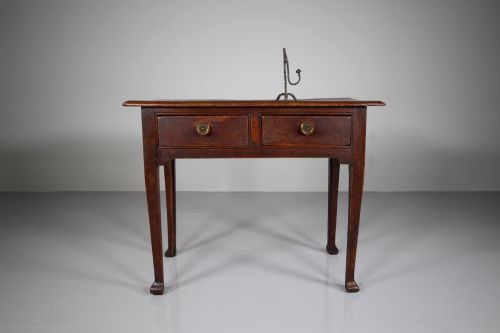
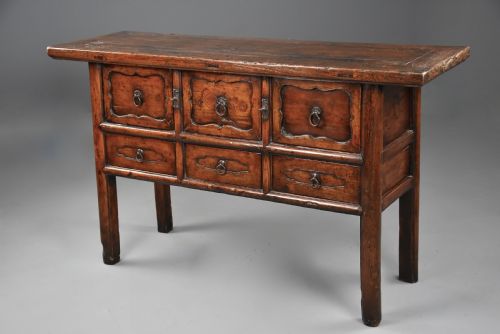
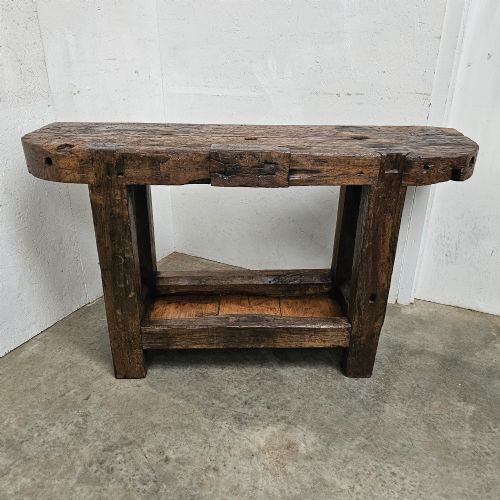
When you search for an elm rustic console table, you are looking at practical side furniture shaped by provincial traditions from England, France, and China. These pieces range from Georgian tavern tables and English side tables to Chinese provincial dressers and French primitive workbenches.
The version you are most likely to meet on this page is a side table or trestle table combining elm timber with oak, fruitwood, or sycamore. Dating spans from the 18th century through the 19th century up to 1900, showing honest construction and utilitarian forms.
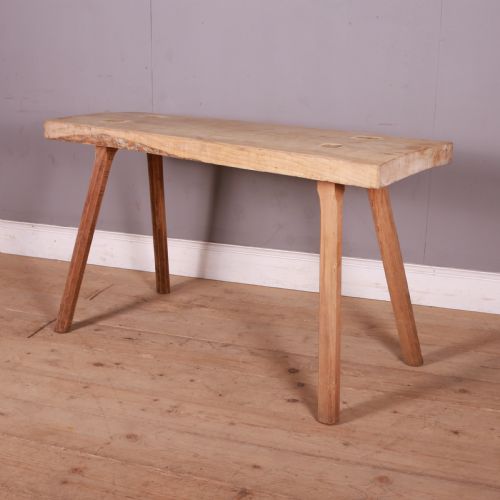
Makers focused on straightforward lines, plank tops, and sturdy cross bases or trestle supports rather than ornate carving. The resulting forms function easily in hallways, living rooms, and kitchens as display surfaces or serving areas.
Materials and construction methods
Elm forms the primary surface material, often paired with oak, sycamore, or fruitwood for structural frames and legs. Iron and brass occasionally appear in functional braces and fixings, supporting the heavy timber construction.
Joinery relies on traditional pegged joints, plank tops, and trestle bases designed for hard daily use rather than delicate display. Scrubbed surfaces and natural finishes reveal the deep figuring of the wood without heavy varnishes.
Some Chinese elm side tables carry the subtle scars of centuries of provincial kitchen prep.
Assessing quality in rustic elm furniture
Quality rests in the depth of the patina built up through generations of use and the natural figuring of the timber. Tables with scrubbed sycamore tops paired with elm frames show careful selection of contrasting woods.
Proportion and structural integrity dictate the standing of a piece, with well-balanced trestle tables and tavern tables holding greater visual presence. Original timber surfaces without excessive modern intervention retain the character collectors seek.
The Elm Rustic Console Table Glossary
- Patina
- The surface sheen and softening of colour developed through years of handling, cleaning, and exposure. This gradual ageing process distinguishes period timber from modern reproductions.
- Trestle table
- A table consisting of two or more supports connected by a horizontal beam, holding a solid plank top. This form provides maximum legroom and stability.
- Plank-top
- A tabletop constructed from wide boards joined side by side. It highlights the natural grain and growth rings of the elm or hardwood.
- Provincial
- Furniture made in regional workshops outside capital cities, prioritising local materials and practical function over fashionable metropolitan styles.
- Scrubbed finish
- A surface repeatedly washed and scoured with water and soap, removing old finishes to leave raw, pale timber. This technique is common on French sycamore and elm tables.
Elm Rustic Console Table: Frequently Asked Questions
Where should I place an elm console table?
These tables suit hallways, living spaces, and dining rooms where their narrow profiles and durable surfaces serve practical needs.
Their restrained proportions allow them to fit against walls without overwhelming smaller rooms.
How do I care for antique elm timber?
Keep the wood away from direct heat sources and sudden temperature shifts to prevent splitting in the aged planks.
Dust with a dry cloth and occasionally apply a neutral beeswax to nourish the dry grain.
What is the difference between French and English styles?
French provincial and primitive pieces often feature scrubbed sycamore and elm with lighter, scraped finishes.
English Georgian and tavern examples tend to show darker patinas and heavier oak framing.
Are these tables suitable for daily use?
The original purpose of these tables was robust everyday work, dining, and serving.
Their solid elm and hardwood construction means they remain sturdy enough for contemporary living.